Microsoft Copilot Studio Overview: Use Cases and Setup Steps

Businesses today seek faster customer support, smoother internal operations, and straightforward methods to automate daily tasks without relying on developers.

As AI assistants become more prevalent, Microsoft Copilot has become a popular choice, particularly for teams already utilizing Microsoft 365. With many large companies now using Copilot, it is clear that AI can help close knowledge gaps and make everyday work easier. Microsoft Copilot Studio helps meet this need by letting teams create their own copilots without coding, making automation simple and accessible for everyone.

This article explains what Microsoft Copilot Studio is, shows easy steps to build your first copilot, and shares real examples of how different teams use it. You will also find setup guidance, use cases, best practices, and tips to help you start using Copilots with confidence.

What is Microsoft Copilot Studio?

Microsoft Copilot Studio helps businesses automate workflows, improve productivity, and streamline daily operations. It is a low-code platform that lets teams create, customise, and deploy AI-powered copilots based on their own business needs. Built on Microsoft’s Power Platform and connected with Microsoft 365, Dynamics 365, and Azure services, it helps organisations work smarter and reduce manual tasks.

Key aspects of Microsoft Copilot Studio:

  • Custom AI Assistants: Create copilots for customer support, HR, IT helpdesk, and internal workflows.
  • Low Code Environment: Build copilots easily with a drag-and-drop interface.
  • Seamless Microsoft Integration: Works smoothly with Microsoft 365, Teams, Copilot for Power Apps, Power Automate, and more.
  • Natural Language Understanding: Helps copilots respond to everyday questions clearly.
  • Workflow Optimization: Automates routine tasks and improves team efficiency.
  • Security & Compliance: Uses Microsoft’s enterprise-grade security standards.

Why Use Copilot Studio?

Copilot Studio is designed to offer a wide range of benefits for organisations looking to streamline operations, improve decision-making, and stay competitive in a rapidly evolving market:

Automate Customer Support

Conversational copilots handle FAQs, solve common issues, and route complex queries, helping reduce support costs and improving response times. Using Microsoft Copilot Studio, these support bots can be built and customised for specific business needs.

Streamline Employee Onboarding

HR teams use copilots to guide new hires through account setup, policies, and training material. This creates a smooth onboarding process without manual follow-ups.

Navigate Internal Knowledge Efficiently

Copilots search SharePoint, Teams, and other sources to provide fast, accurate answers. Seamless integration with Copilot for Power Apps and other Microsoft tools makes internal support easier.

Automate IT Helpdesk Requests

Tasks such as password resets, access requests, and software installations can be handled through Microsoft Copilot for automation, reducing IT workload and speeding up ticket resolution.

Enable Sales Teams

Sales copilots provide quick access to product details, pricing information, and competitor insights. This helps sales teams respond faster and stay better prepared.

Summarize Meetings and Follow-Ups

Copilots generate meeting notes, action points, and follow-up messages directly from Teams or Outlook, keeping projects organised and on track.

Support Compliance and Training

Copilot assistants explain policies, compliance guidelines, and training content in simple language, helping employees stay informed and compliant.

Simplify Event Planning and Documents

Copilots manage events, reminders, and RSVPs, and can also help draft contracts, proposals, or reports with ease.

Getting Started with Copilot Studio

Microsoft Copilot Studio is easy to use, even if you have never created a bot before. Follow these simple steps to set up your account, build your first copilot, and test how it works.

Setting Up Your Environment

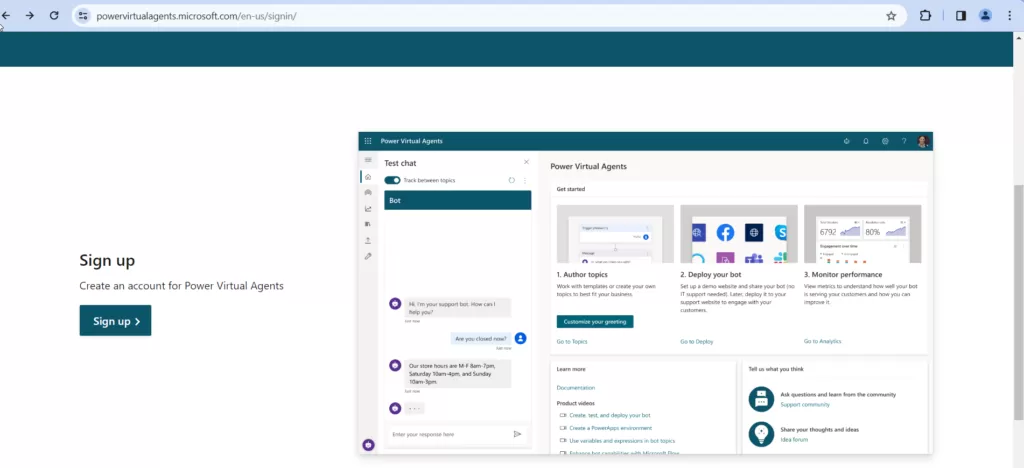
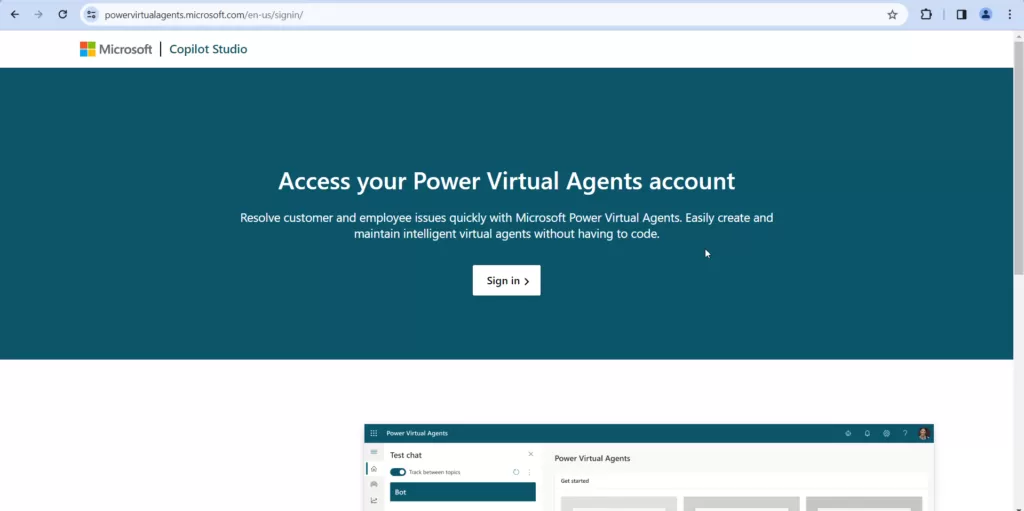
Begin by logging into the Microsoft Copilot Studio portal using your Microsoft credentials. If you do not have an account, you can sign up directly on the same page.

URL: https://web.powerva.microsoft.com/ 
img-01

img-02

This portal is your main workspace for creating and managing copilots.

Creating Your First Bot

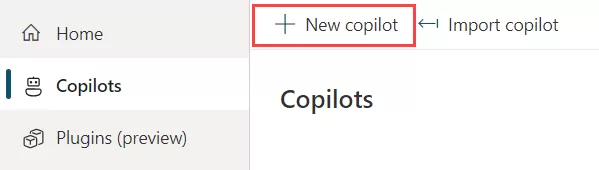
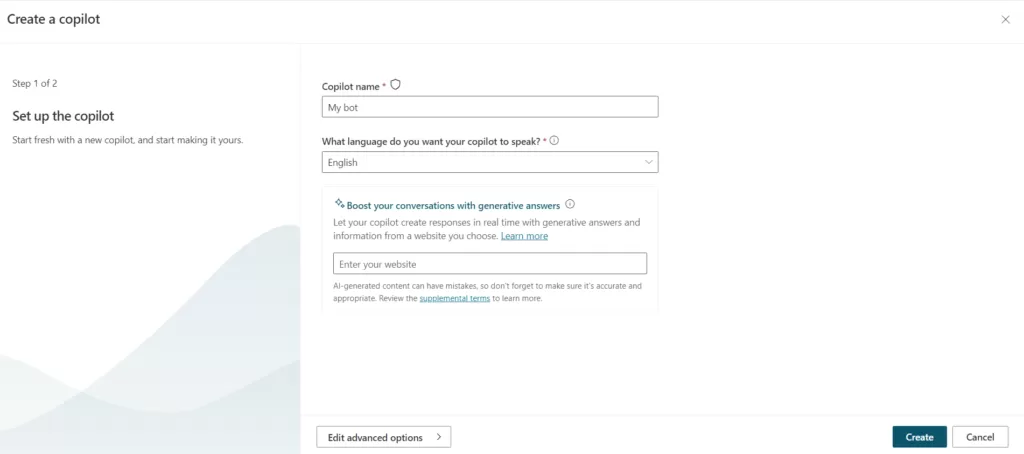
Click the “New Copilot” option to start the bot creation process. Give your bot a clear name and a short description that explains its purpose.
img-03

img-04

Starting with a simple use case helps you learn the tool more quickly.

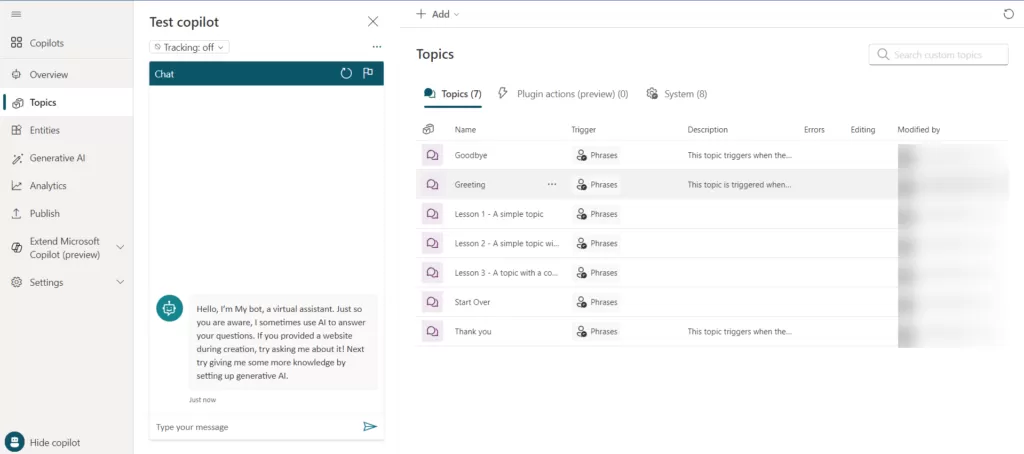
Defining Topics and Triggers

Identify the main topics your bot should handle. Set triggers for each topic so the bot knows which user messages should activate them.
img-05

Clear topics help make your bot easier to maintain and update.

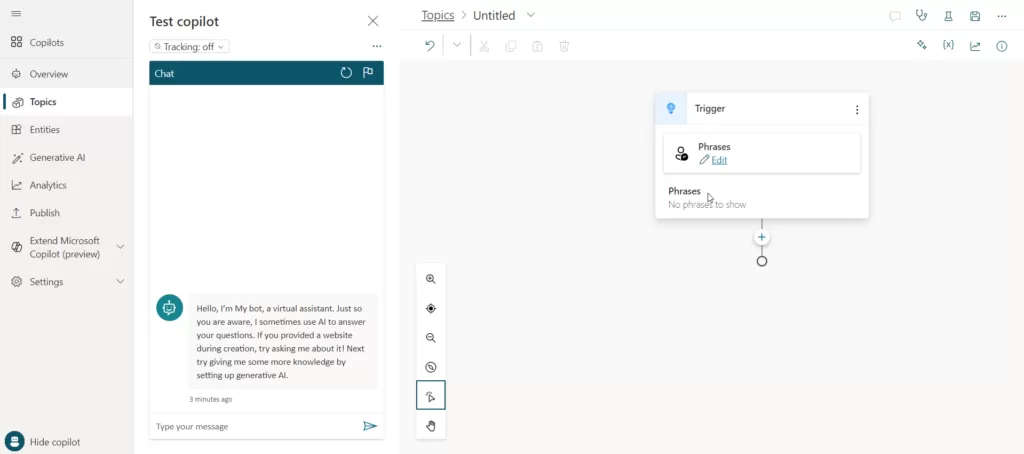
Building the Conversation Flow

Use the drag and drop interface to design the conversation steps. Add messages, questions, conditions, and actions to create a smooth user journey.
img-06

Keep the flow simple at the beginning and expand it as needed.

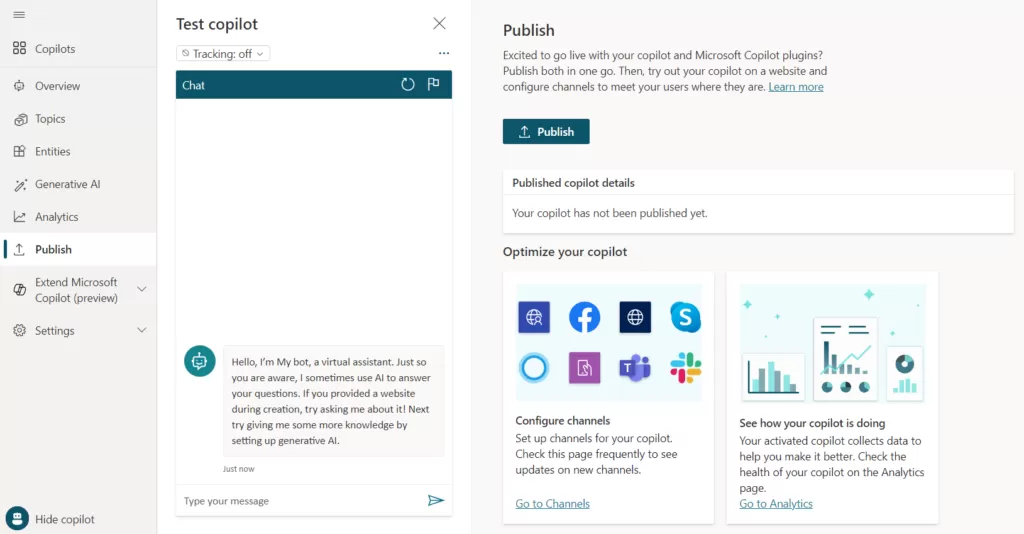
Testing and Deployment

Before deploying your bot, use the testing panel inside Copilot Studio to simulate conversations. Check that the flow feels natural and supports your objectives. Many businesses ask Power Platform consultants to refine these early setups for smoother long-term use.
img-07

Practical Microsoft Copilot Use Cases for Business Teams

Microsoft Copilot helps different teams work faster and stay organised by assisting with writing, summarising, planning, and handling everyday tasks. Here are practical ways departments are using Copilot in their daily workflow.

1. Marketing Campaign Planning

Marketing teams use Copilot in Word to turn ideas into ready content. It creates ad copy, blog outlines, and email drafts so campaigns move forward quickly.

Example: A marketer types, “Write a short caption for a new product launch on Instagram,” and Copilot suggests several caption options.

2. Sales Proposal Creation

Sales teams use Copilot in PowerPoint to turn notes into clear, structured slides. Copilot also drafts personalised emails based on client conversations.

Example: A sales rep types, “Create three slide points explaining our service benefits for a retail client,” and Copilot generates a clean outline.

3. Financial Data Review

Finance teams use Copilot in Excel to summarise numbers, find trends, and highlight unusual changes without formulas. Many teams pair these workflows with Microsoft Copilot for automation to speed up reporting and reduce repetitive work.

Example: A finance analyst types, “Summarise this month’s cash flow,” and Copilot creates a neat summary with key highlights.

4. Customer Support Automation

Support teams use Copilot chat tools to guide customers, answer common questions, and reduce wait times.

Example: A support agent types, “Give steps to fix login issues,” and Copilot provides a short troubleshooting guide.

5. Meeting Summaries and Follow Ups

Teams rely on Copilot to turn long meetings into action items, notes, and follow-up messages that keep everyone aligned. This becomes even more effective when teams follow strong Copilot Studio best practices.

Example: A team lead says, “Summarise today’s sprint planning meeting,” and Copilot produces a clear task list.

Best Practices for Copilot Studio

Here are some Copilot Studio best practices to help businesses get the best results:

  • Start with simple, high-value tasks: Begin with tasks like FAQs, customer queries, or basic reports to see quick wins.
  • Define clear roles and responsibilities: Decide who manages the copilot, updates content, and approves changes.
  • Keep data and connections ready: Connect SharePoint, Teams, and other data sources so the copilot gives accurate answers.
  • Use clear and simple prompts: Write easy instructions so the copilot understands them correctly.
  • Train and support your users: Create small learning groups and share short tips to help teams use the copilot well.
  • Improve using feedback: Review performance often, check common questions, and update flows regularly.
  • Grow in phases: Start small, test results, and then expand to more teams or processes.

How Reality Tech Helps You Maximize Copilot Studio

Businesses using Copilot Studio engage customers faster with quick and helpful responses. It reduces manual work and guides teams with clear insights. Copilots support writing tasks, customer questions, and daily operations. They understand context and assist teams in real time, making them powerful tools for better productivity.

At Reality Tech, support is offered at every stage with complete Microsoft Copilot Solutions, including Copilot for Power Apps, Microsoft 365 Copilot, and automation copilots. Copilot simplifies emails, builds presentations quickly, and makes data reviews easier. It fits smoothly into Microsoft 365 for a unified workflow. Detailed training and 1-on-1 sessions help teams use Copilot confidently and get the most value from it.
Power Platform vs Custom Development: Which Is Right For You?

Businesses must adapt to new digital tools to stay productive, keep customers satisfied, and stay competitive. Large enterprises rely on applications that automate processes, streamline work, and connect teams across departments. 

The primary challenge is selecting the most effective approach. Should you use Microsoft Power Platform to build solutions quickly, or invest in full custom development for deeper control?

Both options deliver strong value, but each comes with trade-offs that influence cost, scalability, governance, and long-term ownership. Understanding your goals and the depth of your requirements is essential. 

This guide compares Power Platform vs custom development from an enterprise perspective, helping IT leaders choose the approach that aligns with their strategy and resources.

Understanding Power Platform and Custom Development

Most enterprises need solutions that automate tasks, integrate business systems, and help teams work more efficiently. The Power Platform vs custom development discussion comes up often because both models can support these needs, but in very different ways.

What is Power Apps?

Power Apps is Microsoft’s low-code platform that helps organizations build applications quickly without advanced programming skills. It offers templates, drag-and-drop controls, and prebuilt connectors that make app creation efficient for business teams.

With Power Apps, teams can build forms, workflows, dashboards, and lightweight business apps using a visual interface. This reduces development costs and shortens delivery timelines, allowing IT to focus on more complex, strategic projects.

Key traits of Power Apps include:

  • Drag-and-drop visual builder
  • More than 300 connectors
  • Seamless integration with Teams, SharePoint, and Azure
  • Ready-to-use templates
  • AI Builder for simple AI capabilities
  • Built-in support for mobile and web

Power Apps empowers non-technical users to handle smaller automation needs on their own. This speeds up internal processes and reduces IT bottlenecks.

Pros of Power Apps

  • Low-code development accelerates delivery
  • Faster time-to-market for internal apps
  • Cost-effective and easier to maintain

Limitations

  • Limited customization for complex scenarios
  • Best suited for apps that stay within the Microsoft ecosystem
  • Less control over the underlying code and advanced UI design

What is Custom Development?

Custom development involves building an application from the ground up to match your exact business workflows. These solutions are designed by professional developers who build complex, high-performance systems for long-term use.

With custom development, enterprises gain full control over design, architecture, performance, integrations, and security. You can choose the technologies, build the features you want, and scale the system based on your long-term goals.

Key benefits of custom development include:

  • Full control over features, logic, and architecture
  • Ability to integrate with any internal or external system
  • High performance for large or complex workloads
  • Complete ownership of source code
  • Flexibility to evolve and scale over time

Custom development is ideal for organizations that need specialized, enterprise-grade applications or mission-critical platforms.

Pros of Custom Development

  • Supports complex and highly specialized use cases
  • Unlimited flexibility in design, features, and workflow logic
  • Broad integration capabilities across all technologies

Limitations

  • Higher upfront cost due to engineering effort
  • Longer development timelines
  • Requires ongoing support and maintenance

Power Platform vs Custom Development: Key Differences

Choosing between Microsoft Power Apps and full custom development depends on development speed, flexibility, cost, integration needs, and long-term goals. In the ongoing PowerApps vs custom coding comparison, both models offer strengths that support digital transformation in different ways.

Here is a clear Power Platform comparison based on enterprise requirements:

Factor Power Apps Custom Apps
Development Effort and Time Fast deployment with minimal coding. Ideal for quick business apps. Longer development cycles. Suitable for precision, performance, and advanced logic.
Customization and Flexibility Limited customization within Microsoft’s ecosystem. Full control to design unique workflows, integrations, and experiences.
Cost Considerations Lower initial cost and predictable licensing. Higher upfront investment but stronger long-term ROI.
Integration Capabilities Seamless integration with Microsoft 365, SharePoint, Teams, and Dynamics 365. Integrates with any system, including legacy and third-party tools.
User Experience and Design Standard and responsive UI with limited customization. Bespoke UI and UX tailored to your branding.
Speed of Development Ready in days or weeks. It may take weeks to months, depending on complexity.
Scalability Best for departmental and mid-sized apps. Ideal for highly scalable, enterprise-wide systems.
Maintenance Managed by Microsoft with automatic updates. Full control of updates and enhancements, but requires internal or partner support.
Security and Compliance Built on Microsoft’s enterprise-grade security framework. Security varies based on architecture and implementation quality.

 This comparison also helps organizations evaluate Power Platform vs custom development when long-term scalability and governance are critical. Power Apps is ideal for internal, fast-moving solutions. At the same time, custom development is better for complex logic, deep integrations, and long-term scalability.

When to Choose Power Platform Instead of Custom Development

The Custom development vs Power Platform choice depends on your goals, budget, and delivery timeline. Power Apps becomes the stronger option when you need a solution that can be built quickly, managed easily, and supported without heavy engineering effort. It is especially useful for internal teams that depend on fast automation and simple applications to improve daily operations.

Below are the situations where Power Apps is the better fit:

  • When speed is your priority

Power Apps allows you to design, test, and launch applications in days or a few weeks. This rapid development model helps teams respond faster to operational needs and reduces delays caused by long development cycles. Custom development, on the other hand, may take months before a solution is ready for production.

  • When cost matters

Power Apps offers predictable licensing and lower development effort, making it a cost-effective choice for many enterprises. You don’t need a large engineering team, and simple improvements can be handled internally. Custom development requires more investment in architecture, coding, and long-term support, which increases total cost.

  • When you rely heavily on Microsoft tools

If your organisation already uses Microsoft 365, SharePoint, Teams, or Dynamics 365, Power Apps fits naturally into your environment. It connects easily with your existing data and services, offering a smooth experience without complex integration work. This is where Microsoft Power Apps consulting can help design a scalable and governed setup.

  • When business users need to build or modify apps

Power Apps is built for business users who may not have coding experience. This capability empowers departments to solve their own operational challenges without waiting for IT backlogs. It also reduces pressure on internal development teams and accelerates small but important improvements.

  • When you want to focus on business outcomes, not coding

In many organisations, the PowerApps vs custom coding debate is about finding the right balance between speed and flexibility. Power Apps supports rapid prototyping and testing, helping teams validate ideas early and turn them into usable solutions without waiting for long development cycles.

  • When you prefer managed security and updates

Microsoft manages platform updates, performance, compliance, and security for Power Apps. Your team benefits from a stable, well-governed environment without worrying about infrastructure, patching, or system upgrades. Custom development requires more internal resources to maintain long-term reliability.

Making the Right Choice for Your Business

Choosing between Power Platform vs custom development starts with understanding what your business needs today and how the solution must evolve. Assess your immediate goals, the complexity of your workflows, and the level of control you expect as your requirements grow.

The right choice is the one that helps your organisation innovate confidently and sustain long-term growth. At Reality Tech, we guide enterprises through this decision using a structured, outcome-focused assessment. Our power platform consultant team helps define requirements, plan governance, and design solutions that fit your business, not the other way around.

Top Microsoft SharePoint Use Cases and Benefits for Enterprises

Nowadays, many organizations struggle with scattered data, slow processes, and poor communication between teams. Microsoft SharePoint helps solve these everyday challenges by bringing people, content, and workflows together in one secure place.

Microsoft SharePoint use cases for enterprises include document management, workflow automation, and improved team collaboration. These use cases fit organizations of all sizes and industries. The platform helps IT, compliance, and document teams work smarter, stay organized, and maintain better control over information.

With the right SharePoint premium services, enterprises can transform SharePoint into a central hub for smarter collaboration and seamless information management.

Understanding Microsoft SharePoint for Enterprises 

In large organisations, the value of structured information cannot be ignored. The platform SharePoint provides more than basic file storage or document sharing functions. It delivers enterprise-grade tools that automate workflows, protect content, and increase operational agility.

At its core, Microsoft SharePoint helps manage documents, enhance collaboration, and centralise data efficiently.

Key elements making SharePoint enterprise-fit include:

  • A central repository that allows you to store, organise, share, and access information securely from any device. 
  • Robust content lifecycle management from creation through archive. 
  • Integration with the Microsoft 365 ecosystem: Teams, OneDrive, Power Platform, Viva, and others.
  • Scalable site architecture and governance that supports thousands of sites, users, and departments.
  • The ability to enforce compliance, security, and workflow rules as part of your information architecture.

In short, SharePoint offers a strategic platform, not just a tactical tool. For large organisations, the value lies in aligning content, collaboration, and governance under one roof and maximising the benefits of SharePoint at scale.

Top SharePoint Use Cases for Enterprises

The following SharePoint enterprise use cases highlight how organizations use SharePoint to manage content, streamline workflows, and connect teams.

Document Management System (DMS) 

Centralized storage with metadata tagging, version control, automated approvals, and secure access. This reduces document retrieval times and supports compliance efficiently. It is one of the most common business Microsoft SharePoint use cases for large organizations today.

Workflow Automation and Business Process Management

Using SharePoint with Power Automate, enterprises streamline approvals, invoice processing, onboarding, and routine tasks to reduce manual work and errors.​

Intranet and Employee Experience Platforms

Modern intranets built on SharePoint enhance internal communication, knowledge sharing, social collaboration, and personalized employee content.​ These SharePoint enterprise use cases help employees stay connected and informed while maintaining consistency in branding. 

Project Management Dashboards

SharePoint enables interactive dashboards for tracking project timelines, resources, assignments, and progress with real-time updates.​

Knowledge Management Systems (KMS)

Centralizing SOPs, training documents, and FAQs to facilitate organization-wide knowledge sharing and faster onboarding.​

Compliance and Governance Management

This is among the top business use cases of SharePoint in compliance-heavy industries. SharePoint simplifies compliance by automating policy enforcement and audit tracking. With Microsoft Purview integration, enterprises maintain control over sensitive and regulated data.

Hybrid and Multi-Cloud Collaboration

SharePoint supports integration with Microsoft 365 and external cloud services, facilitating collaboration in hybrid work environments.​

Custom Business Applications

Enterprises use low-code and no-code tools to extend SharePoint’s capabilities. Power Platform integrations allow teams to create forms, apps, and workflows tailored to business needs.

Customer and Vendor Portals

SharePoint enables secure portals for customers and vendors to access key documents and updates. Controlled permissions and structured communication strengthen relationships and transparency.

Digital Asset Management

Enterprises manage digital content such as images, videos, and marketing files through SharePoint libraries. It centralized access control and metadata tagging to streamline creative workflows and protect brand assets. Such an organisation demonstrates the broader benefits of SharePoint in modern content ecosystems.

Benefits of Microsoft SharePoint for Enterprises

Let’s discuss a few benefits of Microsoft SharePoint that strengthen and simplify enterprise workflows.

  • Improved Data Management: Centralizes documents and integrates with Microsoft Office, enabling easy, secure access from anywhere.
  • Simplified Business Processes: Automates workflows like approvals, feedback, and task tracking, saving time and reducing errors.
  • Regulatory Compliance & Security: Controls permissions, audits, and enforces data access policies to meet compliance needs.
  • Optimized Content Management: Manages document versions, approvals, and multilingual content efficiently.
  • Enhanced Collaboration: Real-time co-authoring, version control, and file sharing prevent duplication and increase teamwork.
  • Increased Productivity: Quick document search and organized folders free up employee time for core tasks.
  • Centralized Administration: Single console for managing settings, backups, upgrades, and security.

Implementing SharePoint Successfully in Your Organization

Implementing SharePoint requires a planned, structured approach to ensure it aligns with business needs and delivers long-term value. The following steps outline the key phases for a successful SharePoint deployment.

1. Requirement Analysis

Begin with a detailed analysis of your organisation’s goals and challenges. Engage key stakeholders and understand their daily tasks and collaboration needs. Identify where SharePoint can simplify document management and automate routine processes. Having a clear understanding at this stage helps build a focused and realistic implementation plan.

2. Solution Design

Design a solution that matches your organisation’s objectives and SharePoint capabilities. Plan the site structure, information hierarchy, user permissions, and overall experience. This ensures scalability and flexibility so the solution can grow with future needs. 

3. Development

In this phase, developers build the custom components required to meet specific business demands. This may include developing workflows, custom web parts, forms, or integrating SharePoint with other enterprise systems. Adhering to Microsoft’s development best practices ensures a robust, maintainable, and secure environment.

4. Testing

Thorough testing is critical to guarantee that the solution functions as expected. Functional, performance, and user acceptance testing help identify issues early and confirm that the system meets defined requirements. Testing also ensures seamless integration with existing tools and preserves data integrity.

5. Deployment

With successful testing complete, deploy the SharePoint solution into the production environment. The deployment process should be carefully managed to minimize downtime or disruption to daily operations. Planning a phased or pilot deployment can help mitigate risks and allow for necessary adjustments before full-scale rollout.

6. Support and Training

Post-deployment, continuous support and user training are essential to ensure successful adoption. Providing clear documentation, ongoing technical assistance, and regular training sessions helps users maximize the full potential of SharePoint. Encouraging feedback and refining features based on user input contribute to long-term success.

Maximize Enterprise Collaboration with Reality Tech

SharePoint enterprise solutions are revolutionising how organisations operate, automating workflows, enhancing collaboration, and ensuring secure information management. 

From document control to employee engagement, SharePoint empowers teams to work efficiently and transparently. Partnering with Reality Tech, a trusted provider of Microsoft SharePoint consulting services, enables seamless implementation, cloud integration, and long-term scalability.

Whether you are an emerging enterprise or a global corporation, capitalize on SharePoint workflow automation, intranet solutions, and custom Power Apps to drive innovation and operational excellence.

SharePoint vs OneDrive vs Teams for Business: Complete Guide

Modern businesses rely on digital tools to manage files, collaborate with teams, and communicate efficiently. Microsoft 365 offers a powerful ecosystem for this, but many organizations struggle to understand the difference between SharePoint vs OneDrive vs Teams.

At first glance, all three tools seem similar because they allow file storage and sharing. However, each one is designed for a specific purpose. When used correctly, they create a seamless workflow. When misused, they lead to confusion, duplicate files, and poor collaboration.

This guide breaks down Microsoft SharePoint, OneDrive, and Teams, helping you understand when to use each and how they work together.

SharePoint vs OneDrive vs Teams for Business

To understand these tools, think of them as three layers of collaboration within Microsoft 365.

  • OneDrive is for individual work
  • Microsoft Teams is for communication and active collaboration
  • SharePoint is for structured, long-term document management

They are not competing tools. Instead, they complement each other to create a complete digital workplace.

Businesses that clearly define how to use each platform see better productivity, improved file organization, and fewer communication gaps.

OneDrive: Personal Storage for Work Files

Microsoft OneDrive is your personal cloud storage within an organization. It is designed for files that belong to an individual but may later be shared.

It works like a secure digital workspace where employees can create, edit, and store files before making them available to others.

Key Features

  • Private file storage with selective sharing
  • Automatic syncing across devices
  • Offline access and backup
  • Version history and file recovery

Practical Use Cases

  • Drafting proposals, reports, or presentations
  • Storing personal notes or working files
  • Sharing files with a limited group

For example, a marketing manager may create campaign drafts in OneDrive and only share them with the team once they are ready for review.

While OneDrive supports collaboration, it is not meant for managing shared business data. Using it as a team storage system can lead to access issues and data dependency on individuals.

SharePoint: The Organizational Knowledge Hub

Microsoft SharePoint is the foundation of document management in Microsoft 365. It is built for teams and organizations to store, organize, and control shared content.

Unlike OneDrive, SharePoint is designed for structured collaboration with clear ownership and governance. To make this effective, businesses should follow a SharePoint IA Guide to properly organize sites, libraries, and permissions for easy access and scalability.

Key Features

  • Centralized document libraries
  • Granular permission control
  • Workflow automation and approvals
  • Version control and audit tracking
  • Intranet and knowledge base creation

Practical Use Cases

  • Managing company policies and documents
  • Storing department-level files
  • Creating internal portals for employees
  • Automating document approval processes

For instance, the HR team can use SharePoint to manage employee handbooks, onboarding documents, and compliance files that are accessible across the organization.

These examples clearly reflect common SharePoint Use Cases for Enterprises, where managing large volumes of content, users, and workflows requires strong structure and governance.

When comparing SharePoint vs OneDrive, SharePoint is the better choice for long-term storage, collaboration across teams, and maintaining a single source of truth.

Microsoft Teams: Real-Time Collaboration

Microsoft Teams acts as the communication hub for your organization. With strong Microsoft Teams Integration, it connects chats, meetings, and file sharing into one unified workspace.

Teams is designed for real-time collaboration, making it ideal for active projects and ongoing discussions.

Key Features

  • Instant messaging and group chats
  • Video meetings and calls
  • Channel-based collaboration
  • Integrated file sharing
  • App integrations for workflows

Practical Use Cases

  • Daily team communication
  • Project discussions and updates
  • Sharing files during meetings
  • Coordinating cross-functional teams

For example, a product team can use Teams channels to discuss features, share files, and track progress without switching between tools.

It is important to understand that files shared in Teams are stored in SharePoint. This means Teams provides the interface for collaboration, while SharePoint manages the storage and structure behind the scenes.

When to Use SharePoint, Teams, and OneDrive

Choosing the right tool depends on the context of your work. Many organizations face confusion around when to use SharePoint vs Teams, especially in collaborative environments.

Use OneDrive When

Microsoft OneDrive should be your starting point for any individual work.

Use OneDrive when:

  • You are working on personal drafts or early-stage documents
  • Files are not ready to be shared with a wider team
  • You need a private workspace to experiment or iterate
  • You want to share files with limited stakeholders for quick feedback
  • You are storing temporary or work-in-progress files

Example:
A designer creates initial UI concepts or a marketer drafts a campaign plan. These files remain in OneDrive until they are ready for collaboration.

Why it matters:
Keeping early-stage work in OneDrive avoids clutter in shared systems and ensures that incomplete or unapproved content is not prematurely accessed by teams.

Use Teams When

Microsoft Teams is best suited for active collaboration and communication-heavy workflows.

Use Teams when:

  • You need real-time discussions and quick decision-making
  • Multiple team members are working on the same file simultaneously
  • Projects require constant updates and coordination
  • You are managing short-term or fast-moving tasks
  • Collaboration is informal and dynamic

Example:
A product team working on a feature release uses Teams channels to discuss updates, share files, and track progress in real time.

Important insight:
Teams is not a storage system. It is a collaboration layer. Files shared here are part of ongoing conversations and should eventually be moved or structured properly in SharePoint.

Use SharePoint When

Microsoft SharePoint is designed for structured, long-term, and organization-wide content management.

Use SharePoint when:

  • Documents need to be accessible across teams or departments
  • Files require structured organization and metadata
  • Content must be stored long-term as a single source of truth
  • You need controlled permissions and governance
  • Documents are finalized and approved

Example:
HR policies, financial reports, training materials, and compliance documents should always live in SharePoint.

Why it matters:
SharePoint ensures that critical business information is not dependent on individuals and remains accessible, organized, and secure.

How They Work Together

The real power of Microsoft 365 lies in integration and workflow continuity.

Integration Explained

  • Files in Teams channels → stored in SharePoint
  • Files in private chats → stored in OneDrive
  • SharePoint manages structure and permissions

This is where OneDrive vs SharePoint document management becomes clear. OneDrive handles temporary and personal files, while SharePoint ensures long-term organization.

Real Workflow Example

  1. Create a file in OneDrive
  2. Share via Teams for collaboration
  3. Store in SharePoint for long-term access

This approach aligns with Microsoft 365 file storage best practices, ensuring clarity, security, and scalability.

Common Mistakes Businesses Make

Even with the right tools, many organizations face challenges due to incorrect usage.

1. Using OneDrive for Team Storage

OneDrive is meant for personal files. Using it for team data creates dependency on individuals and risks data loss.

2. Overloading Teams with Files

Teams is designed for collaboration, not long-term storage. Important files should be moved to SharePoint.

3. Poor SharePoint Structure

Without proper planning, SharePoint can become cluttered, making it difficult to find documents.

4. Lack of Governance

No clear rules for file naming, storage, and access can lead to confusion and duplication.

5. No User Training

Employees often misuse tools simply because they do not understand the differences.

Avoiding these mistakes helps create a more efficient and scalable digital workplace.

Get Expert Help Setting Up Microsoft 365 With Reality Tech

Understanding Microsoft SharePoint, Microsoft OneDrive, and Microsoft Teams is simple when you look at their purpose. Each tool is made for a different type of work. When you use them correctly, your work becomes more organized and easier to manage.

OneDrive is for your personal files and drafts. Teams is for talking and working together with your team. SharePoint is for storing important files that everyone needs. Using them in the right way helps avoid confusion and keeps everything in the right place.

At Reality Tech, we help businesses set this up properly. Our SharePoint Services include intranet setup, migration, and document management. Our OneDrive Service focuses on secure setup and backups to keep your data safe. We do not just install tools; we make sure everything works well for your team.

Whether you are starting with Microsoft 365 or improving what you already have, we help you use these tools the right way. This makes your work smoother, faster, and easier to manage as your business grows.

The Ultimate SharePoint Information Architecture Guide for Businesses

Modern organizations handle a constant flow of documents, data, and internal communication across teams and departments. Over time, this information spreads across multiple locations, making it harder to manage, locate, and control. The result is often duplication, confusion, and increased risk around compliance and data handling.

A well-planned SharePoint information architecture helps businesses bring order to this complexity. It brings order to content, defines how information is organized, and makes access consistent across the business.

This guide explains how to structure SharePoint so it supports daily operations, reduces confusion, and scales as your organization grows.

What Is SharePoint Information Architecture?

SharePoint Information Architecture is the structured framework used to organize content within Microsoft SharePoint. It defines how sites, libraries, lists, metadata, and permissions are designed and connected.

Think of it as a blueprint that determines how information flows across your organization. A strong architecture ensures that employees can easily create, access, and manage content without confusion. 

It includes several key components:

  • Site structure and hierarchy
  • Content organization and storage
  • Metadata and classification
  • Access control and governance
  • Navigation and search optimization

This is why businesses focus on SharePoint Information Architecture as a core part of their digital workplace strategy. Without a clear IA, organizations often face challenges like duplicate content, poor search results, and low user adoption.  

Core Elements of Microsoft SharePoint Information Architecture

1. Site Collections and Hub Sites

The foundation of any SharePoint environment starts with how sites are structured. Large organizations typically have multiple departments, projects, and teams, each requiring its own workspace.

Understanding SharePoint hub sites helps businesses connect related sites under a central hub. Hub sites provide shared navigation, consistent branding, and unified search across connected sites.

By following SharePoint site architecture best practices, organizations can:

  • Create logical groupings of sites
  • Improve navigation across departments
  • Maintain consistency in design and structure
  • Scale easily as the business grows

For example, a company may create separate hubs for HR, Finance, and Operations, each connecting relevant team sites. This makes it easier for employees to find information without navigating unrelated content.

2. Libraries, Lists, and Content Types

Libraries and lists are where most of the content lives in SharePoint. A well-designed structure ensures that documents are organized logically and consistently.

Implementing a SharePoint document management system enterprise approach means:

  • Using standardized document libraries
  • Creating reusable content types
  • Applying version control for tracking changes
  • Setting retention policies for compliance

Content types allow organizations to define properties for different types of documents, such as contracts, reports, or policies. This ensures consistency and makes content easier to manage.

Instead of storing files randomly, businesses can create structured systems where every document has a clear purpose and location.

3. Metadata and Managed Terms

Metadata plays a critical role in organizing and retrieving content. Instead of relying only on folders, SharePoint uses metadata to classify information.

Using SharePoint metadata and taxonomy allows organizations to:

  • Tag content with meaningful attributes
  • Improve search accuracy
  • Enable filtering and sorting
  • Automate workflows

For example, a document can be tagged with metadata such as department, document type, and date. This makes it easy to find without browsing multiple folders.

Managed terms ensure consistency across the organization. By using a centralized taxonomy, businesses can avoid confusion caused by inconsistent naming or classification.

4. Governance and Permissions

Governance ensures that the SharePoint environment remains secure, compliant, and well-managed. Without proper governance, content can become disorganized and difficult to control.

Applying SharePoint governance best practices helps organizations:

  • Define roles and responsibilities
  • Control access to sensitive information
  • Set policies for content lifecycle
  • Maintain compliance with regulations

Permissions should be assigned carefully to ensure that users have access only to what they need. This reduces risks while still enabling collaboration.

Governance also includes auditing and monitoring, which helps track user activity and identify potential issues.

5. Navigation and Search Optimization

A strong IA ensures that users can find what they need quickly and easily. Poor navigation leads to frustration and wasted time.

A well-planned SharePoint intranet structure design focuses on:

  • Clear and intuitive navigation menus
  • Logical grouping of content
  • Metadata-driven search
  • Personalized search results

Search optimization is especially important in large organizations. By using metadata and structured content, businesses can deliver more accurate and relevant search results.

This significantly improves user experience and boosts productivity.

Advanced Capabilities in SharePoint IA

1. Workflow and Automation Integration

Modern SharePoint environments are not just for storing content. They also support business processes through automation.

Workflows can streamline tasks such as:

  • Document approvals
  • Notifications and alerts
  • Task assignments
  • Data collection and processing

By integrating tools like Microsoft Power Automate, organizations can reduce manual work and improve efficiency.

Automation ensures that processes are consistent, faster, and less prone to errors.

2. Personalization and User Experience

User experience plays a major role in the success of SharePoint adoption. Even the best architecture will fail if users find it difficult to use.

Personalization helps tailor the experience to individual users. This includes:

  • Role-based dashboards
  • Customized content recommendations
  • Targeted announcements

These improvements are often part of SharePoint Intranet Modernization, where organizations upgrade their intranet to provide a more engaging and user-friendly experience.

A better user experience leads to higher adoption and better outcomes.

3. Training, Adoption, and Analytics

Building a strong IA is only the first step. Ensuring that employees use it effectively is equally important.

Organizations should invest in:

  • Training programs for employees
  • Documentation and support resources
  • Continuous improvement based on feedback

Analytics tools help track usage patterns, identify popular content, and uncover gaps in the system.

This data-driven approach ensures that the IA continues to evolve and meet business needs.

Why Good SharePoint Information Architecture Matters?

An effective SharePoint information architecture gives your system a clear structure to store and manage content inside Microsoft SharePoint.

It helps employees find information quickly, reduces duplication, and keeps data secure. It also allows businesses to apply consistent rules without making the system complex. 

This also supports multiple SharePoint Use Cases for Enterprises, including intranet portals, document management, and workflow automation.

Key Reasons Why It Matters:

Improves Collaboration

Employees can quickly find and share information, which makes teamwork faster and smoother.

Supports Compliance

Rules for data storage, access, and tracking are easier to manage, helping reduce risks.

Boosts Productivity

Less time is spent searching for documents, so employees can focus more on their work.

Enables Scalable Growth

The system can grow with your business without becoming messy or difficult to manage.

Step-by-Step Guide to Building Effective IA

Building a strong information architecture requires a clear and practical approach. Below is a simple step-by-step process to create a structure that is easy to use, scalable, and aligned with business needs.

1. Assess Current State

Start by reviewing your existing setup in Microsoft SharePoint.

Look for:

  • Duplicate or outdated content
  • Poorly structured sites
  • Unused libraries and lists
  • Confusing permissions

This helps you understand what needs improvement before making changes.

2. Define Metadata and Structure

Create a clear plan for how content will be organized. A structured approach to metadata helps you:

  • Classify documents properly
  • Improve search results
  • Keep consistency across teams

Keep it simple and aligned with how your business works.

3. Design Site Architecture

Organize your sites into a logical structure using hubs and collections.

This ensures:

  • Easy navigation across departments
  • Better scalability
  • Consistent user experience

Avoid creating too many layers to keep things simple.

4. Plan Governance and Permissions

Set clear rules for how content is created, accessed, and managed.

This helps you:

  • Control access to information
  • Maintain security and compliance
  • Keep the system organized as it grows

Define roles early to avoid confusion later.

5. Build Navigation and Search

Make it easy for users to find information quickly.

Focus on:

  • Clear navigation menus
  • Logical grouping of content
  • Search filters for better results

Test with real users to ensure it works well.

6. Prepare for Migration

If you are moving from another system, plan carefully.

This includes:

  • Cleaning up old data
  • Removing unnecessary files
  • Organizing content before moving

Proper planning ensures a smooth transition.

7. Implement and Test

Build your new structure and test it with a small group of users.

Check if:

  • Content is easy to find
  • Permissions are correct
  • Workflows are functioning properly

Make improvements before full rollout.

8. Train Users and Drive Adoption

Provide simple training to help employees use the system effectively.

Offer:

  • Quick guides
  • Support resources
  • Ongoing help

Good training ensures better adoption.

9. Monitor and Improve

Information architecture should evolve.

Regularly:

  • Review usage
  • Collect feedback
  • Improve structure

This keeps your system effective and aligned with business needs.

Best Practices for SharePoint Information Architecture

Creating a strong SharePoint information architecture is not just about structure, but also about following the right practices that keep your system simple, scalable, and easy to use. Here are some best practices every business should follow when working with Microsoft SharePoint.

  • Keep the structure simple and avoid unnecessary complexity
  • Use metadata instead of deep folder structures for better organization
  • Maintain consistent naming conventions across sites and documents
  • Plan governance rules early to control access and the content lifecycle
  • Design with search in mind to improve content discoverability
  • Organize related sites using hub sites for better navigation
  • Limit heavy customization to keep the system easy to manage
  • Focus on user experience to make navigation smooth and intuitive
  • Provide training to ensure proper usage and adoption
  • Regularly review and improve the structure based on user feedback

Conclusion

A well-structured approach in Microsoft SharePoint is key to keeping content organized, accessible, and manageable across the business.

Without it, information becomes difficult to control, leading to inefficiencies, duplication, and risk. With the right structure in place, teams can find what they need quickly, work more effectively, and maintain consistency across departments.

Many organizations also rely on SharePoint information architecture services to design a structure that fits their business needs and scales over time. It also supports better security and compliance by keeping data controlled and accessible only to the right people.  

By following the right approach and continuously improving your setup, SharePoint can become a powerful platform that supports collaboration, automation, and long-term business success.

Complete SharePoint Migration Checklist 2026 (Step-by-Step Guide)

Migrating to SharePoint Online is no longer just an IT upgrade. It is a strategic move that reshapes how organizations collaborate, secure data, and scale operations. Yet many migrations fail not because of technology, but because of poor planning, unclear structure, and overlooked governance.

Starting with a well-defined SharePoint online migration checklist can make the difference between a smooth transition and a costly failure. It ensures every critical step is accounted for, from early discovery to post-migration validation.

This comprehensive checklist walks you through every critical phase of a successful SharePoint migration in 2026. Whether you are upgrading from legacy SharePoint, file servers, or another platform, this guide will help you avoid costly mistakes and ensure a smooth transition.

Why Migrate in 2026? (Legacy vs Cloud)

Organizations still relying on legacy SharePoint environments or file servers are facing growing limitations. Maintaining on-premises infrastructure requires constant updates, hardware investments, and dedicated IT resources. At the same time, users demand faster, more flexible collaboration tools.

SharePoint Online offers scalability, seamless updates, and integration with the Microsoft 365 ecosystem. Features like real-time collaboration, AI-powered search, and automation through Power Platform significantly improve productivity.

Cloud migration is also critical for security and compliance. Modern organizations need centralized policies, better visibility, and automated protection mechanisms. Moving to the cloud ensures access to evolving capabilities without the burden of manual upgrades.

Phase 1: Discovery & Inventory

The discovery phase sets the foundation for your entire migration. Without a clear understanding of your current environment, even the best tools and strategies can fail.

Conduct a Full Environment Audit

Start by identifying all SharePoint assets, including sites, libraries, lists, workflows, and custom solutions. Many organizations discover outdated or duplicate content during this process.

A thorough pre-migration assessment of the SharePoint approach helps identify risks early and ensures nothing critical is overlooked.

Analyze Data and Usage

Understand how much data you are migrating and how it is being used. Look at storage size, file types, version history, and access patterns. This helps you prioritize high-value content and avoid unnecessary migration.

Clean and Classify Content

Not all data deserves to be migrated. Classify content such as active, archive, or obsolete. Removing redundant data improves performance and reduces migration time.

Map Dependencies

Identify integrations with third-party tools, workflows, and business applications. These dependencies must be addressed during migration to avoid disruptions.

Phase 2: Information Architecture & UX

A migration is the perfect opportunity to redesign your digital workplace. Instead of copying your old structure, focus on building a modern and user-friendly environment.

Design a Scalable Structure

Avoid deep folder hierarchies and move toward a flat architecture using hub sites. This improves navigation and aligns with modern SharePoint design principles.

Following a SharePoint modernization guide allows organizations to rebuild their structure in a way that supports long-term growth and usability.

Implement Metadata Strategy

Metadata replaces traditional folders and enhances search capabilities. Define content types, tags, and taxonomy that reflect your business processes.

Improve Navigation and Search

Users should be able to find content quickly. Design intuitive navigation and optimize search settings to improve discoverability.

Align with Collaboration Tools

Ensure SharePoint integrates seamlessly with Teams, OneDrive, and other Microsoft 365 services. This creates a unified collaboration experience.

Phase 3: Security, Permissions & Compliance

Security and compliance are critical aspects of any SharePoint migration. Poorly managed permissions can lead to data breaches or operational inefficiencies.

Review and Simplify Permissions

Audit existing permissions and eliminate unnecessary complexity. Replace individual permissions with group-based access wherever possible.

Establish Governance Framework

Define policies for content management, access control, and lifecycle management. Governance ensures consistency and security across the organization.

Implementing Microsoft 365 data governance practices helps protect sensitive data and maintain regulatory compliance.

Configure Compliance Features

Set up retention policies, sensitivity labels, and data protection rules before migration. This ensures your environment is secure from day one.

Plan External Sharing Policies

Define how external users will access your content. Apply restrictions based on business needs to prevent unauthorized access.

Choosing Your Tools (SPMT, Mover, Third-party)

Selecting the right tools is essential for a successful migration. Different tools offer different capabilities depending on your requirements.

Native Microsoft Tools

SPMT and Mover are ideal for simple migrations. They are cost-effective and easy to use, but may lack advanced features.

Third-Party Solutions

Tools like ShareGate and AvePoint provide advanced capabilities such as automation, reporting, and better handling of complex environments.

A detailed SharePoint migration tool comparison helps you evaluate tools based on performance, scalability, and cost.

Hybrid Strategy

Many organizations use a combination of tools to balance efficiency and budget. This approach allows flexibility in handling different types of content.

Phase 4: Testing, Training & Adoption

Testing is a crucial step that ensures your migration process works as expected before full deployment.

Run Pilot Migrations

Start with a small group of users and migrate their data. This helps identify potential issues without impacting the entire organization.

Validate Data Accuracy

Check file integrity, metadata, permissions, and functionality. Address any discrepancies before moving forward.

Train Users Early

Introduce users to the new system through training sessions and documentation. Early training reduces resistance and builds confidence.

Applying SharePoint migration best practices 2025 during this phase ensures a smoother transition and better user experience.

Phase 5: Training, Rollout & Adoption

This phase determines whether your SharePoint migration succeeds in practice, not just in theory. Even the most technically flawless migration can fail if users do not understand the new environment or resist adopting it. The goal here is to ensure a smooth transition while driving long-term engagement.

Build a Clear Rollout Strategy

Avoid migrating the entire organization at once. A phased rollout is far more effective and manageable. Start with smaller teams or departments, then expand gradually as confidence and stability increase.

Each rollout wave should include clear timelines, a defined scope, and dedicated support. This approach reduces risk and allows your team to fix issues before scaling further.

Communicate Early and Often

Communication is one of the most overlooked aspects of migration success. Users should never feel surprised by changes.

Make sure you clearly explain:

  • What is changing
  • When it is happening
  • How it impacts daily work
  • Where to get help

Use simple language focused on benefits such as easier collaboration, faster access to files, and improved search experience.

Deliver Role-Based Training

Not all users interact with SharePoint in the same way, so training should be tailored accordingly.

End users need practical guidance on everyday tasks like uploading files, sharing documents, and navigating sites. Site owners and power users require deeper knowledge about permissions, metadata, and content management.

Short video tutorials, quick reference guides, and live demos are more effective than lengthy manuals. Keep training focused, relevant, and easy to access.

Empower Internal Champions

Identify employees within each department who are comfortable with the new system. These champions can support their teams, answer questions, and encourage adoption.

Providing them with early access and additional training creates a support network that reduces dependency on IT teams.

Encourage User Adoption

Adoption does not happen automatically. You need to actively promote the value of the new system.

Highlight improvements such as:

  • Real-time collaboration
  • Access from any device
  • Better document organization
  • Integration with Microsoft 365 tools

Aligning your rollout with a SharePoint modernization guide approach helps users understand that this is not just a migration, but a transformation in how they work.

Provide Ongoing Support

Support should not end after rollout. Set up help channels such as dedicated support teams, FAQs, and internal knowledge bases.

Monitor user feedback and quickly resolve issues to maintain trust and momentum.

Track Adoption Metrics

Measure success using data. Monitor user activity, login frequency, file sharing patterns, and feedback.

These insights help identify areas where users may need additional support or training.

Common Pitfalls to Avoid

Even with good planning, SharePoint migrations can run into problems. Here are some common mistakes to avoid:

Migrating Everything Without Cleanup

Moving all data without reviewing it creates clutter. Remove outdated and duplicate files before migration to keep things organized.

Skipping Proper Assessment

Not doing a detailed pre-migration assessment of SharePoint can lead to missed dependencies and unexpected issues during migration.

Copying Old Structure As-Is

Simply recreating your old folder structure in the cloud limits SharePoint’s capabilities. Use a SharePoint modernization guide approach to build a better structure.

Ignoring Permissions Complexity

Old environments often have messy permissions. Migrating them directly can cause confusion and security risks. Clean them up first.

Choosing the Wrong Tools

Using the wrong tool can slow down your migration. A proper SharePoint migration tool comparison helps you pick the right one.

Not Testing Before Migration

Skipping a pilot run can lead to bigger issues later. Always test with a small group before full rollout.

Missing Governance Setup

Ignoring Microsoft 365 data governance can create compliance and security problems. Set policies early.

Ignoring User Training

If users don’t understand the new system, adoption will fail. Provide simple and role-based training.

Poor Communication

Lack of updates creates confusion. Keep users informed about what’s changing and when.

No Post-Migration Checks

Without a post-migration validation checklist, issues like missing data or broken permissions may go unnoticed.

Conclusion

A successful SharePoint migration is not just about moving data; it is about creating a better way for your team to work. With the right planning, clean structure, and focus on user adoption, you can turn migration into a long-term business advantage.

By following this checklist and applying a modern SharePoint modernization guide, you reduce risks, improve collaboration, and build a scalable digital workplace that actually works for your users.

If you are planning your SharePoint migration and want expert support, Reality Tech can help. Our team specializes in SharePoint consulting, migration, and modernization tailored to your business needs.

Talk to Reality Tech today and make your SharePoint migration smooth, secure, and future-ready.

SharePoint Information Architecture Best Practices for Enterprises

Large enterprises generate and manage an enormous volume of content every day. From internal documents and policies to project files and communication assets, the challenge is not just storing information but organizing it in a way that makes it accessible, secure, and scalable. This is where sharepoint information architecture becomes critical.

A well-planned IA ensures that your SharePoint environment is not just a repository, but a structured digital workplace where users can easily find, manage, and collaborate on content. Without it, even the most advanced implementation can turn into a cluttered and inefficient system.

What Is SharePoint Information Architecture for Large Enterprises?

Sharepoint information architecture refers to how information is structured, categorized, and managed within your SharePoint environment. It includes elements such as site structure, navigation, metadata, taxonomy, and governance policies.

For large enterprises, IA goes beyond basic organization. It serves as the backbone for how information flows across departments, teams, and business units. A strong framework ensures users can easily access relevant content while maintaining consistency and compliance.

It also plays a crucial role in digital transformation. With the right structure in place, organizations can integrate tools, automate workflows, and maximize the value of platforms like Microsoft 365, often supported by microsoft 365 consulting services.

Why Information Architecture Matters in Enterprise SharePoint?

In enterprise environments, poor information structuring leads to inefficiencies. Employees often struggle to locate critical documents, duplicate files exist across departments, and governance policies become harder to enforce.

A well-designed system built on sharepoint information management principles helps eliminate these challenges and creates a more organized and efficient digital workplace.

It enables organizations to:

  • Improve content discoverability so users can quickly find what they need
  • Enhance user experience through intuitive navigation and structure
  • Support compliance by organizing content in a controlled and secure manner
  • Enable collaboration by connecting teams with shared resources
  • Reduce redundancy and improve content lifecycle management

When implemented correctly, SharePoint evolves from a basic storage platform into a powerful productivity engine that supports enterprise-wide efficiency and growth.

Top SharePoint Information Architecture Best Practices

Following sharepoint information architecture best practices ensures long-term scalability and efficiency.

Establish Clear Governance and Ownership

Governance is the backbone of any successful SharePoint environment. Define clear roles and responsibilities for site owners, content managers, and administrators. Establish policies for content creation, storage, and deletion.

Without governance, even the best-designed sharepoint architecture will degrade over time. A structured governance model ensures accountability and long-term sustainability.

Standardize Naming Conventions

Consistency in naming sites, libraries, and files is essential. Standard naming conventions help users understand content quickly and improve search accuracy.

For example, using structured naming formats for projects or departments makes it easier to locate relevant content across the organization.

Design with Business Goals in Mind

Your information architecture should reflect how your organization operates. Structure your SharePoint environment based on departments, functions, or workflows rather than arbitrary categories.

This alignment ensures that the system supports real business needs and enhances productivity.

Use Hub Sites for Enterprise-Wide Consistency

Hub sites allow you to connect related SharePoint sites under a unified structure. They provide consistent navigation, branding, and search experiences across different departments.

For large enterprises, hub sites are essential for maintaining a scalable and organized environment.

Keep the Architecture Flat

Modern SharePoint works best with a flat architecture. Instead of creating deeply nested subsites, use separate sites connected through hub sites.

A flat structure improves flexibility, scalability, and ease of management. This aligns with proven sharepoint intranet best practices, improving scalability and flexibility.

Plan Before You Build

Many organizations make the mistake of jumping into implementation without proper planning. Conduct a content audit, identify user needs, and create an IA blueprint before building your SharePoint environment. Proper planning is essential for building scalable sharepoint online architecture.

SharePoint Metadata and Taxonomy Best Practices

Managing content in SharePoint becomes much easier when you use a clear metadata and taxonomy strategy. Strong sharepoint metadata management helps organize documents so users can quickly find, filter, and use information without confusion. Instead of relying on complex folder structures, metadata allows content to be categorized in a smarter and more flexible way.

Use Metadata Instead of Folders

Folders can become messy and hard to manage over time. Metadata is a better option because it lets you tag documents with details like department, project, or document type.

This makes it easier to search and filter content without needing to know where it is stored. One document can also belong to multiple categories without duplication.

Build a Consistent Taxonomy

A taxonomy is a structured way of organizing content using predefined terms. Creating a consistent set of terms across your organization helps keep content organized and easy to understand.

For example, using the same names for departments or document types avoids confusion and improves search results.

Use Content Types

Content types help standardize documents. They define what information should be included, such as metadata fields and templates.

This ensures that all similar documents follow the same format, making them easier to manage and use.

Train Users on Metadata

Even the best system won’t work if users don’t apply metadata correctly. Provide simple training and guidelines so employees understand how to tag documents properly.

Making metadata fields easy to use also improves adoption.

Review and Update Regularly

Your business needs will change over time, so your taxonomy should too. Regularly review and update your metadata terms to keep them relevant and useful.

Designing a Scalable SharePoint Site and Hub Architecture

A scalable site and hub structure is essential for enterprise growth, flexibility, and efficient content management across departments. A well-planned sharepoint site architecture ensures your environment remains organized as your business expands.

Use a Flat Architecture Model

Flat site structures improve scalability and make it easier to manage and connect sites across the organization. This approach also aligns with modern sharepoint intranet best practices, helping teams navigate content more efficiently.

Organize Sites by Function or Department

Group sites based on real business functions, departments, or projects. This creates intuitive navigation and ensures your overall structure reflects how your organization actually works, especially when implementing a strong sharepoint hub site architecture.

Choose the Right Site Type

Use communication sites to share information broadly and team sites to enable collaboration. Selecting the right type improves usability and ensures each site serves a clear purpose.

Standardize Site Templates

Creating standardized templates helps maintain consistency, reduces setup time, and ensures a uniform experience across all sites. Following proven sharepoint site architecture best practices makes your environment easier to scale and manage.

Optimizing Search and Content Discoverability

Configure Search Properly

Ensure your SharePoint search is configured correctly and that all relevant content is indexed. Regularly reviewing search settings helps maintain accuracy as your content grows.

Use Metadata to Improve Search Results

Metadata plays a key role in making content easier to find. Proper tagging allows users to filter and retrieve documents quickly and efficiently.

Implement Clear Navigation

Navigation should guide users to important content without confusion. A well-structured navigation system is a core part of effective sharepoint intranet design best practices.

Promote Key Content

Highlight frequently used documents and important resources. This reduces search time and improves overall user experience.

Common SharePoint Information Architecture Mistakes to Avoid

Overcomplicating the Structure

Complex structures make it difficult for users to navigate and manage content. Keep your architecture simple and intuitive.

Ignoring Governance

Without governance, SharePoint environments can quickly become disorganized. Establish and enforce governance policies from the start.

Poor Metadata Planning

Inconsistent or missing metadata reduces the effectiveness of search and content management.

Lack of User Focus

Designing IA without considering user needs leads to low adoption. Always prioritize user experience.

No Scalability Planning

Your architecture should be designed to grow with your organization. Plan for future expansion to avoid major restructuring later.

Conclusion

A well-structured SharePoint Information Architecture is essential for large enterprises aiming to improve efficiency, collaboration, and governance. It provides the foundation for a scalable and user-friendly digital workplace.

By implementing best practices such as clear governance, consistent metadata, and a flat site structure, organizations can transform SharePoint into a powerful business tool that supports long-term growth.

However, building and maintaining an effective SharePoint architecture requires the right expertise and strategic approach. That’s where Reality Tech comes in. At Reality Tech, we help enterprises design, optimize, and scale their SharePoint and Microsoft 365 environments for maximum performance and usability.

Ready to transform your SharePoint into a high-performing digital workplace? Connect with Reality Tech today and get started with expert SharePoint architecture and Microsoft 365 consulting services.

Mastering Modern Protection, Configuring Intune App Protection Policies in 2025 (Part 2)

Welcome back! If you read Part 1, you know why Intune App Protection Policies (APPs) are your absolute best bet against mobile data leaks, AI-driven cyber-attacks, and regulatory risks in 2025. Now, let’s get hands-on with Intune modern protection and learn how to set up Intune app protection policies step by step.

Phase One: Design with Intent

Map Your Sensitive Data Flows

  • Identify your riskiest user groups: sales, finance, and executives.
  • Inventory of apps that carry sensitive data: OneDrive, Teams, Outlook, third-party apps.
  • Document your core information types: contracts, trade secrets, financial records, and customer lists.

Define Your Risk Boundaries

  • What should never leave a protected app? (e.g., copy/paste, print, share, screenshot)
  • Where is access required, but with zero tolerance for leaks? (e.g., BYOD devices in transit)

Phase Two: Build Your Policy in Microsoft Intune

Launch Intune Admin Center

  • Navigate to Apps > App protection > Create policy.

Select Platform & Apps

  • Choose OS (Android, iOS, Windows).
  • Pick protected apps, OneDrive, Outlook, Teams, and supported third-party apps.

Define Data Protection Actions

  • Block copy/paste and “Save As” operations to unmanaged destinations.
  • Disallow backups to personal cloud storage.
  • Restrict printing and screen capture to prevent offline leaks.
  • Enforce authentication: PIN or biometrics for every access.
  • Set up selective wipe: Instantly delete corporate data after suspicious behavior or device compromise.

Assign to User Groups

  • Target only those groups at greatest risk or start with a high-value pilot population.

Refine and Test

  • Pilot the policy, gather user feedback, and monitor for disruptions.
  • Adjust settings for productivity and protection.

Real-World Example: How This Works

Your sales rep, Anna, is closing a deal from the airport. She opens OneDrive on her personal phone:

  • She reviews a confidential client proposal but can’t print, screen capture, or save a copy outside the app.
  • If Anna accidentally pastes data in WhatsApp, it’s blocked.
  • If her phone is lost, IT can selectively wipe corporate content, and her personal photos, apps, and contacts stay safe.
  • Meanwhile, your CFO can audit payroll in Outlook at home, and sensitive spreadsheets are never backed up to untrusted clouds.

This is the power of managing Intune app protection policies effectively.

Monitoring, Compliance, and Continuous Evolution

Conclusion: Futureproof Security Isn’t Optional

In 2025’s world of mobile work, your data is at risk everywhere. But with Intune App Protection Policies, your security strategy is as dynamic, mobile, and intelligent as your business itself.

Part 1 delivered the “why,” Part 2 delivered the “how.” Now it’s your move: deploy, monitor, and adapt, giving your teams the power to work boldly, with your data guarded every step of the way.

Ready to fortify your future? Let’s secure it, app by app, policy by policy, starting today.

From Deepfakes to Data Breaches: Why App Protection Policies Matter in 2025 (Part 1)

Have you noticed how 2025’s headlines are filled with stories of AI-powered phishing, deepfake-driven fraud, and billion-dollar data breaches sparked by just one careless moment? As mobile devices have become the backbone of productivity, company secrets, financial records, and intellectual property now travel faster and further than ever, sometimes vanishing into the wilds of unknown networks and personal apps.

Today’s workforce expects total freedom, seamless access on any device, from any location, whether it’s a client pitch over Wi-Fi in a café or a midnight contract review in a hotel lobby. But with this new agility, IT leaders are left asking: How do we unleash our teams while safeguarding the digital heart of our business?

The Peril in the Palm of Your Hand

In just 2024 and the first half of 2025, over 7 billion sensitive records, contracts, client data, and strategic IP were exposed worldwide. Now, with AI threats multiplying, social engineering becoming more cunning, and the “perimeter” gone, the mobile security reality shows that mobile data is not just moving, it’s in orbital flux, perpetually exposed.

Traditional security, built for static networks and restricted hardware, simply can’t keep pace with the explosion of device diversity, third-party apps, and personal work habits. That’s why mobile application protection has become a business-critical layer for safeguarding sensitive data.

Introducing App Protection Policies: Security That Moves with You

An app protection policy (APP) is your modern defensive line. Rather than locking down devices, it acts as an invisible bouncer within the apps where sensitive business happens, like Microsoft OneDrive, Outlook, and Teams. Its digital shield follows your data, wherever it flows.

Real Scenario:
Imagine your sales lead reviews confidential proposals on their smartphone en route to a meeting. Simultaneously, the finance chief balances budgets at 30,000 feet or a busy café. Mobile app protection ensures that data in these business-critical apps:

  • Cannot be copied/pasted into personal apps or chats.
  • Printing, screen capturing, and saving to local drives are blocked.
  • Cloud backups to unmanaged storage (iCloud, Google Drive) are never allowed.
  • Every access attempt requires a PIN or biometrics, and suspicious activity triggers a selective wipe, leaving personal apps untouched.

Result? Power and privacy unlocked, freedom for your team, protection for your business.

Why This Is the New Standard for 2025

AI isn’t waiting. Automated attacks, deepfake threats, and credential theft target the weak spots in shadow IT and BYOD. A mobile app protection policy framework is the only way to defend against these rapid-fire risks.

Regulators expect more. Data protection laws in 2025 demand proof that confidential information is ring-fenced regardless of device or location. That’s why organizations are already adopting app protection policy 2025 best practices as a compliance benchmark.

Your workforce craves trust. Apps deliver confidentiality without prying into employees’ personal world. That’s why Microsoft compliance purview services are being paired with App Protection Policies to ensure sensitive information is governed, monitored, and safeguarded, giving organizations confidence that regulatory expectations are being met.

At the same time, Security and Compliance Services strengthen this approach by providing an added layer of assurance for both regulators and employees. Together, they create a holistic security framework that balances compliance, data protection, and user privacy.

By combining mobile application protection with adaptive enforcement, organizations achieve airtight coverage that balances productivity with protection.

Final Thought

The future isn’t about locking down users, it’s about enabling them. Forward-thinking companies are already working with Microsoft consulting services to design and implement mobile app protection at scale.

Stay tuned: In Part 2, we’ll show exactly how to configure these app protection policies and make airtight, adaptive protection a seamless reality for your users.

Workaround to change primary column value from one column to another using JavaScript

In Dataverse, the primary column serves as a key identifier that plays a crucial role in how data is displayed and managed. Whether you’re working with important data or adding records manually, the primary column must contain a unique value.
If you need to update a column value using JavaScript, especially the primary column within a model-driven app, here’s how to do it effectively.

Scenario: Imagine you are importing data into a Dataverse table by copying and pasting from external sources. During this process, there’s a risk that the primary column might end up with incorrect or missing values.

This issue becomes particularly problematic when handling more than 1,000 records manually correcting the primary column would be time-consuming and inefficient.

Since the primary column in Dataverse is essential for uniquely identifying records, you need a way to fix or assign values to it automatically.
This is where changing the primary column value JavaScript becomes extremely useful.

In the case described here, some phone numbers and ID column values have been swapped. While the correct IDs are stored in another column, “Student ID,” you cannot set that column as the primary one. This leads to inconsistencies in how the records are identified. To address this issue, we need a workaround to copy the values from the “Student ID” column to the primary column (referred to as the “ID” column in this scenario) using JavaScript when the form loads.

column to the primary column

Here are the steps to automate the process using JavaScript, ensuring that the primary column is populated with a unique and non-modifiable value for each record.

Step 1: The following JavaScript code is used to copy the Student ID column values to the ID column.


function setIDValue(executionContext) {
// Get the form context
var formContext = executionContext.getFormContext();

// Get the value from the ‘cr32f_studentid’ attribute
var Id = formContext.getAttribute(“cr32f_studentid”).getValue(); // Use getValue() to get the value

// Set the value in the ‘cr32f_id’ attribute
formContext.getAttribute(“cr32f_id”).setValue(Id);

// Save the form to persist changes
formContext.data.entity.save();
}

Step 2: To run JavaScript updates data in a table column, you need to add the internal names of both columns. To find these, go to the Dataverse table, then navigate to the columns section, and copy the logical names of both columns.

Step 2

Step 3: After saving the JavaScript, go to the Dataverse table, navigate to the form, click on ‘JavaScript’ from the left navigation pane, and then click on ‘Add Library’.

Step 3

Step 4: After clicking on ‘Add Library,’ click on ‘New Web Resource,’ select the file, provide a name for the file, and then click ‘Save’ and ‘Publish .’

Step 4

Step 5: Now, search for that file, select it, and click on ‘Add.’

Step 5

Step 6: Select the form, then click on ‘Events’ on the right side. In the events section, click on ‘On Load.’

Step 6

Step 7: After clicking on ‘Event Handler,’ select the JavaScript file, enter the function name, and check ‘Pass execution context as the first parameter.’ Then click ‘Done,’ and save and publish the application.

Step 7

Step 8: After that, when you click on existing data, the script will run and set the Student ID value to the ID column.[JP5]

Step 8

Conclusion

By following these steps, you can automate the process of updating the primary column with the correct values from another column, ensuring that each record in your Dataverse table has a unique and accurate primary identifier. This approach not only saves time but also improves data integrity, making your data management more efficient and reliable. For organizations working with complex Microsoft ecosystems, especially those guided by SharePoint Premium Consultants, this kind of automation ensures seamless integration, better governance, and smarter data handling across platforms.

Newsletters