
Step-by-Step Guide to Creating View Forms in Power Pages

This guide helps you understand how to view and read forms in Power Pages. Simply follow these steps: access Power Pages Management, create a new form, sync your site, and add the form to your page.

By doing this, you can easily integrate forms into your website, making it easier to manage data and improve user experiences.

Steps to View/Read a Form in Power Pages

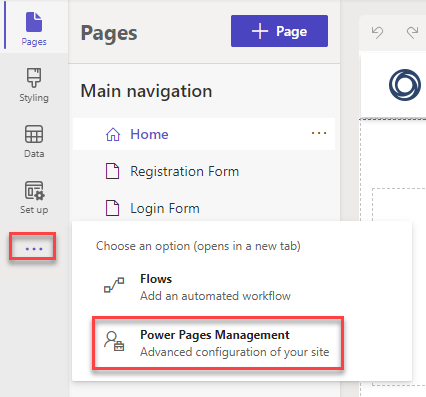
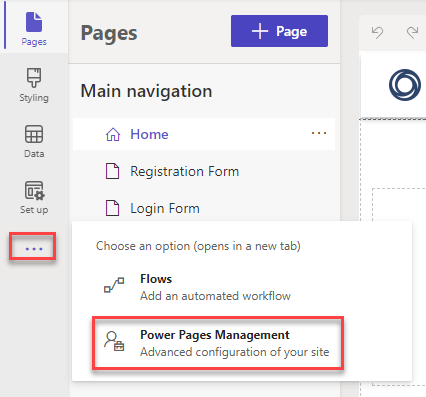
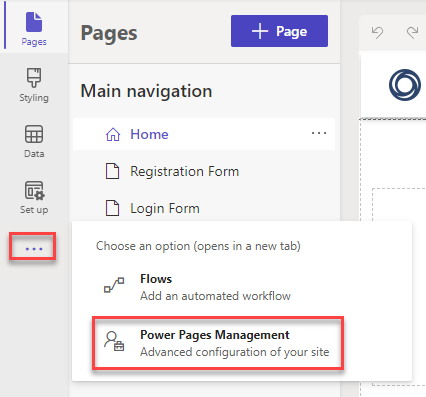
Step 1: Go to the Power Pages Management

Power Pages Management Option

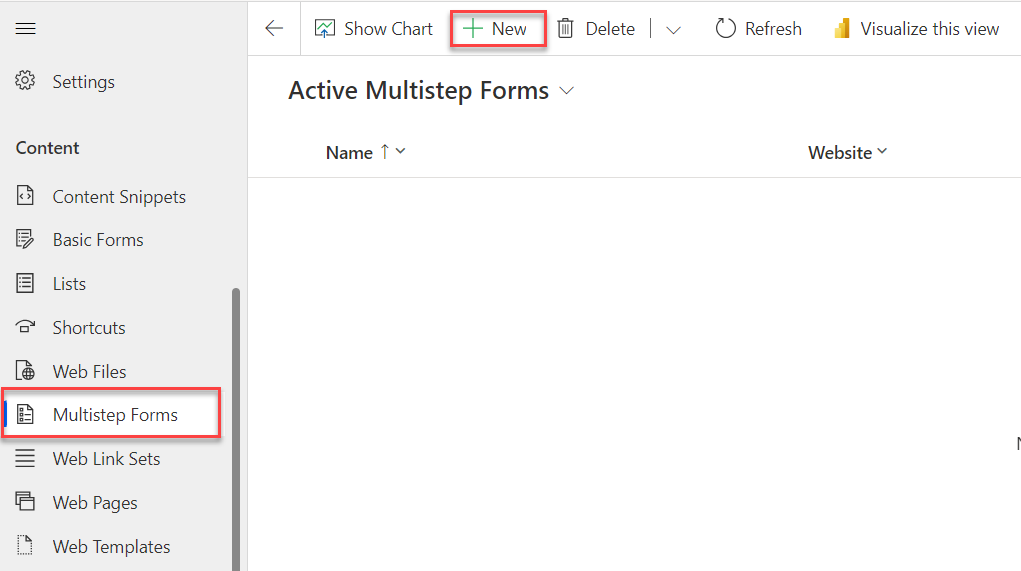
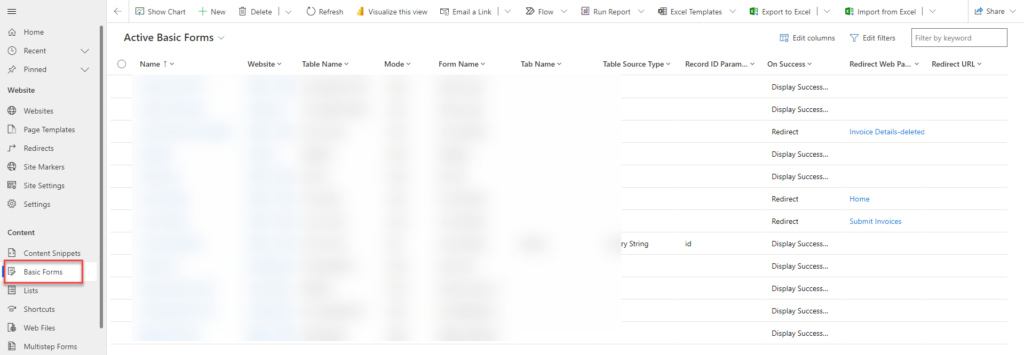
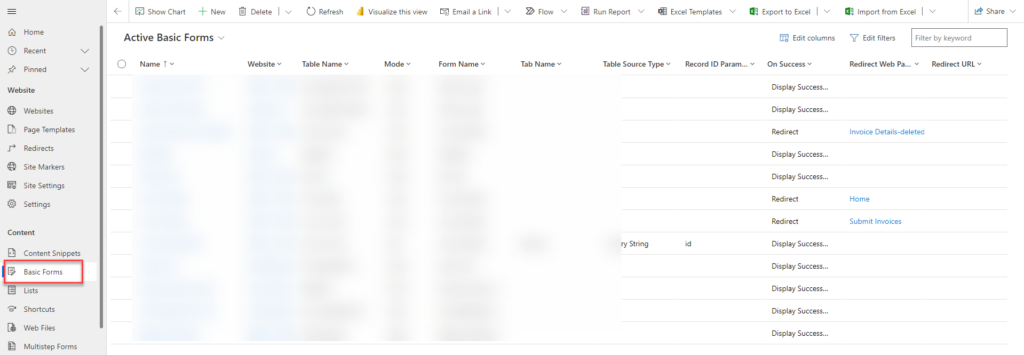
Step 2: Go to Basic Forms and click on the “+ New” button.

New button option

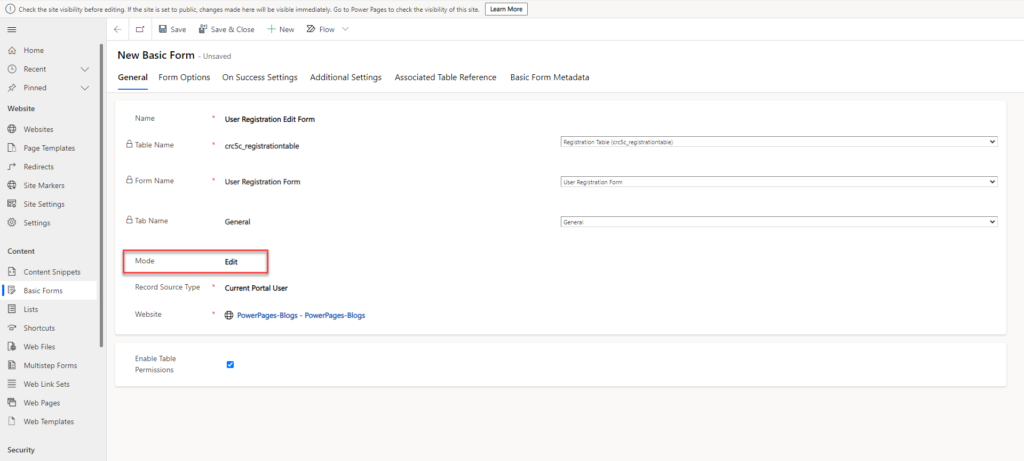
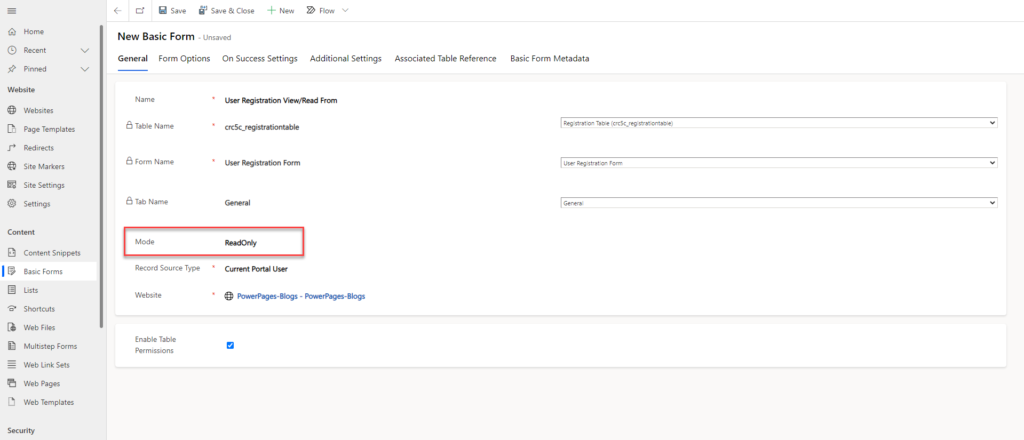
Step 3: Give a name to the form, then select a table. Next, choose the form name and tab name. In the mode selection, choose “ReadOnly” then select the record source type and website, and finally click on Save.

Read Only Option

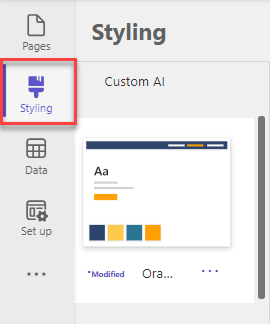
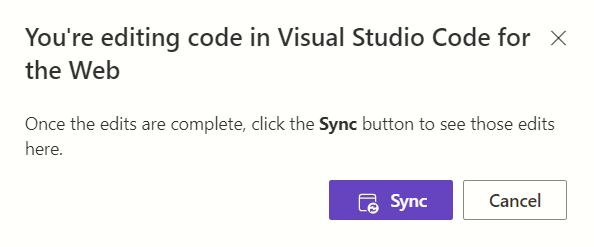
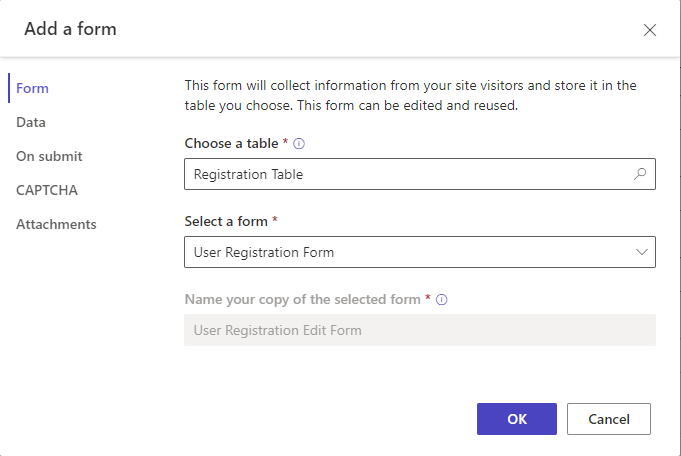
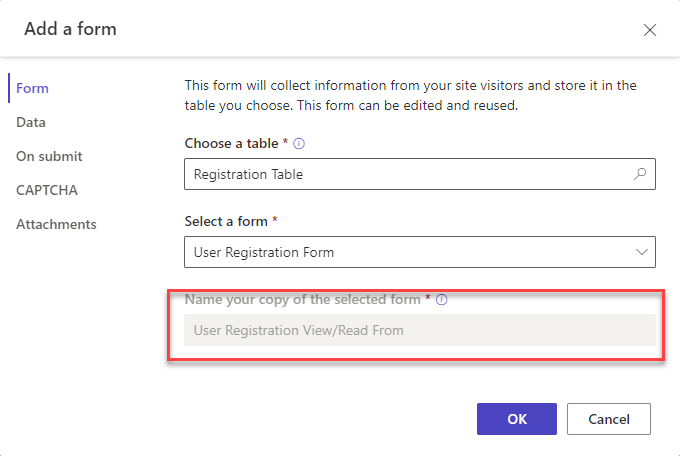
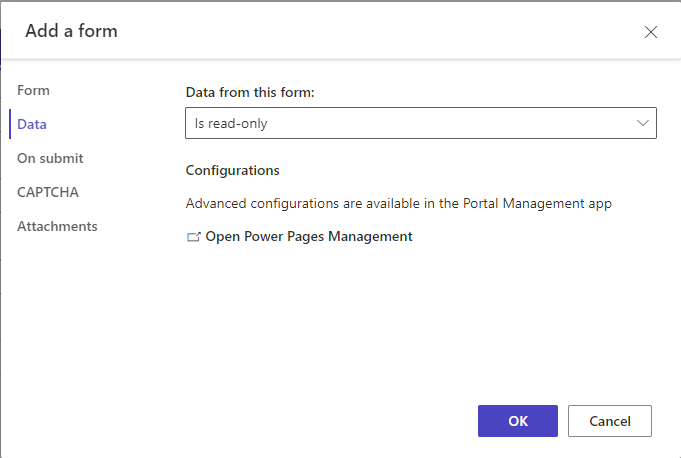
Step 4: Go to the Power Pages site and “Sync” the site. On the page, in the component section, click on the form and select the ReadOnaly form that was created.

Add a Form Pop Up Form

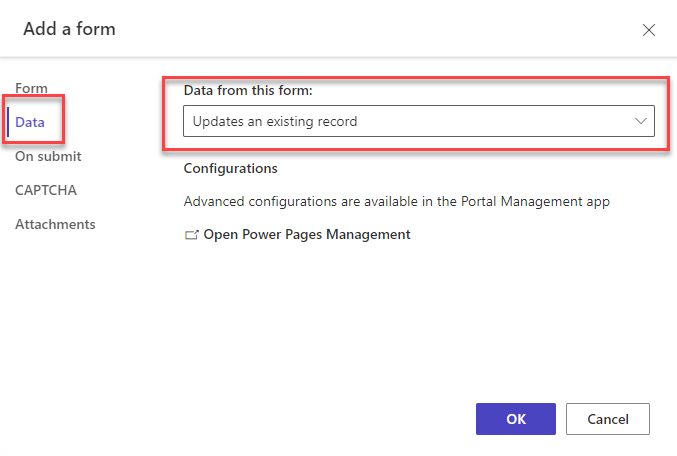
In the data section, you can see that your form is set to is read-only. Now, you can click on “OK” and add the form to the page.

Add a Form Option

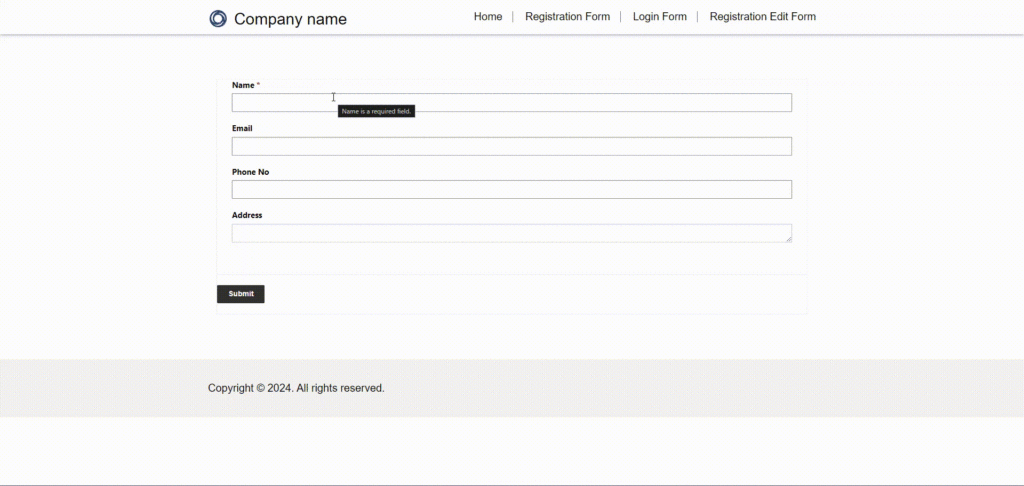
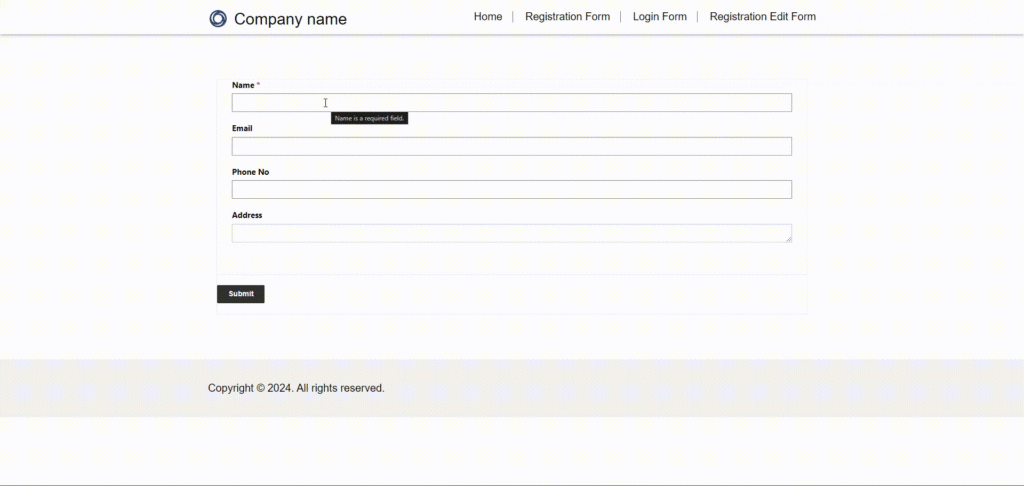
Step 5: To use the read form, you need to first add some user information to the database, and then you can read those details.

Company name option

Conclusion: This guide provides a clear pathway to effectively viewing and reading forms within Power Pages. Following the outlined steps allows for seamless integration of forms into your website, thereby simplifying data management and enhancing user experiences.

By leveraging Power Pages, you can optimize your website’s functionality and ensure a smoother interaction for users.

Using SharePoint Filter Queries in Power Automate: A Guide to Efficient Data Retrieval

The SharePoint Filter Query is a powerful feature that allows users to refine and manipulate data within their Power Automate workflows efficiently. This blog aims to provide an in-depth exploration of how to leverage this functionality effectively, offering insights and tips.

  • The filter query typically follows a syntax that depends on the data source you’re working with. In SharePoint, for example, you can use OData (Open Data Protocol) syntax to construct your filter query. This syntax allows you to specify conditions such as equals, not equals, greater than, less than, contains, starts with, ends with, and more.
  • The Filter Query is a powerful tool to retrieve only the data you need, reducing unnecessary processing and improving efficiency in your workflows.
  1. Single line of text: Starting with the internal name of the single line of text, followed by “equals (eq)” and the corresponding single line of text value.Single line of text
    Column Type Available operator(s) | Functions Usage Example
    Single line of text eq [equals]

    ne [not equals]

    startswith() [column value begins with…]

    substringof() [column value contains…]

    Column eq ‘value’

    Column ne ‘value’ startswith(Column, ‘value’) substringof(‘value’, Column)

    Title eq ‘My Item’

    Title ne ‘My Item’ startswith(Title, ‘My’) substringof(‘Item’, Title)

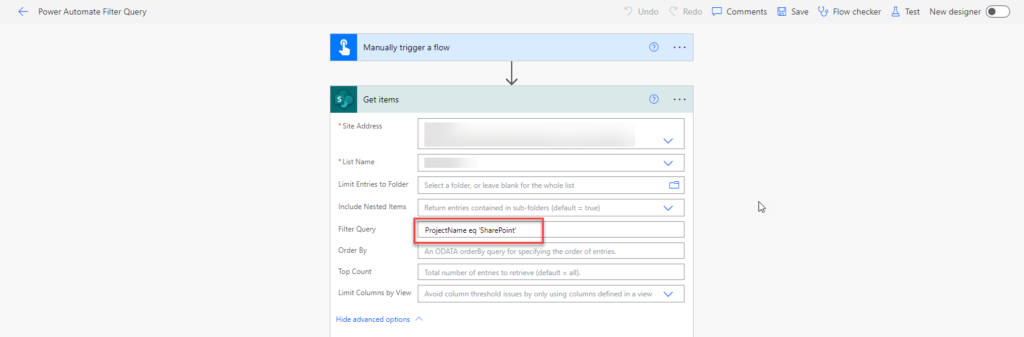
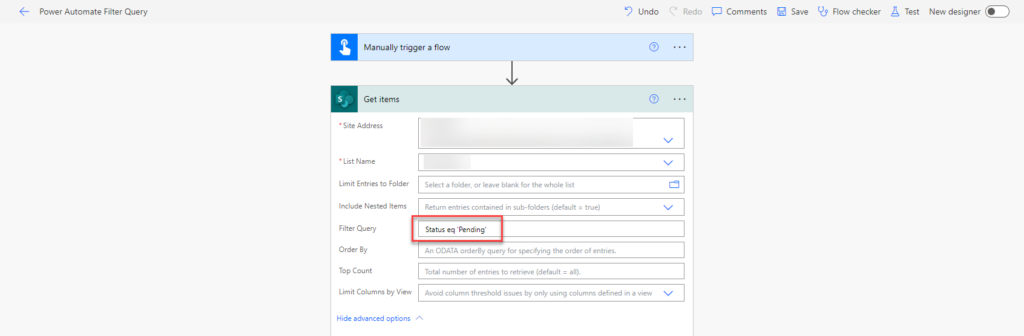
  2. Choice Column: Input the internal name of the Choice column, followed by “equals” to specify the user’s preference for displaying only pending items. Enclose the desired value in brackets.Choice Column
    Column Type Available operator(s) | Functions Usage Example
    Choice (menu to choose from) eq [equals]

    ne [not equals]

    startswith() [column value begins with…] substringof() [column value contains…]

    Column eq ‘value’

    Column ne ‘value’ startswith(Column, ‘value’) substringof(‘value’, Column)

    Status eq ‘Approved by manager’

    Status ne ‘Not approved’ startswith(Status, ‘Approved by’) substringof(‘by manager’, Status)

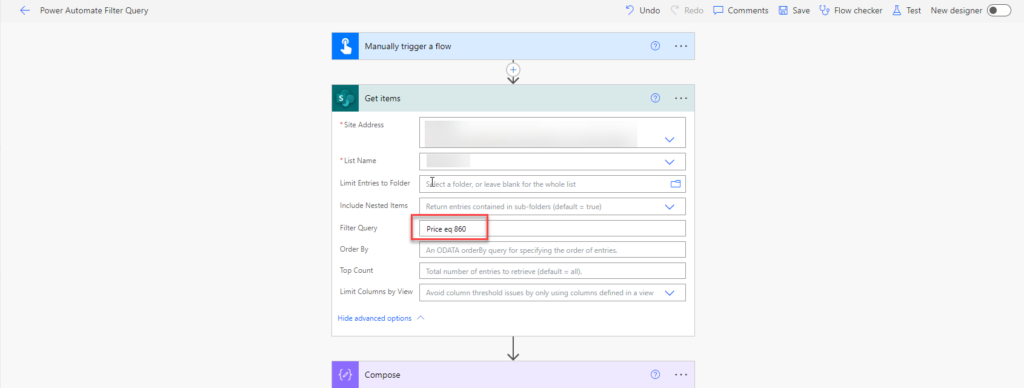
  3. Number Column: Start by entering the internal name of the column, followed by “equals (eq)” and the number you want to specify. Do not include the number value within the single quotes.Number Column
    Column Type Available operator(s) | Functions Usage Example
    Number (1, 1.0, 100) eq [equals]

    ne [not equals]

    lt [less than]

    le [less or equal than]

    gt [greater than]

    ge [greater or equal than]

    Column eq number

    Column ne number

    Column lt number

    Column le number

    Column gt number

    Column ge number

    Value eq 20

    Value ne 100

    Value lt 1000

    Value le 50000

    Value gt 200

    Value ge 50

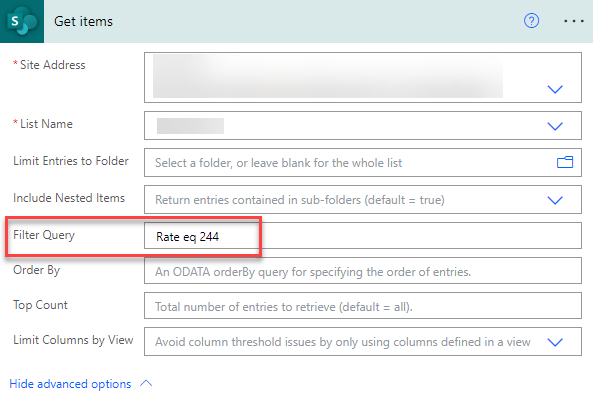
  4. Currency Column: Start by entering the internal name of the Currency column equals(eq) enter the value which user want to filter and run the flow show the output.Currency Column
    Column Type Available operator(s) | Functions Usage Example
    Currency ($, ¥, €)  eq [equals]

    ne [not equals]

    startswith() [column value begins with…]

    substringof() [column value contains…]

    lt [less than]

    le [less or equal than]

    gt [greater than]

    ge [greater or equal than]

    Column eq number

    Column ne number

    startswith(Column, ‘value’) substringof(‘value’, Column)

    Column lt number

    Column le number

    Column gt number

    Column ge number

    Rate eq 20

    Rate ne 100

    startswith(Rate, ‘5’) substringof(‘500’, Rate)

    Rate lt 1000

    Rate le 50000

    Rate gt 200

    Rate ge 50

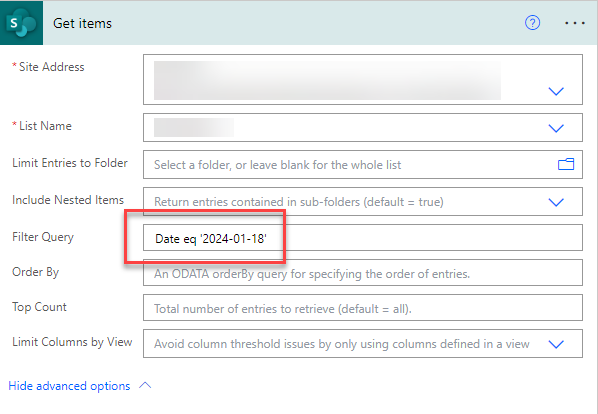
  5. Date and Time: Enter the internal name of the date column, followed by “equals (eq),” and input the desired date for filtering. Ensure that you enclose the date in single quotes and here to the date format as shown: Date Format (yyyy-mm-dd”).Date and Time
    Column Type Available operator(s) | Functions Usage Example
    Date and Time eq [equals]

    ne [not equals]

    lt [less than]

    le [less or equal than]

    gt [greater than]

    ge [greater or equal than]

    Date eq ‘date’

    Date ne ‘date’

    Date lt ‘date’

    Date le ‘date’

    Date gt ‘date’

    Date ge ‘date’

    Date eq ‘2024-01-18’

    Date ne ‘2024-01-18’

    Date lt ‘2024-01-18’

    Date le ‘2024-01-18’

    Date gt ‘2024-01-18’

    Date ge ‘2024-01-18’

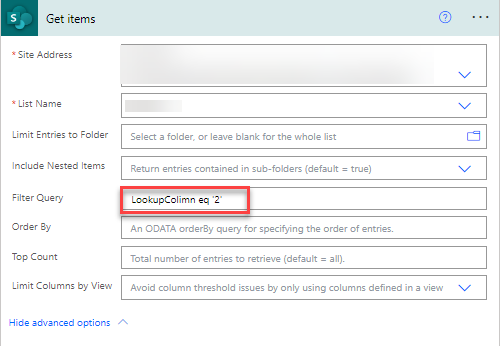
  6. Lookup Column: Begin by including the internal name of the Lookup column, followed by “equals (eq),” to specify the lookup ID.Lookup Column
    Column Type Available operator(s) | Functions Usage Example
    Lookup eq [equals]

    ne [not equals]

    Lookup eq ‘Lookup ID’

    Lookup ne ‘Lookup ID’

    Lookup eq ‘123’

    Lookup ne ‘123’

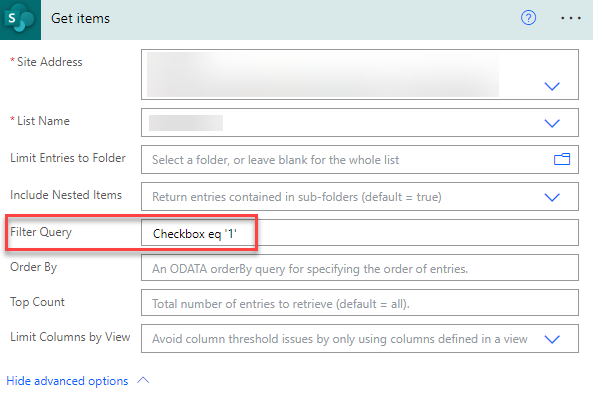
  7. Checkbox: Yes/No Checkbox: Input the internal name of the checkbox, followed by “equals (eq),” and add either ‘0’ or ‘1’.
    ‘0’ corresponds to “No.”
    ‘1’ corresponds to “Yes.”Checkbox

    Column Type Available operator(s) | Functions Usage Example
    Yes eq [equals]

    ne [not equals]

    Checkbox eq 1

    Checkbox ne 1

    Checkbox eq 1

    Checkbox ne 1

    No eq [equals]

    ne [not equals]

    Checkbox eq 0

    Checkbox ne 0

    Checkbox eq 0

    Checkbox ne 0

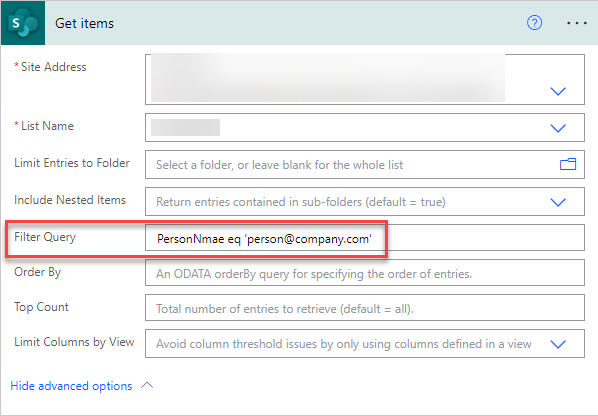
  8. Person or Group: Input the internal name of the person or group, followed by “equals (eq).” Add either the email address or the first name and last name of the person.Person or Group
    Column Type Available operator(s) | Functions Usage Example
    Person or Group eq [equals]

    ne [not equals]

    Person/EMail eq ’email address’

    Person/Title eq ‘user name’

    Person/EMail ne ’email address’

    Person/Title ne ‘user name’ ‘user name’

    Person/EMail eq ‘person@company.com’ 

    Person/Title ne ‘Firstname Lastname’

In conclusion, Power Automate Filter Query emerges as a crucial tool for refining data workflows. By mastering its syntax and leveraging its capabilities, users can efficiently filter and process data, ensuring relevance and accuracy.

This feature enables dynamic automation, allowing for tailored and precise data handling. Embracing Power Automate Filter Query empowers users to optimize workflows, enhancing overall efficiency in their automation endeavours.

Building Powerful Applications: A Guide to Creating Custom Connectors in Power Apps

Microsoft Power Apps has emerged as a significant change in the realm of app development, offering a versatile platform to create powerful applications. One key feature that takes the capabilities of PowerApps to the next level is the ability to create custom connectors. In this blog post, we will guide you through the process of creating a custom connector in PowerApps, allowing you to seamlessly integrate your apps with various data sources and unlock the full potential of this remarkable platform.

Understanding the Power of Custom Connectors in PowerApps 

PowerApps, at its core, empowers users to build applications with minimal coding. However, true magic happens when you leverage custom connectors. These connectors act as bridges, enabling your apps to connect with external data sources, services, and APIs. By creating a custom connector, you open the door to a world of possibilities, extending the functionality of your apps and ensuring they meet the unique requirements of your business or project. 

What is a PowerApps Custom Connector? 

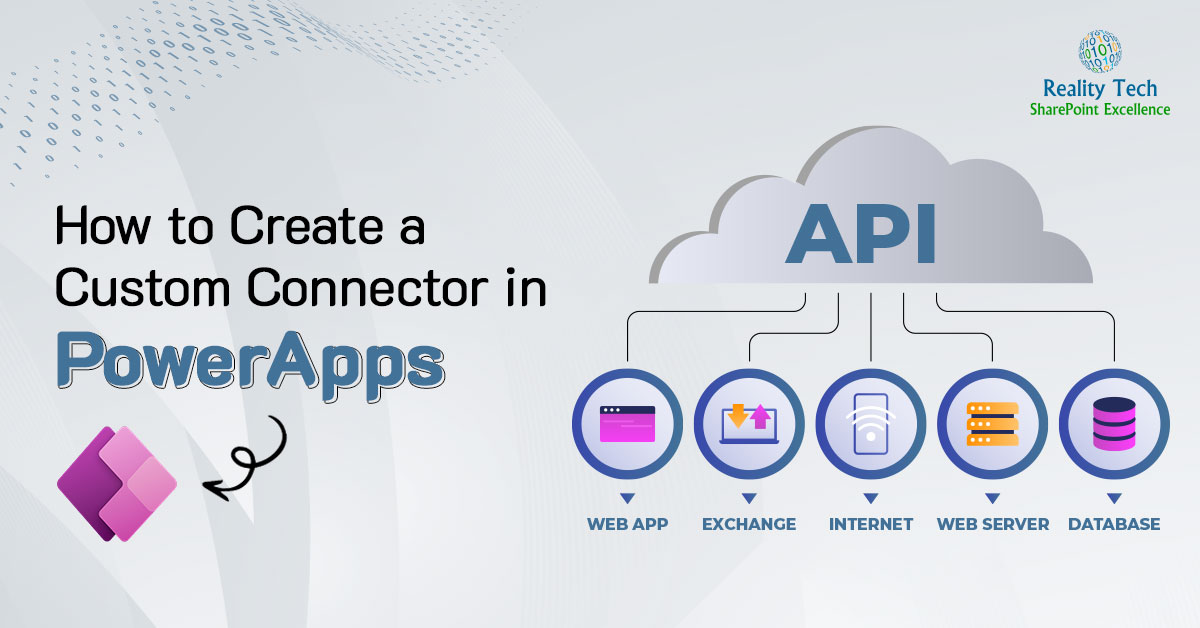
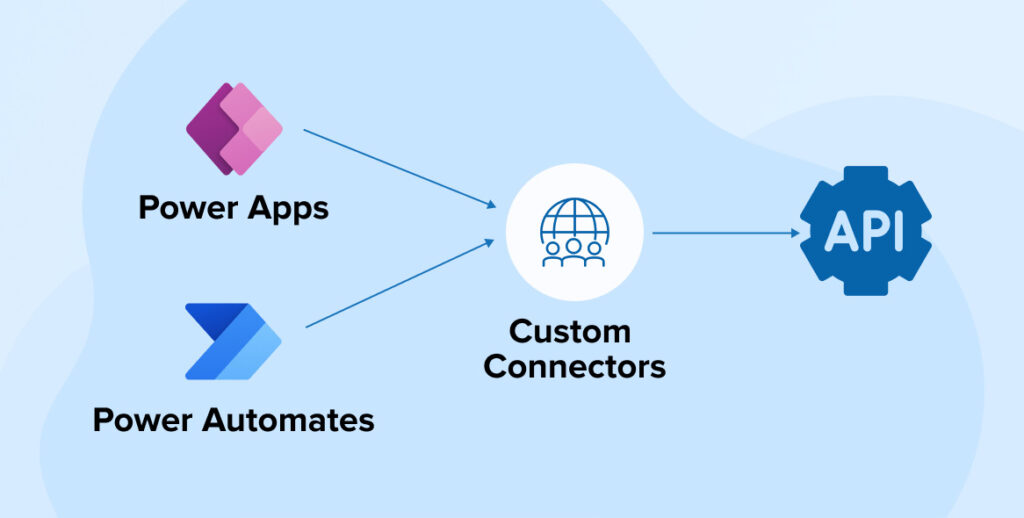
A PowerApps Custom Connector serves as a conduit for integrating your custom APIs with Microsoft Power AppsMicrosoft Power Automate, and Azure Logic Apps. It acts as a wrapper around an API, facilitating communication between different systems. 

Think of a Custom Connector as a vital link that bridges the gap between PowerApps and external services, such as APIs or various data sources. Its primary function is to enable seamless access, retrieval, and manipulation of data. By functioning as this intermediary, Custom Connectors significantly enhance the capabilities of your apps, allowing them to interact with external services effortlessly. 

Image

Creating a New Custom Connector:

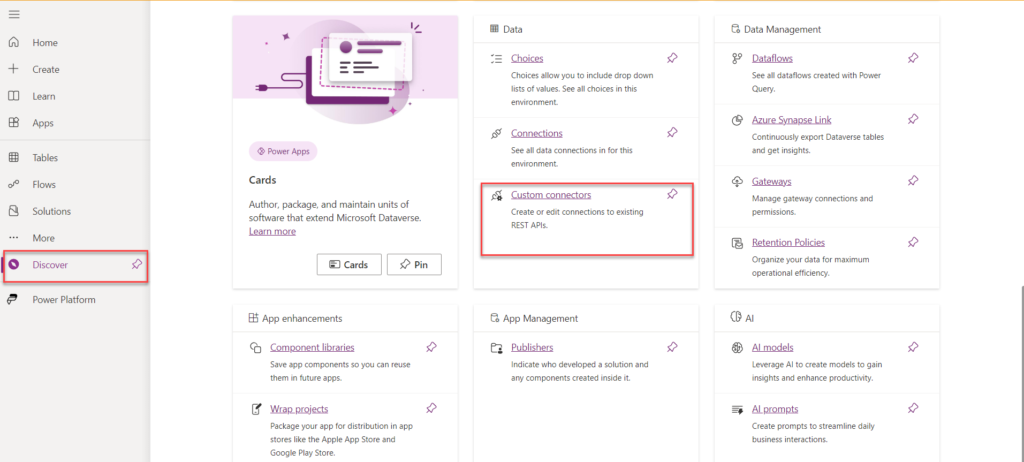
Step 1: Sign into Power Apps 

Step 2: Select Custom connectors” in the Navigation pane on the left. 

Image


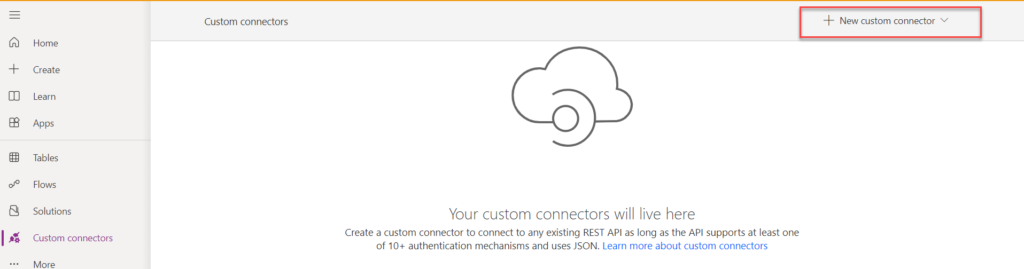
Step 3: Click on “New Custom Connector and choose “Create from blank. 

image

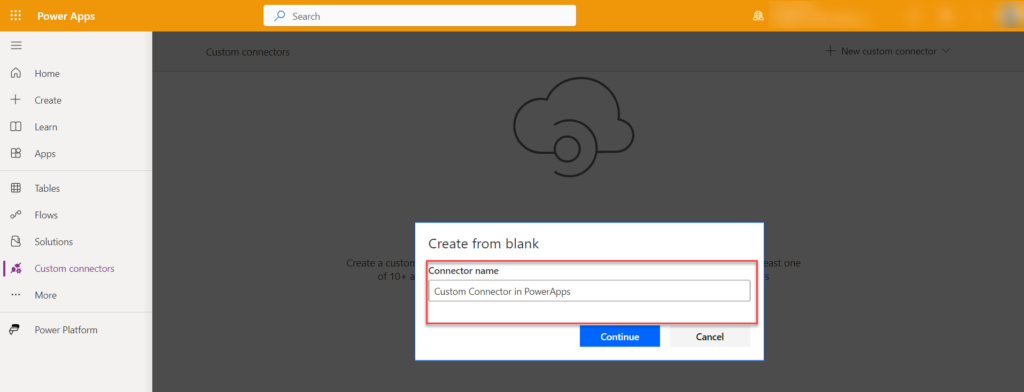
Step 4: Provide a meaningful name for your connector. 

image

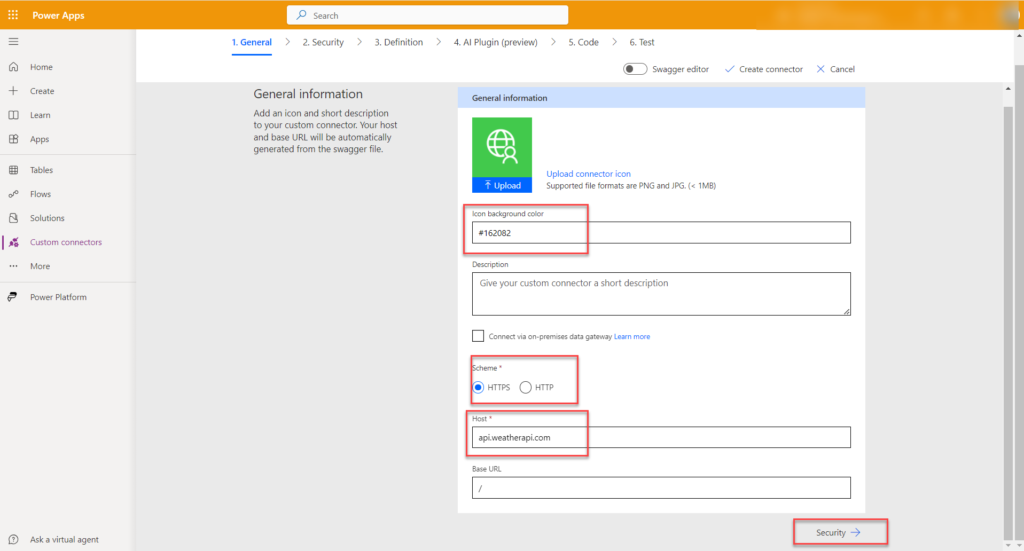
General details of the API and Power Apps Connector: 

  • In the Description field, enter a meaningful value. This description will appear in the custom connector’s details, and it can help others know if the connector could be useful to them. 
  • Schema: HTTP or HTTPS. 
  • Update Host to the address for the API URL. The connector uses the API host and the base URL to determine how to call the API.

Select on Security to continue. 

Image

Defining security sections: 

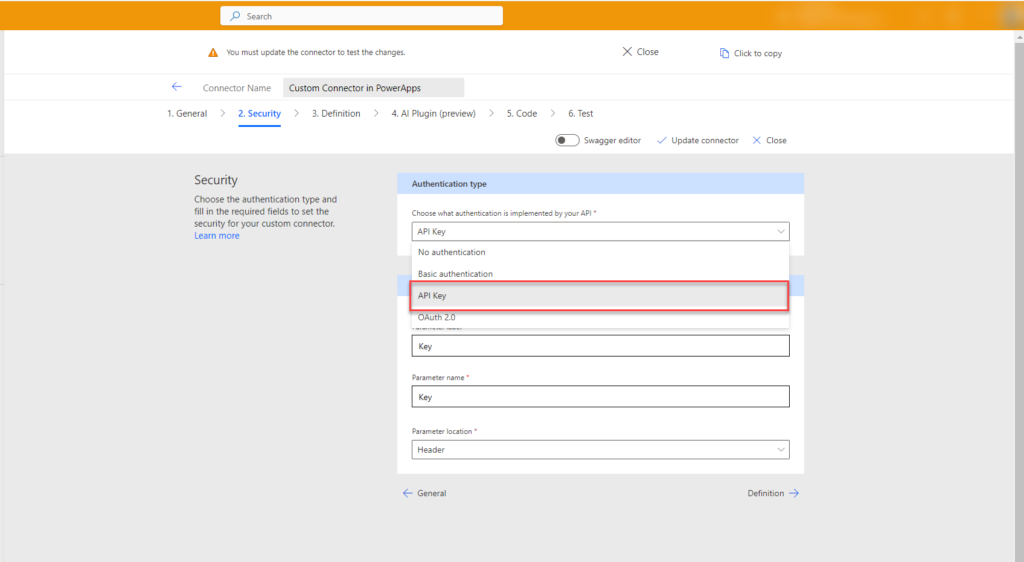
Choose authentication type On the Security tab. 

Image

Select on Definition to continue.

Custom Connector in PowerApps definition: 

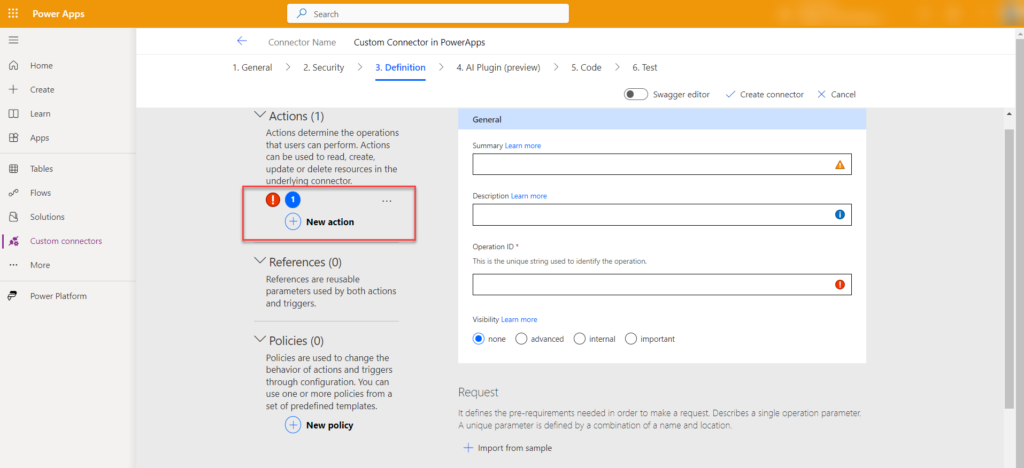
In the definition section, you can define multiple actions for your custom connector. For this blog, we will cover a single action. Click on “New action,” fill in the summary and description, and name the operation ID field for future reference. 

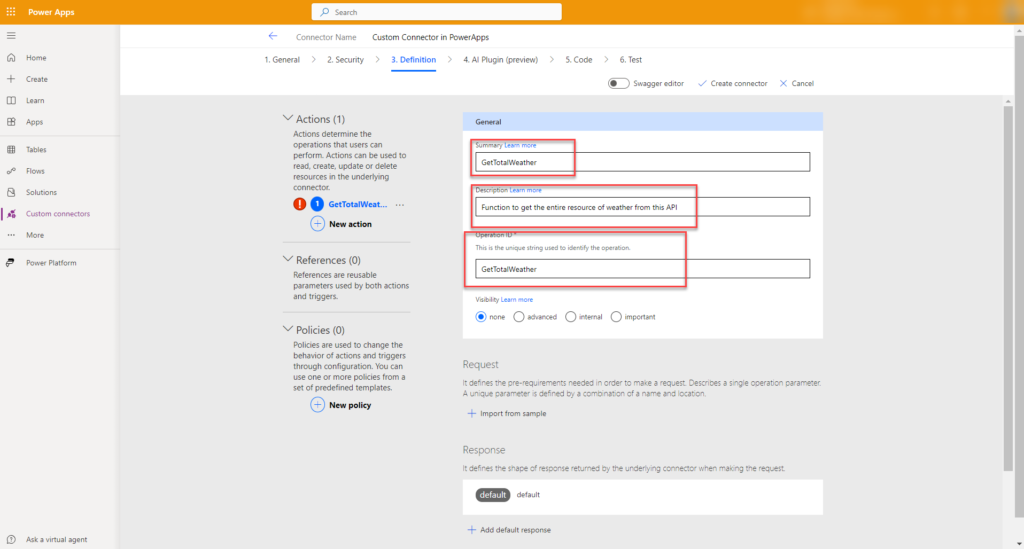
In the operation ID field, name the field which will be easy to remember and meaningful as this field will be required later in the canvas app. 

Create a New Action – Actions > Select New Action 

Image

Complete the SummaryDescription/Operation ID for the new action.

Image

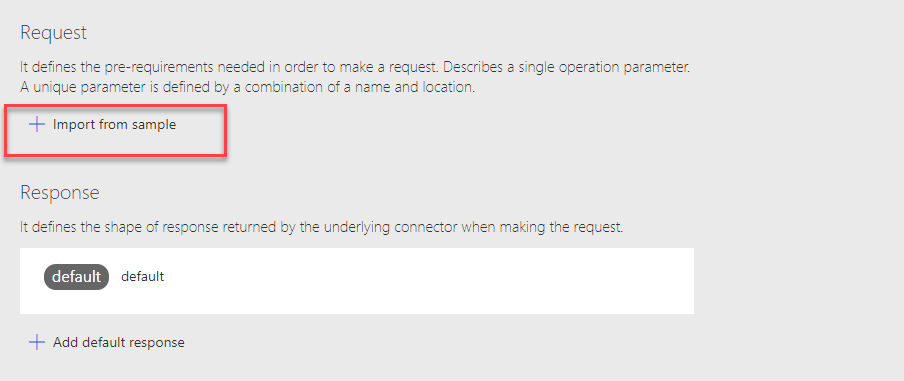
Import from sample: 

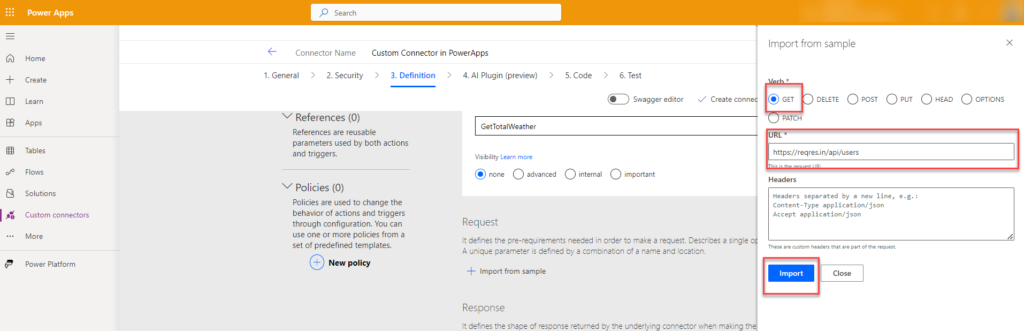
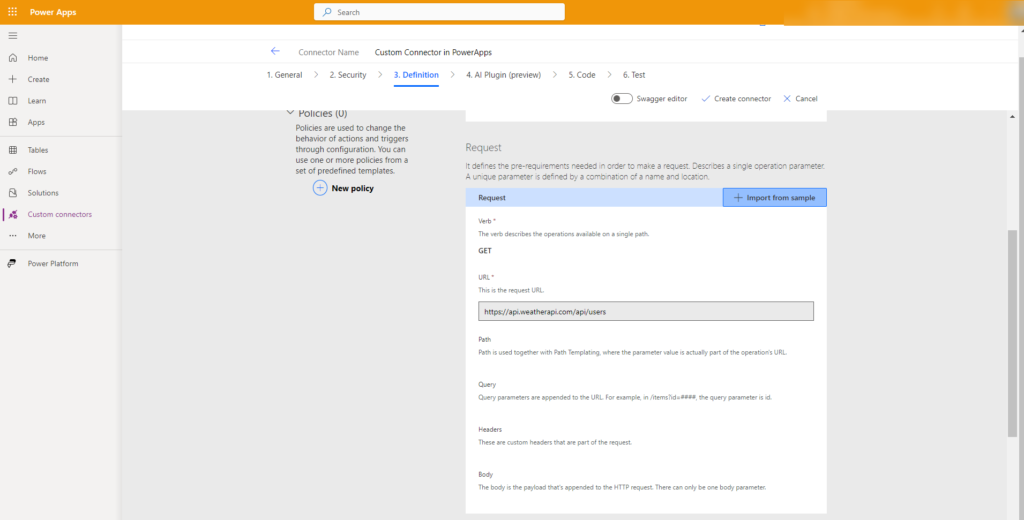
Here, we will define the requirement needed for the request. 

We will use GET as we are getting data from the API. 

In the URL, provide the endpoint which we use earlier to test by city name and click import. 

Image

Image

image

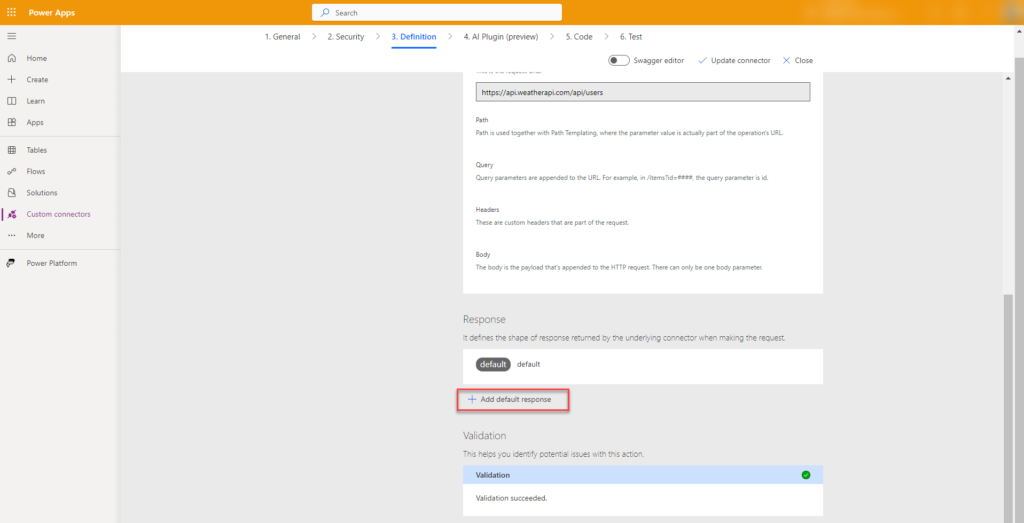
Defining a Response in our custom connector: 

Select Add default response. 

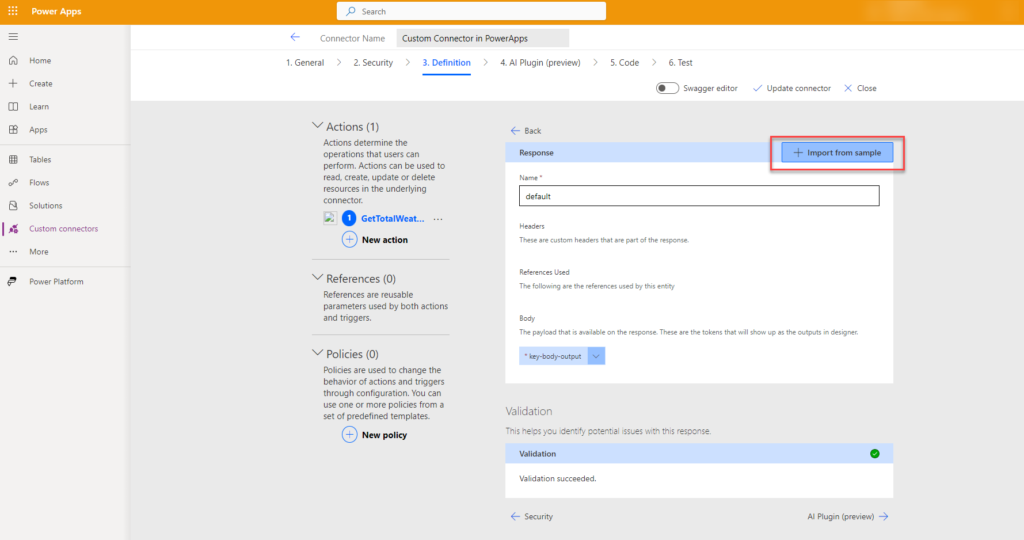
Image

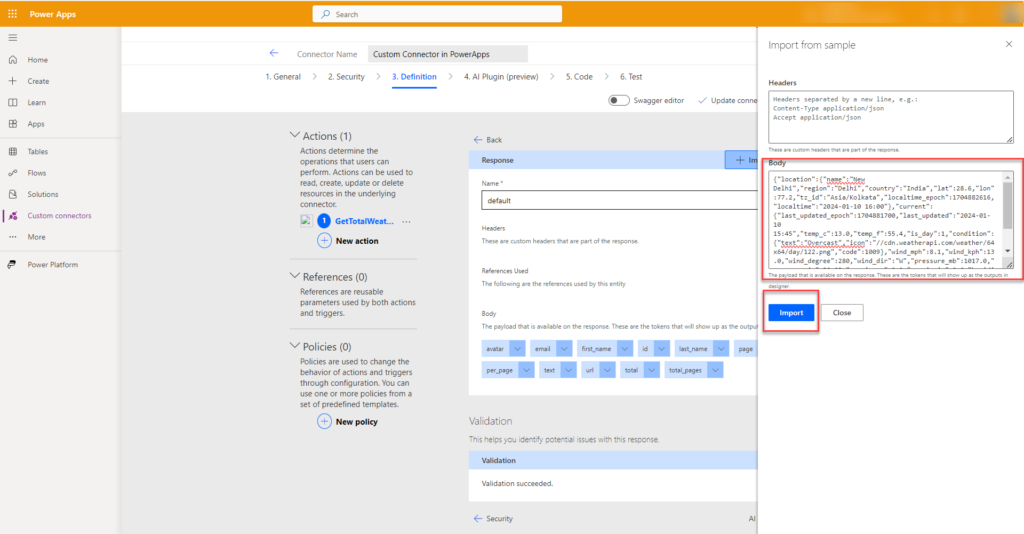
Select Import from sample

Image

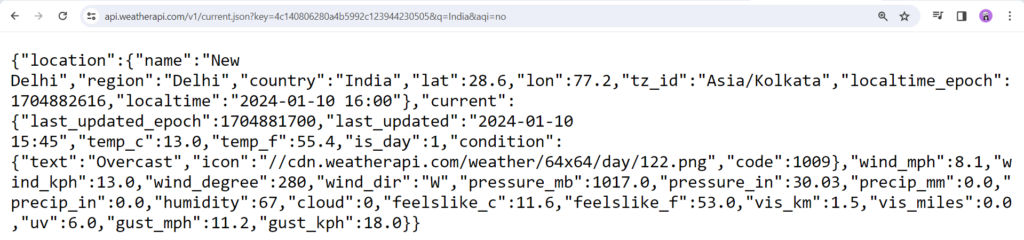
Copy a RAW JSON response from URL. 

In example case from the URL: https://api.weatherapi.com/v1/current.json?key=4c140806280a4b5992c123944230505&q=India&aqi=no 

Image

Paste Body example (as shown below): 

Then, select Import. 

Image

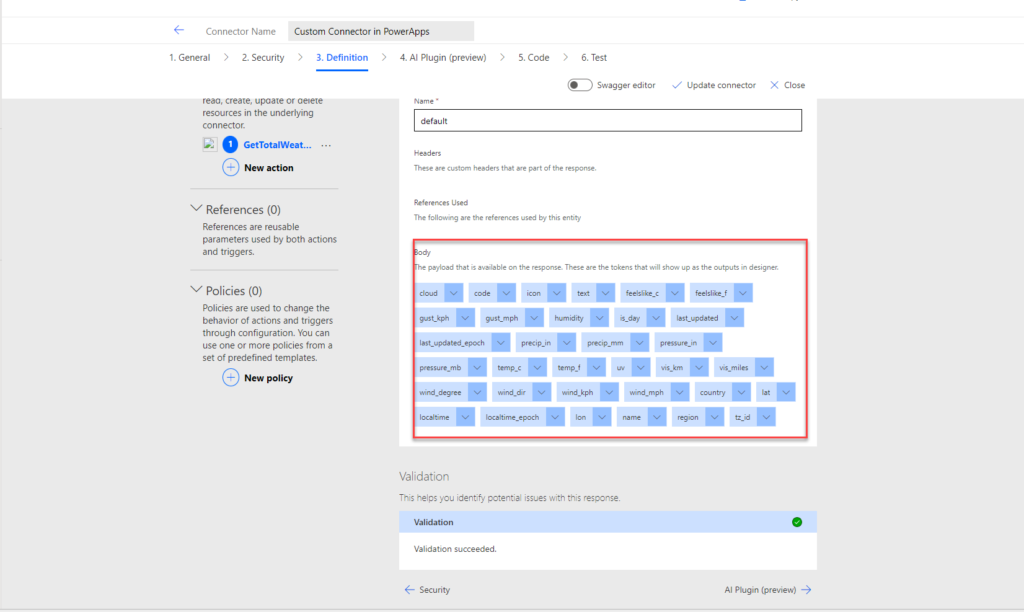
Finally, you will see the properties loaded in the response. 

Select on Code to continue. 

Image

Test the Custom Connector in PowerApps: 

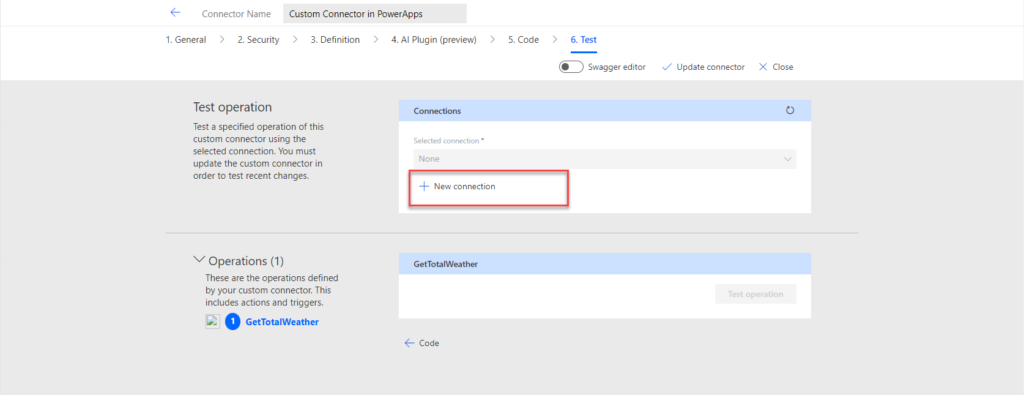
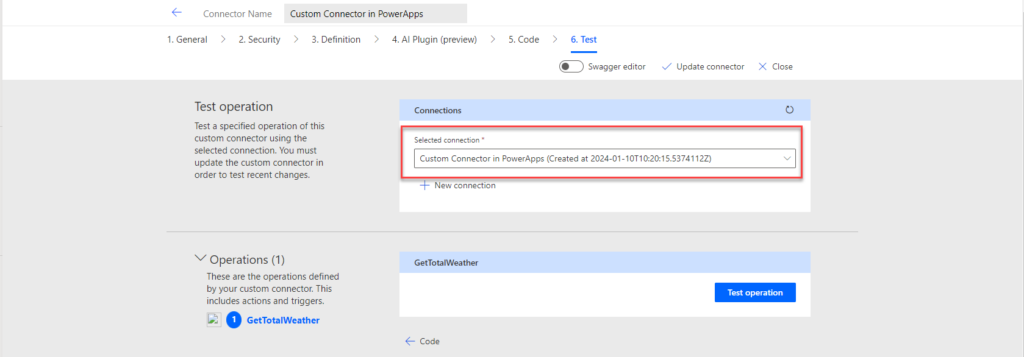
Select Test from Create a new Connection. 

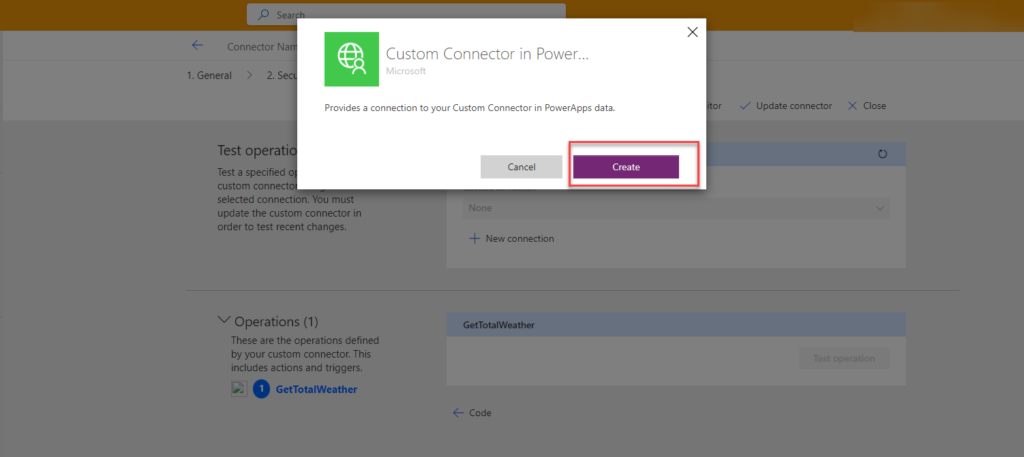
Select New Connection. 

Then, select Create. 

Image

Image

Image

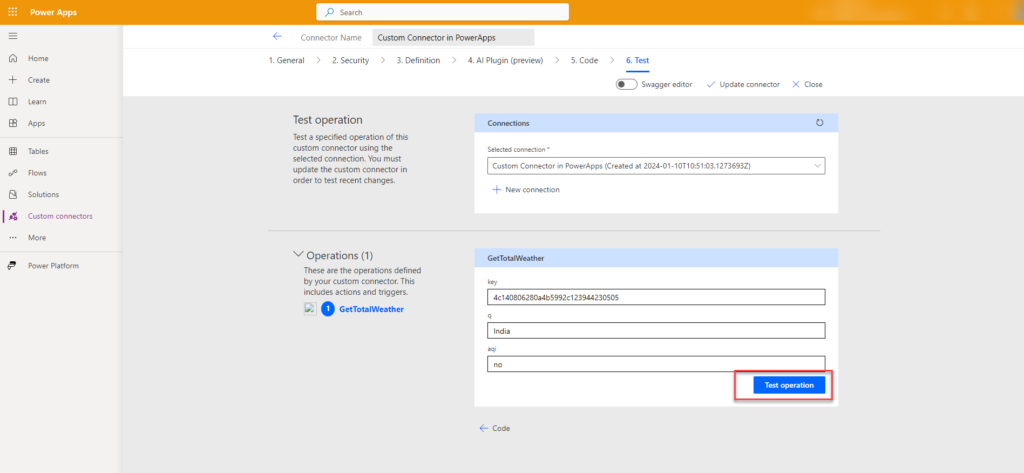
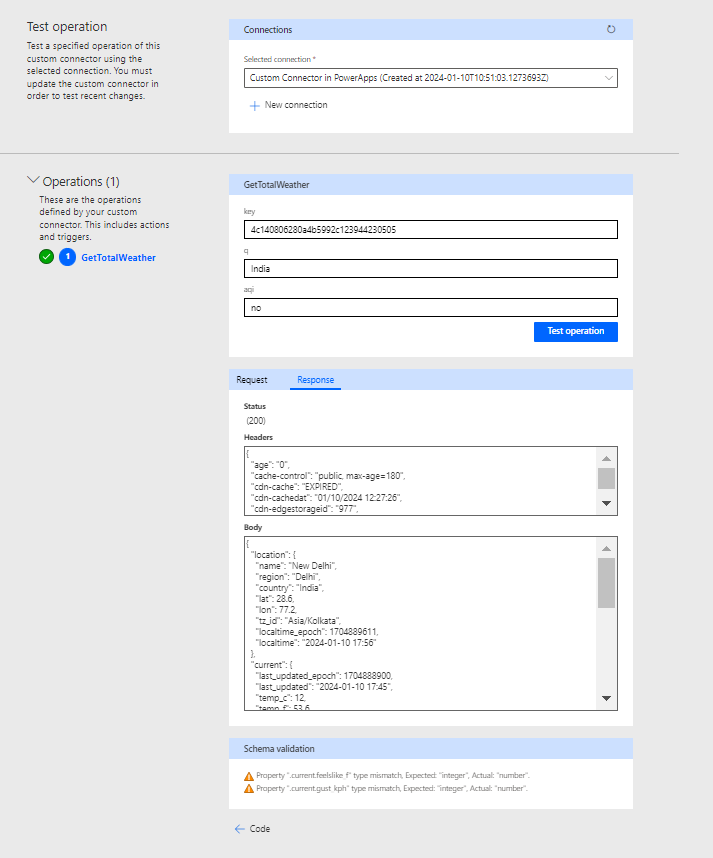
Test Operation: 

Select Test Operation. 

Image

Image

Integrating PowerApps with APIs (Custom Connector):

After creating our custom connector, we will now see how to add our custom connector to our canvas app and use it as a data source. 

Sign in to PowerApps. 

Start a new app or open an existing one. 

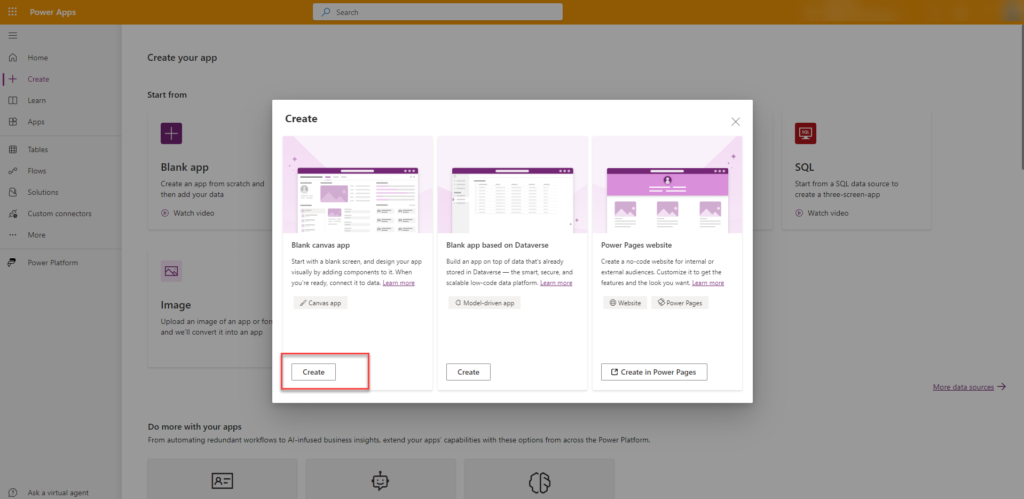
Navigate to Home > Blank app.

Image

A blank screen will be displayed. 

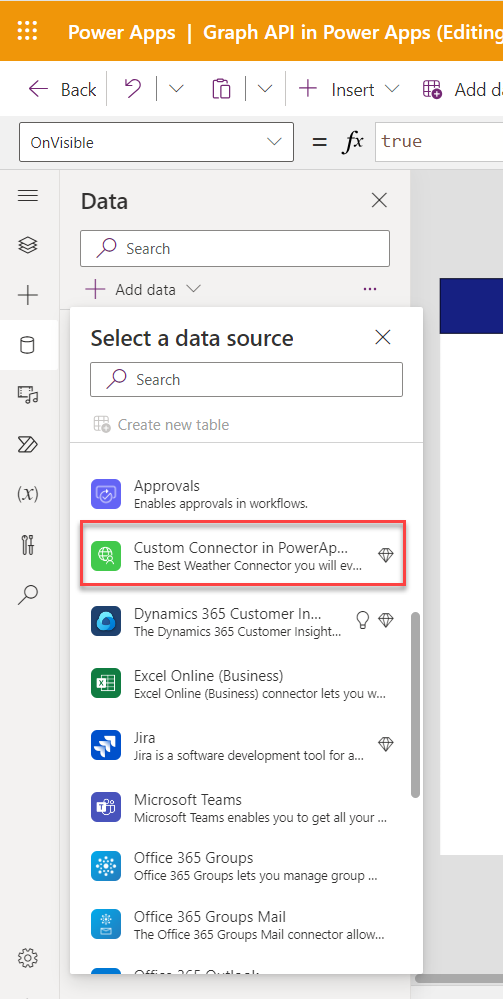
Click on the data icon and select “Add data.” 

Go to the Connectors tab or locate your custom connector in the list. 

Select the custom connector to load and establish a connection.

Image

Now, you just must use a label and see whether it is working or not. 

Use the formula given below to test it. 

The custom connector is the connector name we have given earlier, and the place is the operation ID. 

Note: use your own API Key in the app id.

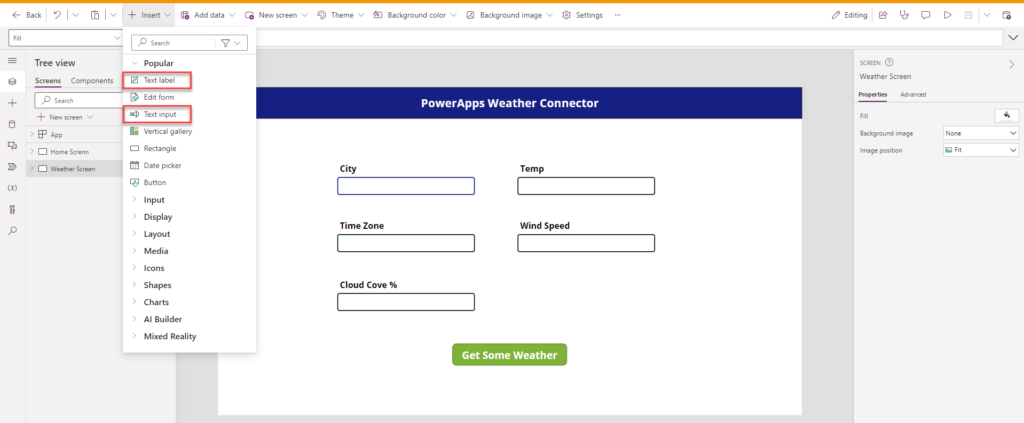
Add Text Label and Input Boxes: 

Include Text labels and Text input boxes in your app. 

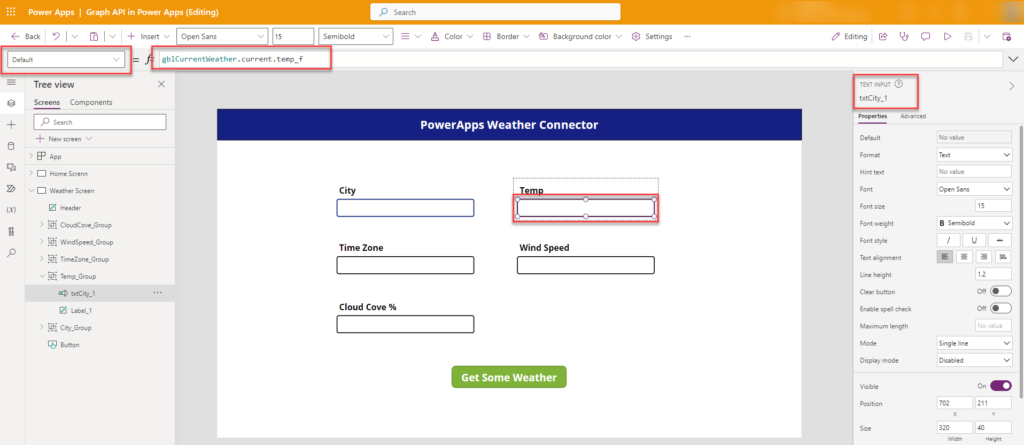
Use the formula below to display real-time data: 

For Temperature: 

Default = gblCurrentWeather.current.temp_f 

For Time Zone 

Default = gblCurrentWeather.location.localtime 

For Wind Speed 

Default = gblCurrentWeather.current.wind_kph 

For Cloud Cove 

Default = gblCurrentWeather.current.cloud 

Image

Image

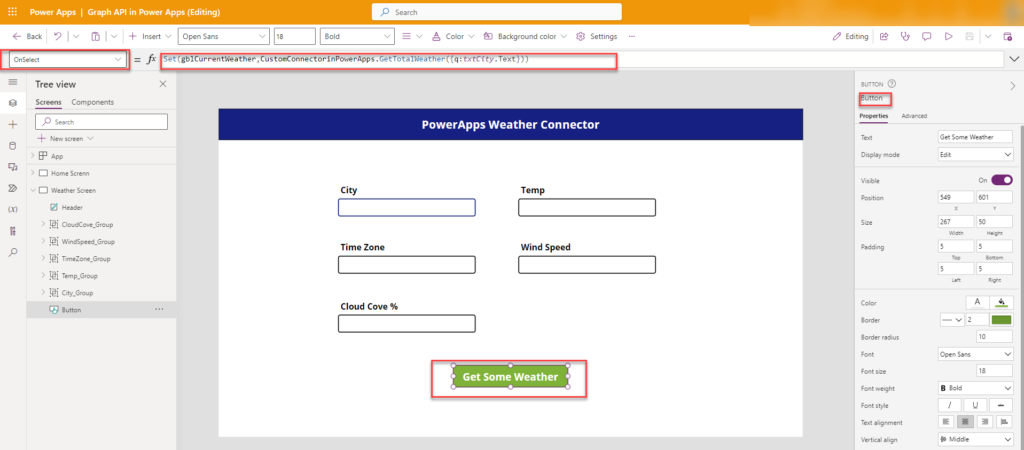
Configure Button Properties: 

Add a button to trigger data retrieval. 

Set the OnSelect property with the following code: 

OnSelect = Set(gblCurrentWeather,CustomConnectorinPowerApps.GetTotalWeather({q:txtCity.Text})) 

Image

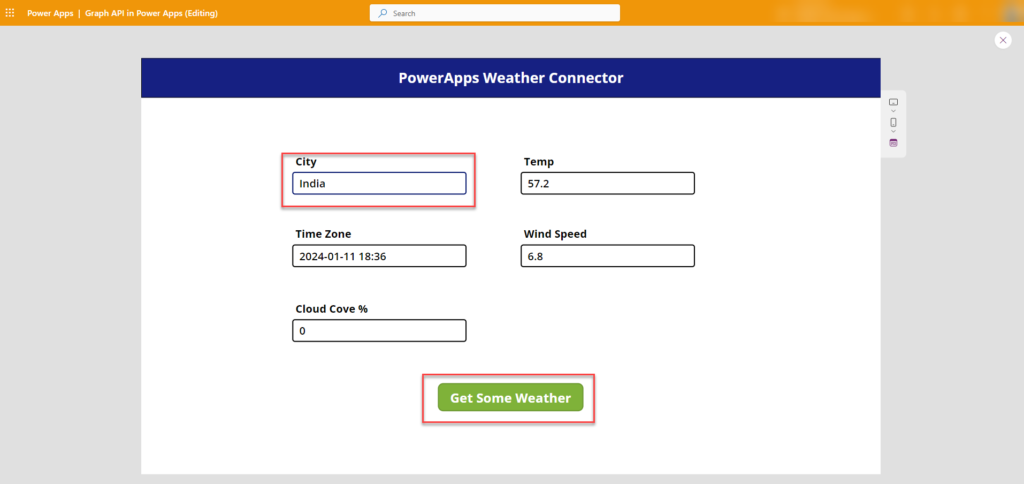
Run the PowerApps 

Execute the PowerApp. 

Input the city name and click the button to retrieve and display the values.

Image

Conclusion: 

Custom connectors in Power Apps open doors to API integration beyond standard connectors. This guide walked you through creating custom connectors, empowering you to tailor solutions for unique needs. Whether building apps or automating workflows, custom connectors enhance connectivity. If you have questions or feedback, share them in the comments. Best of luck in your Power Apps journey! 

Create a Responsive Container-based Popup Dialog Box in Power Apps

Creating a responsive container-based popup dialog box in Power Apps involves designing a dynamic and adaptable dialog box that adjusts its size and layout based on the content and screen size. This approach typically utilizes container controls to organize and structure the dialog box elements. Containers offer flexibility in terms of layout and control placement compared to traditional popup forms.

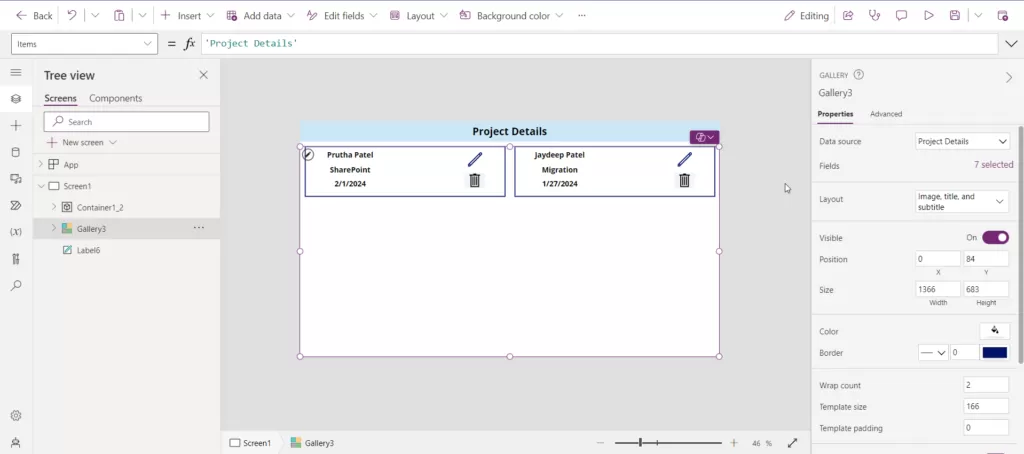
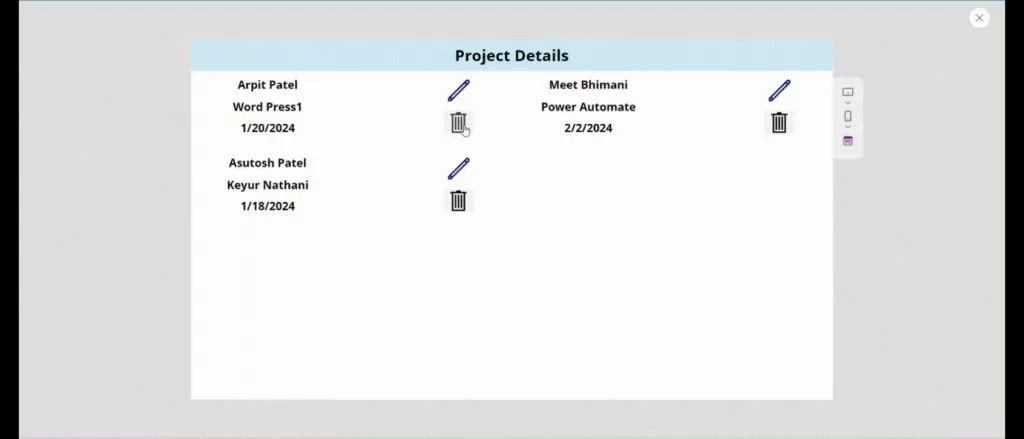
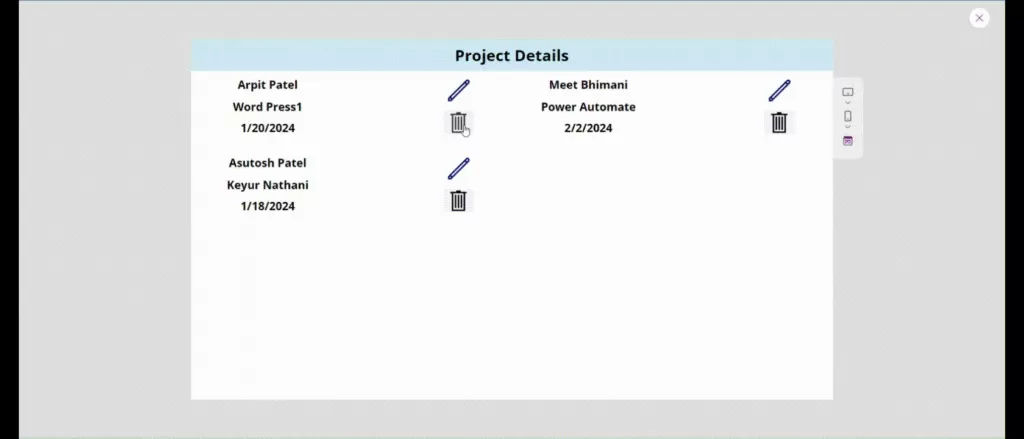
Step 1: Add a new screen in PowerApps and include a vertical gallery connected to your data source. In the screenshot below, display the data with three columns: ‘Project Name,’ ‘Assigned to,’ and ‘Submitting Date.’ Add the edit and delete icon in the gallery1

img

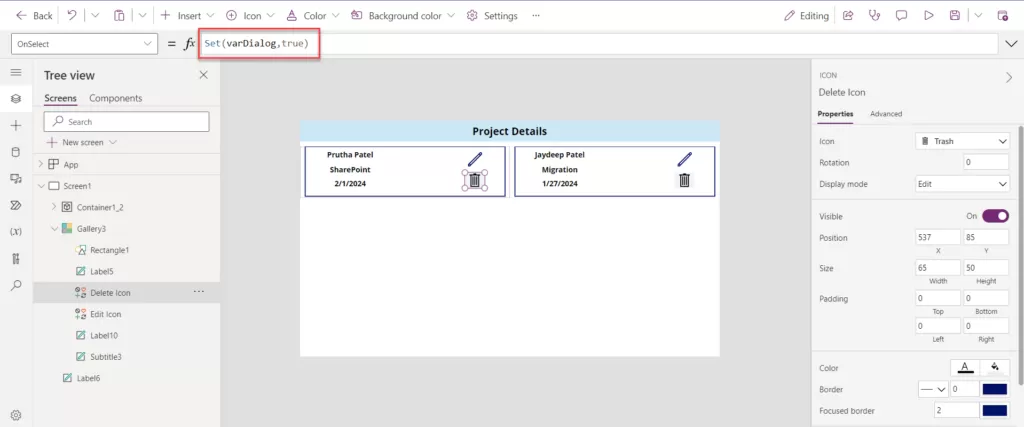
Step 2: Add the Delete and Edit Icon. Add the formula below to the OnSelect property of the Delete icon 

img

Set(varDialog,true)

img

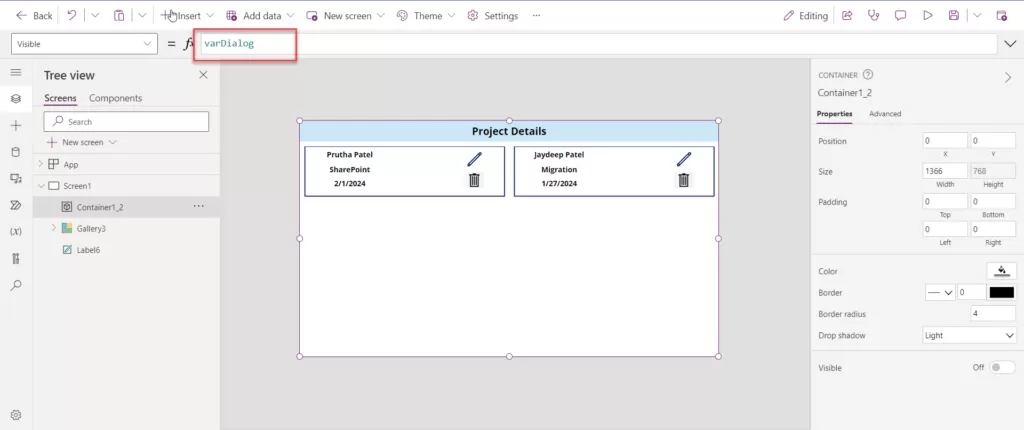
Step 3: Click on Screen1 and insert the Vertical container. Add the variable to the Visible property of the Vertical container. Set the Vertical container’s height and width according to the parent size.

img

Step 4: Click on Container4 and add a new vertical container. Adjust the height and width according to the screen, then on the right side Justify (vertically) and align (horizontally) it in the centre.

jm

Step 5: Click on Container 5 and add the Cancel icon and Text label. Click on the Cancel button, select the OnSelect property, and enter the formula below. Then, add the text to the Text label. 

ghfc

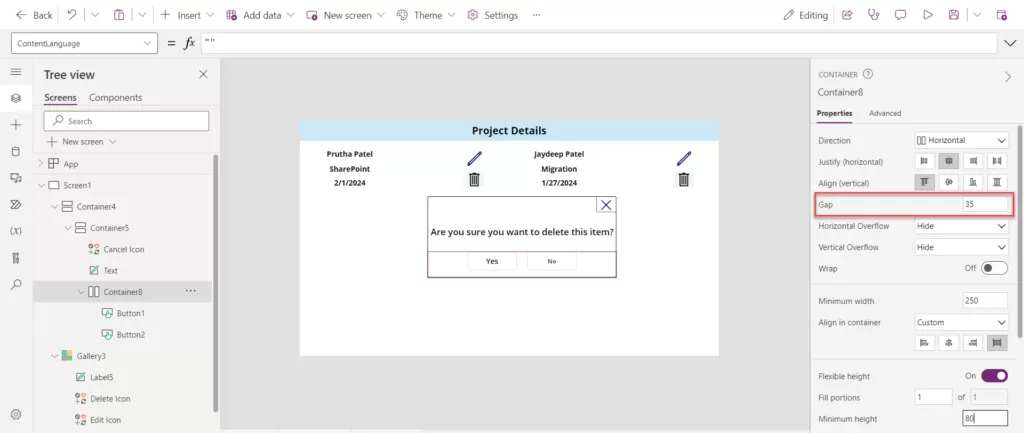
Step 6: Next, click on Container5 and add a horizontal container. Add the 2 buttons in the horizontal container, set their positions to center horizontally, and add a gap between the two buttons.

 
seg fgnf

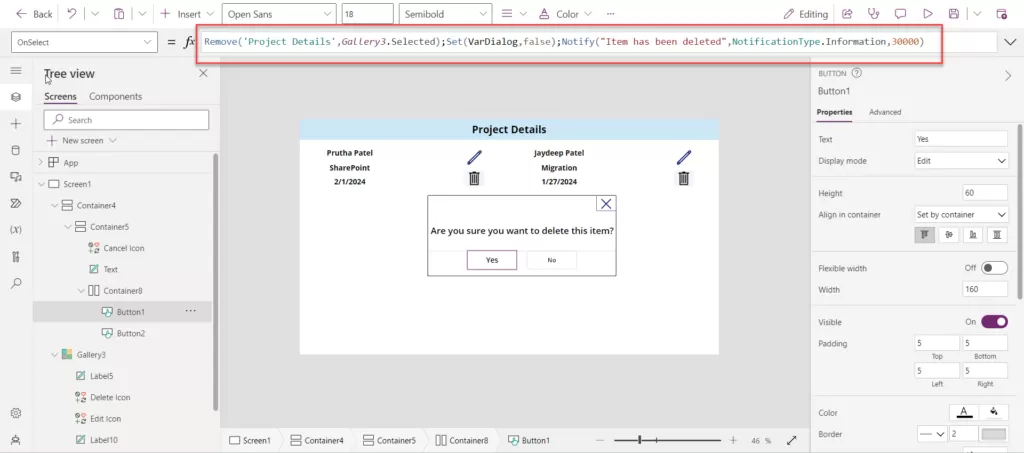
Step 7: Add the following formula to the OnSelect property of the button “Yes” and “No” buttons respectively. 

On the Yes button add the below formula: 

Remove('Project Details',Gallery3.Selected);Set(VarDialog,false);Notify("Item has been deleted",NotificationType.Information,30000)

Project details replace with your data list.

On the No button add the below formula:

Set(VarDialog,false)
 htrnh Step 8: Click on the delete button to display the popup. If you wish to delete the item, click the ‘Yes’ button, and a notification will appear saying ‘Item has been deleted. 

Step 8: Click on the delete button to display the popup. If you wish to delete the item, click the ‘Yes’ button, and a notification will appear saying ‘Item has been deleted. 

img

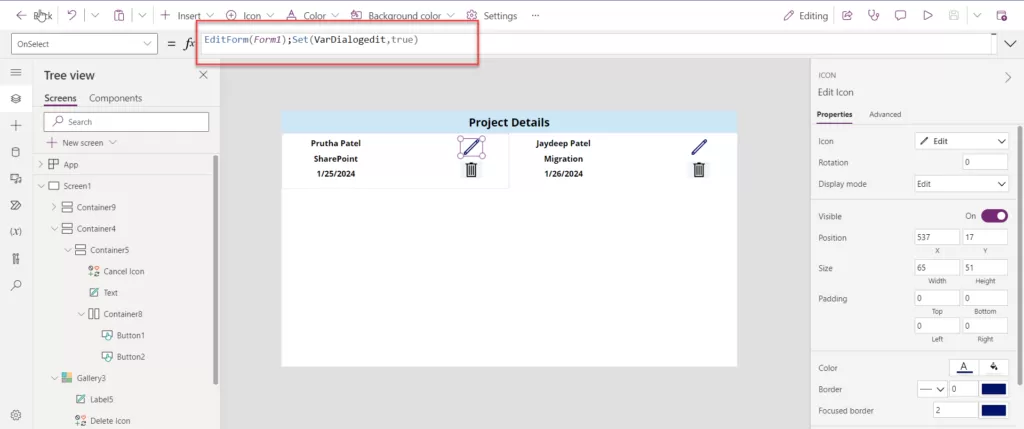
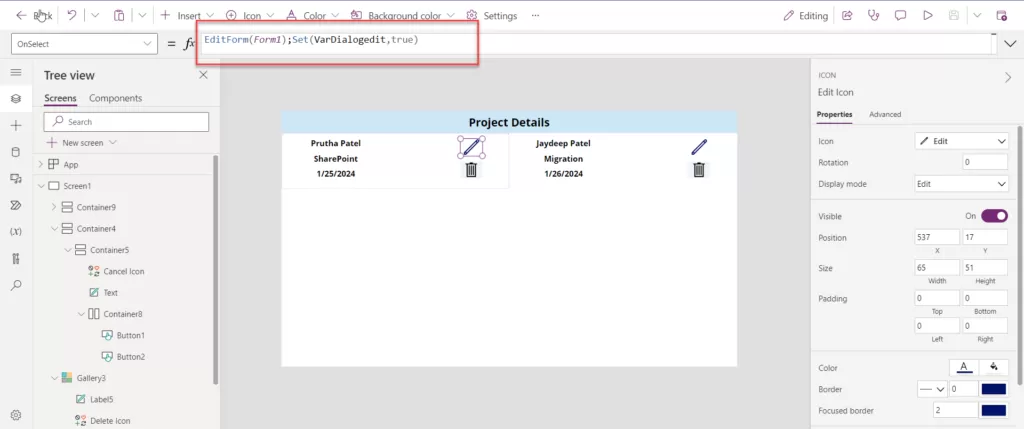
Step 9: Click on the Edit button, create a new variable, and add the formula on Onselect property.

EditForm(Form1);Set(VarDialogedit,true)
 dsv

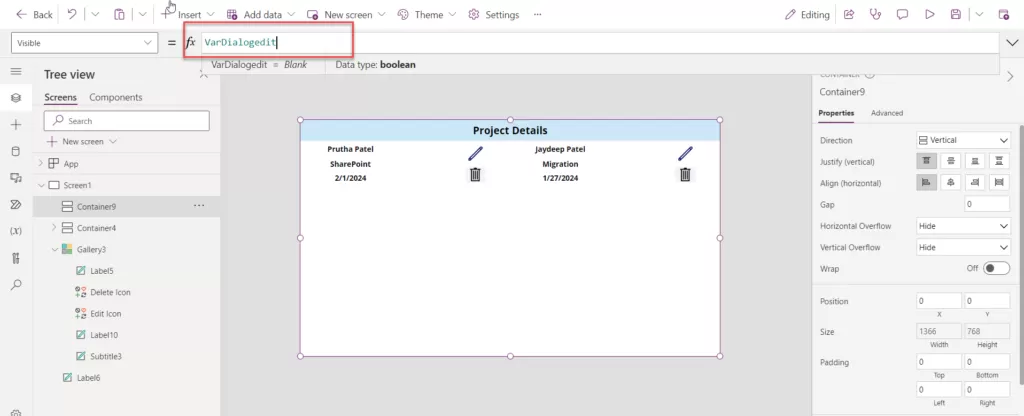
Step 10: Click on Screen1 and add a new vertical container. Set the height and width according to the parent size. Also, set the variable in the Visible property of the vertical container. 

VarDialogedit

 fb

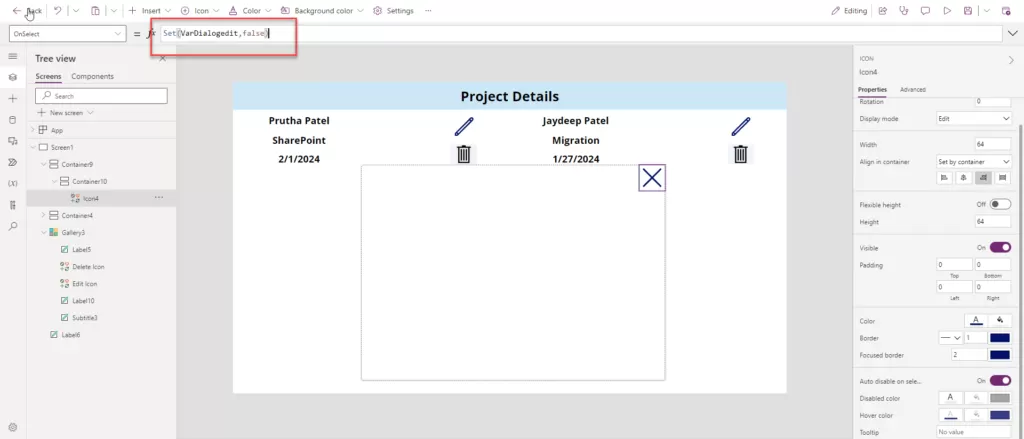
Step 11: Click on the Container and insert a new vertical container. Adjust the justification (vertical) and alignment (horizontal) to centre. Click on Container10, add the cancel icon, select the OnSelect property, and enter the formula below.

Set(VarDialogedit,false)

igg

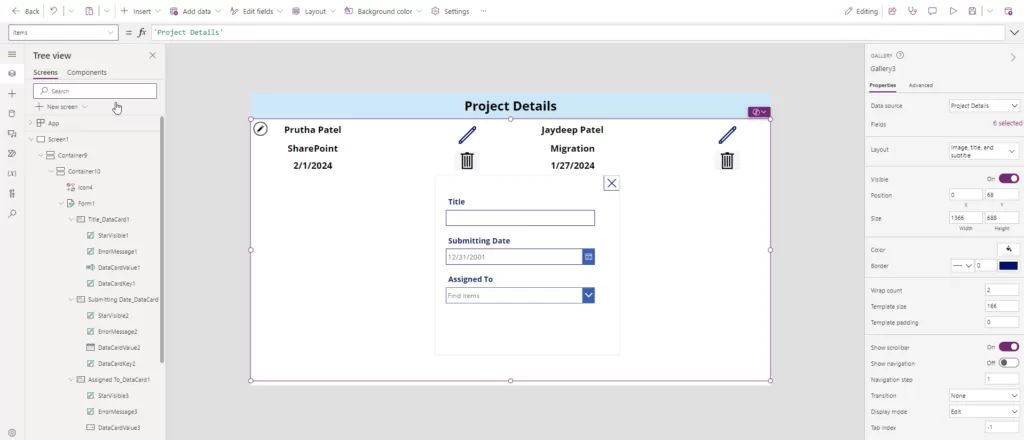
Step 12: Click on Container 10 and add the Edit form, connecting the data with the data list. 

img

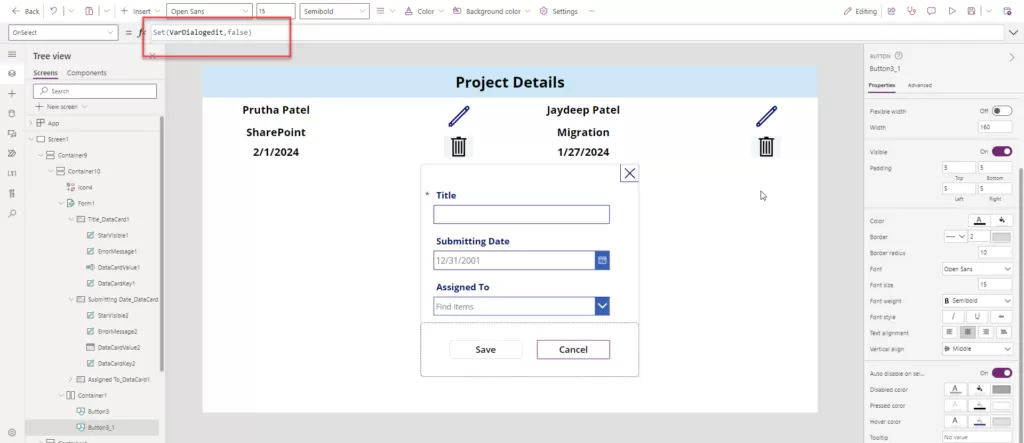
Step 13: Click on Container10 and add a horizontal container. Include two new buttons and adjust their sizes according to the form size. Write the formula below for the Cancel button. 

Set(VarDialogedit,false) 
cvf

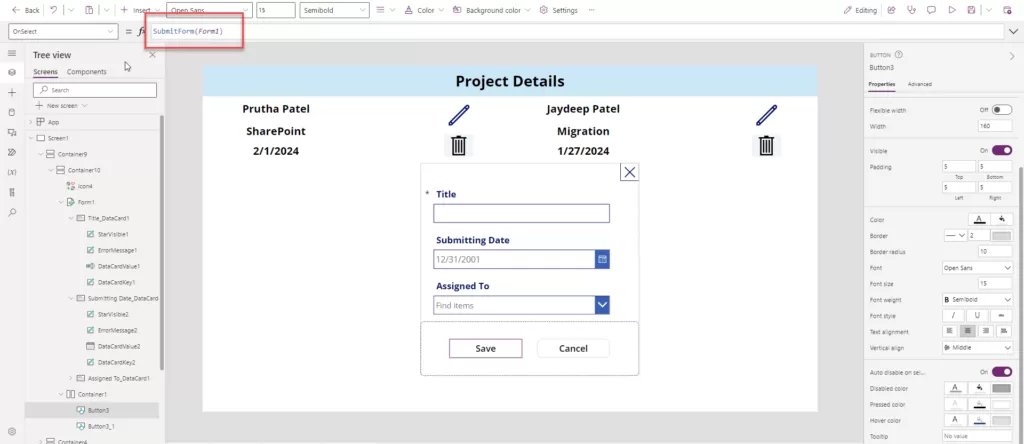
Step 14: Click on the OnSelect property of the Save button and add the formula. 

SubmitForm(Form1)


gm

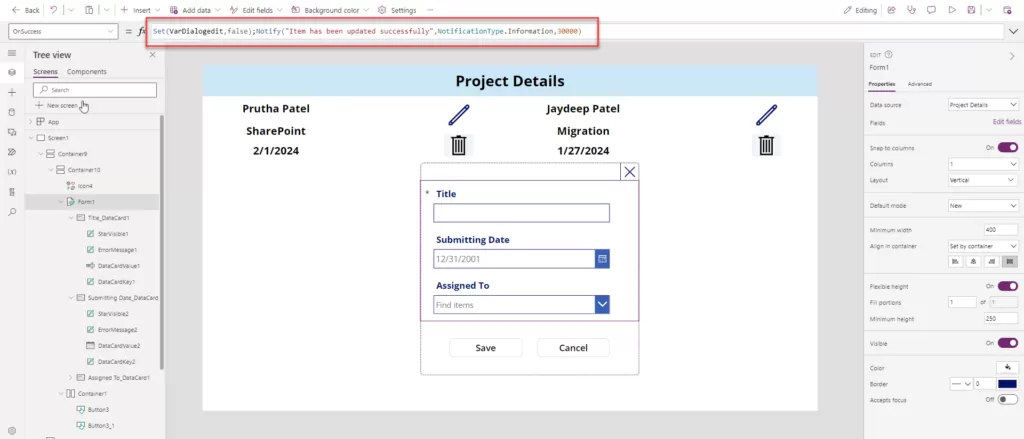
Step 15: Click on Form1, select the OnSuccess property, and write the formula. When the user edits any column and clicks the Save button, display a notification for 3 seconds indicating that the item has been updated successfully.
Set(VarDialogedit,false);Notify("Item has been updated 


fxdbd

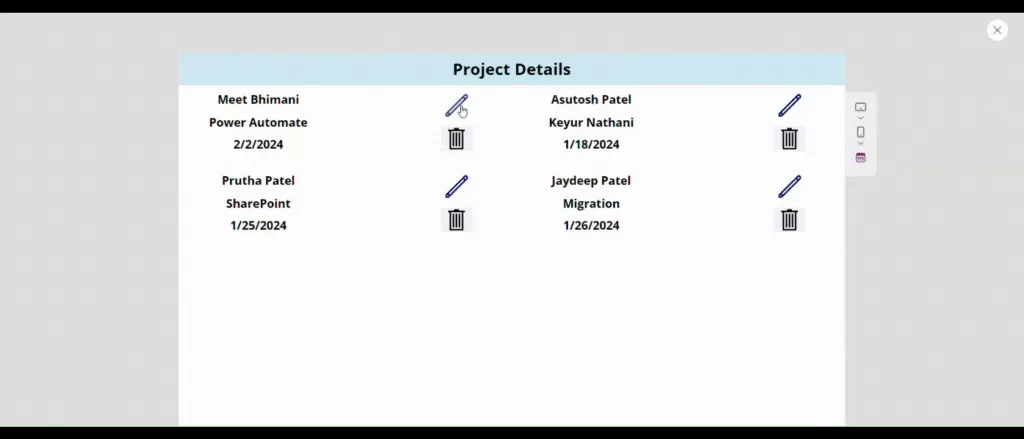
Step 16: Click on the edit button to modify details according to requirements. After making the necessary changes, click on the save button to update the column values.
db
In conclusion, creating a responsive container-based popup dialog box in Power Apps involves designing a dynamic and adaptable dialog box that adjusts its size and layout based on the content and screen size. By utilizing container controls like the Group control, developers can organize and structure the dialog box elements effectively. Key considerations include ensuring responsive design, accommodating dynamic content, implementing show/hide logic, optional use of animations for enhanced user experience, and handling user input if required. This approach allows for a user-friendly experience across various devices and screen sizes in Power Apps.

Microsoft 365 Records Management An In-Depth Guide for Comprehensive Control

A records management system, also known as records and information management, is a solution for organizations to manage regulatory, legal, and business-critical records. Records management for Microsoft Purview helps you achieve your organization’s legal obligations, provides the ability to demonstrate compliance with regulations, and increases efficiency with regular disposition of items that are no longer required to be retained, no longer of value, or no longer required for business purposes.

Understanding Retention Policies and Labels in Microsoft 365

In the world of Microsoft 365, retention policies and labels are more than just mechanisms; they are the guardians of crucial data, ensuring its retention and compliance. These elements, nestled within the Microsoft Compliance Center, serve a paramount role in governing critical information.

Retention Policies and Labels: Guardians of Data 

Retention policies and labels act as a safety net, preventing the irreversible deletion of vital Microsoft 365 data. This encompasses a spectrum of information: from precious Outlook emails and SharePoint documents to the trove of conversations held within Teams messages.

Their significance lies not only in preserving this data but also in enabling organizations to: 

  • Proactively comply with industry regulations and internal policies, mandating the retention of data for stipulated durations. 
  • Mitigate the risks associated with litigation or security breaches by responsibly disposing of outdated content. 
  • Foster an environment of efficient knowledge sharing, ensuring that users engage with pertinent, current information. 

The versatility of retention settings within Microsoft 365 caters to various scenarios, including:

  • Retain-only: Preserving content indefinitely or for a specified period. 
  • Delete-only: Permanently erasing content after a designated timeframe. 
  • Retain and then delete: Maintaining content for a specified period before permanent deletion.

Navigating Retention Settings and Content Interaction

The mechanics of retention settings are designed to safeguard content seamlessly within its original space, irrespective of potential edits or deletions. This mechanism orchestrates an automatic retention of content copies, strategically stored across different platforms:

SharePoint and OneDrive: Copies reside in the Preservation Hold library, ensuring the sanctity of data within these repositories. 

Exchange Mailboxes: Content copies find refuge in the Recoverable Items folder, shielding valuable communication archives. 

Teams and Yammer Messages: Safeguarded within the clandestine confines of the Substrate Holds folder, nestled within the Exchange Recoverable Items folder, lies copies of these conversations. 

Revealing details: Retention Policy vs. Retention Label

Delving deeper into Microsoft 365’s retention strategies reveals two key approaches: retention policies and retention labels. These methods serve distinct functions yet coalesce to fortify data management.

Retention Policies: Container-Level Governance

Retention policies operate at a container level, affording administrators the capability to uniformly assign retention settings across entire sites or mailboxes. They offer a sweeping approach to managing data, ensuring blanket compliance within defined spaces.

Retention Labels: Granular Control at Item Level 

In contrast, retention labels allow administrators to finely calibrate retention settings at an item level, affording granular control. This method excels when nuanced retention needs arise, such as when specific emails necessitate varying retention periods within a single mailbox.

Retention labels offer a portability advantage: they travel with the content across different locations within the Microsoft 365 tenant. In contrast, retention policies are tethered to specific content containers, limiting their purview.

Moreover, retention labels boast distinct capabilities that elevate their functionality beyond retention policies:

  • Initiating the Retention Period: Commencing retention from labeling or event-based triggers, in addition to content age or last modification. 
  • Utilizing Trainable Classifiers: Identifying content for labeling purposes, enhancing precision in retention application. 
  • Default Label Application for SharePoint Documents: Simplifying labeling processes for efficiency. 
  • Disposition Review Support: Allowing scrutiny of content before permanent deletion. 
  • Record Marking: Providing irrefutable proof of disposition upon content deletion at the retention period’s culmination. 

What are the rules of Microsoft 365 retention?

Content can be subject to multiple retention policies and be classified with a retention label. Therefore, Microsoft has defined retention principles to determine what happens to that content. 

gbf

Retention wins over deletion example 

An item is subject to two retention policies 

  • Retention policy 1 deletes content after 1 year. 
  • Retention policy 2 retains content for 2 years. 

In this scenario, the retention rule for policy 2 is the longest so the retention period is 2 years. When the retention period expires content is deleted as per policy 1.

Longest retention wins example 

An item is subject to two retention policies and a retention label 

  • Retention policy 1 retains content for 1 year. 
  • Retention policy 2 retains content for 10 years. 
  • Retention label retains the item for 2 years. 

In this scenario, retention policy 2 has the longest retention so the retention period is 10 years.

Explicit wins over implicit for deletions example 

An item is subject to 

  • Retention policy 1 deletes content after 1 year 
  • Retention label deletes the item after 3 years. 

In this scenario, because a retention label is explicitly applied, the label rules apply. The item is deleted after 3 years.

Shortest deletion wins example 

An item is subject to two retention policies, 

  • Retention policy 1 deletes content after 1 year 
  • Retention policy 2 deletes content after 2 years. 

In this scenario, the shortest deletion period wins, so the item is deleted after 1 year. 

How to Create and Apply Microsoft 365 Retention Labels

When it comes to managing data effectively within Microsoft 365, retention labels play a pivotal role. These labels aid in categorizing and retaining data as per an organization’s policies, ensuring compliance and data governance. Here’s a detailed guide on how to create and apply Microsoft 365 retention labels seamlessly.

Note: To create and configure retention labels, one needs to be a global administrator or a compliance administrator. 

Understanding Retention Labels 

Retention labels are critical for defining how long content needs to be retained, when the retention starts, and what happens at the retention’s conclusion. To create a retention label: 

Step 1: Navigate to the Microsoft 365 Compliance Center 

Access the Microsoft Compliance > Records Management > File plan Here, select “Create a label” to initiate the process. Provide a Label name and description for the label that users and administrators can use. 

fv

Step 2: Define Label Settings 

In the dialog box, specify the label’s name and description. This step is crucial as it lays the foundation for label identification. 

ghm

Step 3: Customize Retention Settings 

Tailor the label’s settings to match your organization’s requirements. Determine the retention duration, start date, and actions post-retention. 

Describe the business details for the label; it’s optional and customizable, allowing you to create descriptors as needed.

File plan descriptors columns 

File plan lets you include more information as part of your retention labels. These file plan descriptors provide more options to improve the manageability and organization of the content you need to label.

By default, starting with Reference ID, the next few columns display these optional file plan descriptors that you can specify when you create a retention label, or edit an existing label.

To get you started, there are some out-of-box values for the following file plan descriptors: 

  • Business function/department 
  • Category 
  • Authority type 
  • Provision/citation 
bd

Define Label setting

  • Retain items forever or for a specific period: Items won’t be retained but when they reach the age you specify, they’ll be deleted from where they are stored. 
  • Enforce actions after a specific period: Labeled items won’t be retained. You can decide whether they should be deleted, or relabeled when the period you specify in the next step ends. 
  • Just label items: Choose this setting if you only want to classify labeled items. The items won’t be retained, and your users won’t be restricted from editing, moving, or deleting them. vgChoose what happens during the retention period 
    • Retain items even if users delete: Users will be able to edit items and change or remove the label. If they delete items,and keep copies in a secure location. 
    • Mark items as a record: Users won’t be able to edit or delete items, and only admins will be able to change or remove the label. For SharePoint or OneDrive files, actions are blocked or allowed based on whether the item’s record status is locked or unlocked. 
    • Mark items as a regulatory record: Users won’t be able to edit or delete items or change or remove the label. In addition, admins won’t be able to modify or delete this label after it’s created. They’ll only be able to increase the retention period or publish it to other locations. fbChoose what happens during the retention period 
      • Retain items even if users delete: Users will be able to edit items and change or remove the label. If they delete items,and keep copies in a secure location. 
      • Mark items as a record: Users won’t be able to edit or delete items, and only admins will be able to change or remove the label. For SharePoint or OneDrive files, actions are blocked or allowed based on whether the item’s record status is locked or unlocked. 
      • Mark items as a regulatory record: Users won’t be able to edit or delete items or change or remove the label. In addition, admins won’t be able to modify or delete this label after it’s created. They’ll only be able to increase the retention period or publish it to other locations. egeDisposition Stages The concept of (multi-stage) disposition allows for a workflow and auditing supported process for content deletion after the retention period has expired. This is mandatory for many regulations and this feature supports this. Disposition review is configured at the label level and here you can set one or more reviewers. By using the permissions on the content, these reviewers only see the content they need to review.drgd

        Step 4: Review and Create

        Ensure all label details are accurate. Then, proceed to create the label.

      xfb

      Once a label is created you will receive this screen to publish the created retention label. 

    • Publishing Retention Labels Creating labels is just the beginning. To leverage these labels effectively, they need to be published across relevant locations. Follow the steps below to establish a retention label policy. Step 1: In Microsoft Purview Navigate to the Records management tab. Select tab Label policies, click on Publish labels. 

      gfnStep 2: In the pop-up dialog box which lists all the labels available for publishing, select the ones you want to publish. 

    • fsvStep 3: The selection of admin units plays a pivotal role. These admin units operate as the linchpin in restricting policies to specific user groups, significantly influencing subsequent location options. Understanding the nuances and functionalities of admin units is crucial for optimizing policy management within the Microsoft Entra ID ecosystem. 
    • fv
    • Step 4: Choose if you want the policy to be static or adaptive. 
    • dfvbStep 5: If you chose Adaptive in Step 4 Click on Add scopes and select one or more adaptive scopes that have been created. Then, select one or more locations. The locations that you can select depend on the scope types added.  If you chose Static in Step 4 Choose the locations where you want to apply the selected retention labels. 
    • cfgbStep 6: Add a name and description to the policy and review the details. wfr

      The selected retention labels will be published. For SharePoint locations(we have selected in the scope), published labels are typically available to apply within one or two days. For Exchange and Microsoft 365 Group locations, it can take up to seven days for the published retention labels to appear for users in Outlook (the mailbox should have at least 10 MB of data). 

      Note:   

      Once a retention label or label policy is created and saved, the following settings cannot be changed: names for retention labels and their policies, the scope type (adaptive or static), the retention settings except the retention period, and the option to mark items as a record. If the retention period is based on when the items were labeled, the retention period cannot be changed either.  

      You can only delete retention labels that are not currently included in any retention label policies, that are not configured for event-based retention, or that do not mark items as regulatory records.

      Understanding the Relationship Between Labels and Policies 

      A retention label can be part of multiple retention label policies, while a single policy can encompass multiple labels, with the exception of auto-apply retention label policies that accommodate only one label. 

      Publishing Labels 

      Once labels are created, they need to be published strategically. The published locations are determined by the label’s function and are specified within retention label policies. These policies dictate where and how the labels are applied to content. 

      Conclusion 

      In conclusion, creating and applying Microsoft 365 retention labels involves a structured process that requires careful consideration of an organization’s data governance needs. By following these steps meticulously, organizations can ensure streamlined data management and compliance within their Microsoft 365 environment. 

Unveiling Auditing Excellence: Microsoft Purview’s Advanced Features

Auditing is the process of investigating security events, conducting forensic investigations, complying with internal regulations, and meeting external compliance obligations. It involves capturing, recording, and retaining a unified audit log. 

In other words, it means keeping a close eye on what happens in the system. It checks actions, changes, and who accesses data to follow rules and keep everything secure. It helps manage risks and ensures that everything meets the required standards.

In Microsoft 365, there are two Auditing options: 

  • Audit Standard: This is the basic option with lots of searchable events stored for 90 days. You can export these records easily. 
  • Audit Premium: This is more advanced. It includes everything in Audit Standard but also keeps records longer, identifies important events, and allows more data access. 

Key Features of Audit New Search 

  • Customizable Query Parameters: The tool offers flexibility in defining search parameters, allowing users to tailor audits based on date ranges, data types, or specific compliance criteria. 
  • Intelligent Insights: Leveraging Microsoft’s robust algorithms, Audit New Search provides insightful data analytics, enabling users to extract actionable insights from the audit results. 
  • Comprehensive Reporting: Generate detailed reports summarizing audit findings, facilitating comprehensive analysis, and aiding in compliance improvement strategies. 
  • User-Friendly Interface: The intuitive interface ensures ease of navigation, allowing both novice and experienced users to navigate the tool effectively.

Benefits of Microsoft Purview’s Audit: 

  • Improved security posture: By understanding what is happening in your Microsoft 365 environment, you can identify and address security threats more quickly. 
  • Reduced compliance risk: Audit logs can help you demonstrate compliance with internal regulations and external compliance requirements. 
  • Improved incident response: Audit logs can provide valuable evidence in the event of a security incident. 
  • Enhanced investigations: Audit logs can help you investigate security incidents and other events more effectively.

How to Audit with Microsoft 365  

Auditing in Microsoft 365 is part of Microsoft Purview. Thousands of actions and operations conducted across Microsoft 365 services and solutions are reported in your organization’s unified audit log. IT admins, risk teams, and compliance and legal operators within an organization can search audit logs using the audit log search tool. 

You must be assigned the Audit Logs role in the Microsoft Purview compliance portal to turn auditing on or off in your Microsoft 365 organization. By default, this role is assigned to the Audit Manager, Organization Management, and Security Administrator role groups on the Permissions page in the compliance portal.

Verify the Auditing status for your organization 

Audit logging is turned on by default for Microsoft 365 organizations. However, when setting up a new Microsoft 365 organization, you should verify the auditing status for your organization.

Use PowerShell to turn on Auditing 

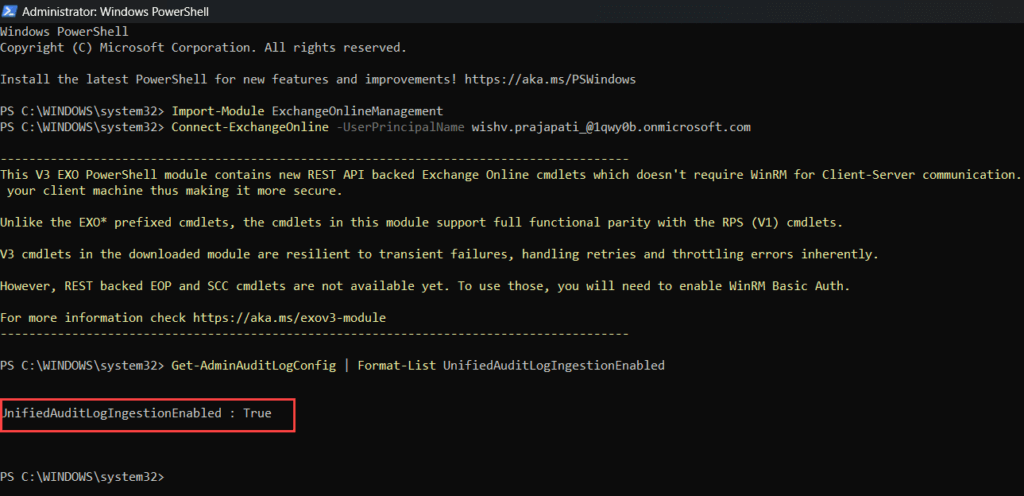
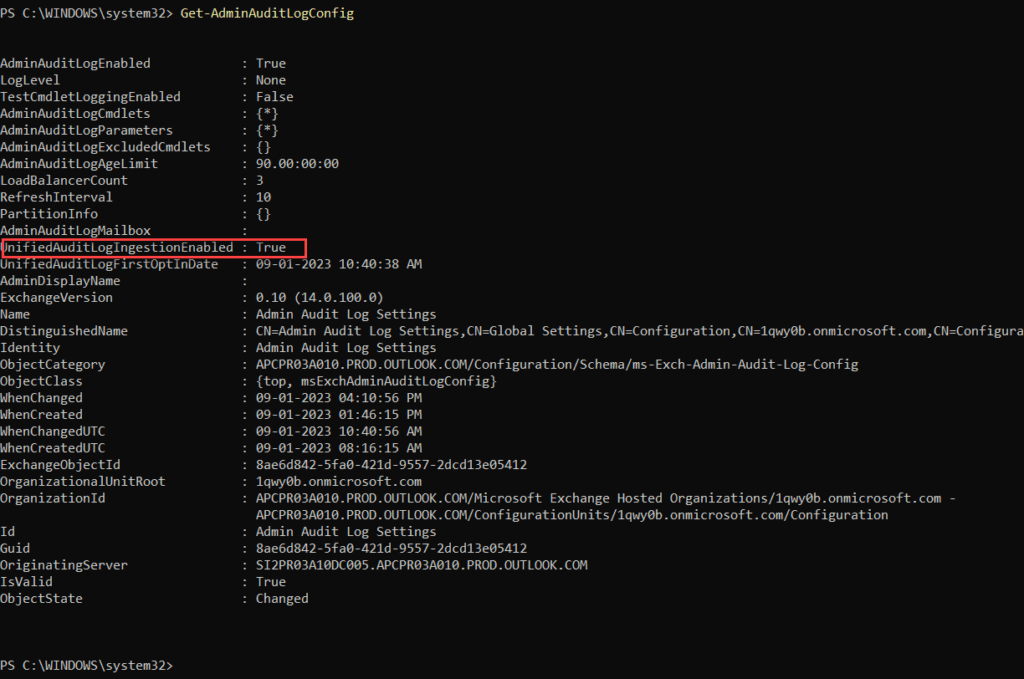
To verify that auditing is turned on for your organization, Execute the subsequent command in PowerShell, following each step.

Step 1:  Import-Module ExchangeOnlineManagement 

Step 2:  Connect-ExchangeOnline -UserPrincipalName <UPN>  

“UPN is your account in user principal name format (for example, xyz@contoso.onmicrosoft.com).” 

In the sign-in window that opens, enter your password, and then click Sign in. 

MFA only: A verification code is generated and delivered based on the response option that’s configured for your account 

Step 3 :  Get-AdminAuditLogConfig | Format-List UnifiedAuditLogIngestionEnabled

image

A value of True for the “UnifiedAuditLogIngestionEnabled” property indicates that auditing is turned on. A value of False indicates that auditing isn’t turned on. 

Be sure to run the previous command in Exchange Online PowerShell. Although the Get-AdminAuditLogConfig cmdlet is also available in Security & Compliance PowerShell, the UnifiedAuditLogIngestionEnabled property is always False, even when auditing is turned on

image

Assign permissions from compliance portal to scope Audit logs 
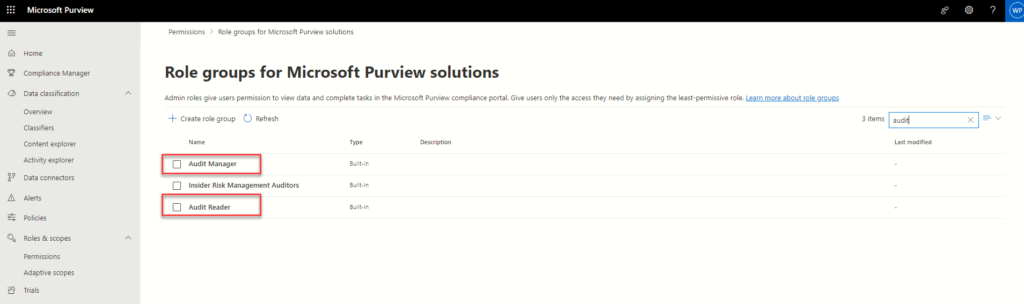
The following screenshot shows the two audit-related role groups in the compliance portal.

image

To search or export the audit log, administrators or members of investigation teams must be assigned to at least one of the following audit-related role groups in the compliance portal 

Audit Manager: A user assigned to the Audit Manager role group can search and export the audit log and manage audit settings for the tenant (like enabling or disabling audit logging). This role group grants the View-Only Audit Logs and Audit Logs roles to the user. 

Audit Reader: A user assigned to the Audit Reader role group can only search and export the audit log. They can’t enable or disable audit logging. This role group grants the View-Only Audit Logs role to the user 

Search the Audit log in Microsoft Purview 

Now you’re ready to search the audit log in the Microsoft Purview compliance portal. 

1. Go to https://compliance.microsoft.com and sign in using an account that has been assigned the appropriate audit permissions. 

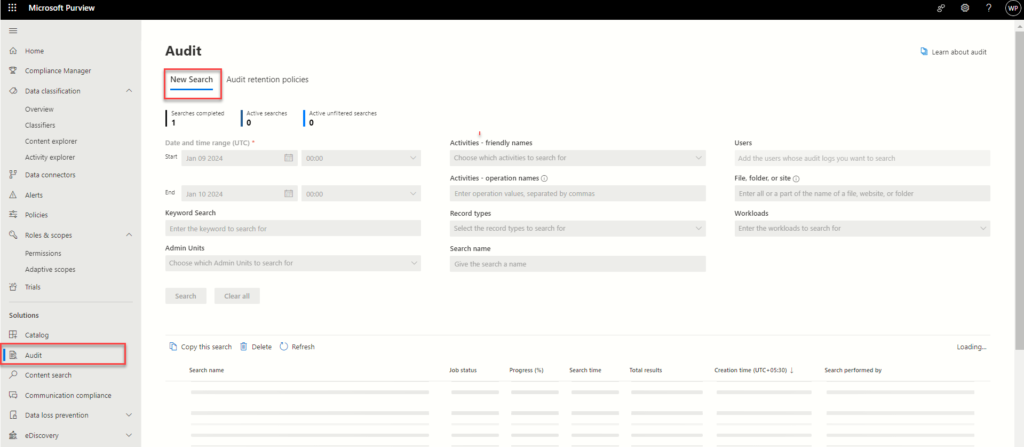
2. Select the Audit tab on the left panel of the homepage to navigate to the Audit tool.

Image

3. Select New Search tab at the top of the Audit page.

image

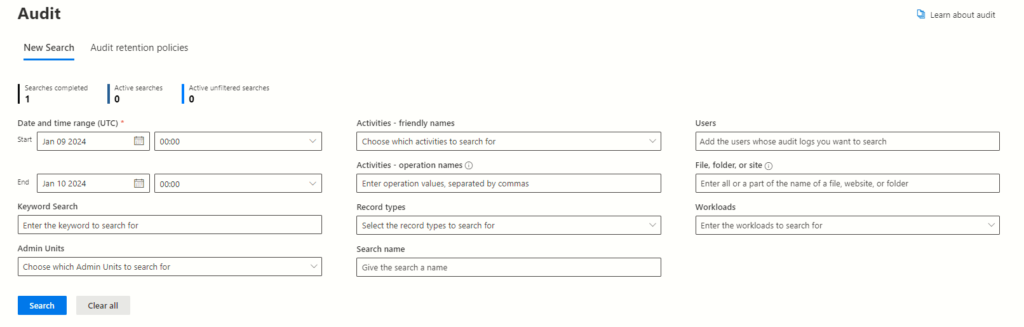
4. On the New Search tab, configure the following search criteria as applicable: 

  • Date Range: Choose a date range up to 180 days to view events, with the default set to the last seven days in Coordinated Universal Time (UTC). 
  • Keyword Search: Look for specific words or phrases in the audit log, replacing special characters with asterisks for text containing such characters. 
  • Admin Units: Filter audited activities based on specific administrative units within your organization. 
  • Activity Names: Select user or admin activity groups or individual activities to focus your search in the log. 
  • Operation Names: Specify exact operation names to refine search results, enabling flexible data discovery. 
  • Record Types: Filter audited activities based on specific types for more targeted search results. 
  • Search Name: Create a custom name for your search job to distinguish it in the search job history. 
  • Users: Choose specific users to see their related audit log entries or leave blank for all users. 
  • File, Folder, or Site: Search for file or folder activities by entering related keywords or URLs. 

**Select Search to start your search job. A maximum of 10 search jobs can be run in parallel for one user account. ** 

Search Job dashboard

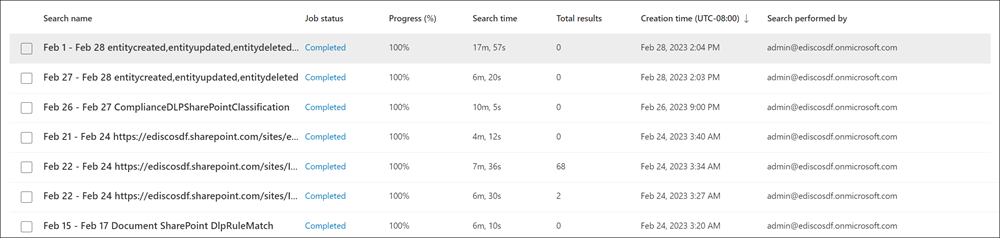
Active and completed search jobs are displayed in the search job dashboard. The dashboard displays the following information for each search job: 

Image

  • Search name: The name of the search job. The full search name for a job can be seen by hovering the cursor over the search job name. 
  • Job status: The status of the search job. The status can be Queued, In Progress, or Completed. 
  • Progress (%): The percentage of the search job that has been completed. 
  • Search time: The total running time that elapsed to complete the search job. 
  • Total results: The total number of results returned by the search job. 
  • Creation time: The date and time the search job was created in UTC. 
  • Search performed by: The user account that created the search job. 

Search Job details dashboard 

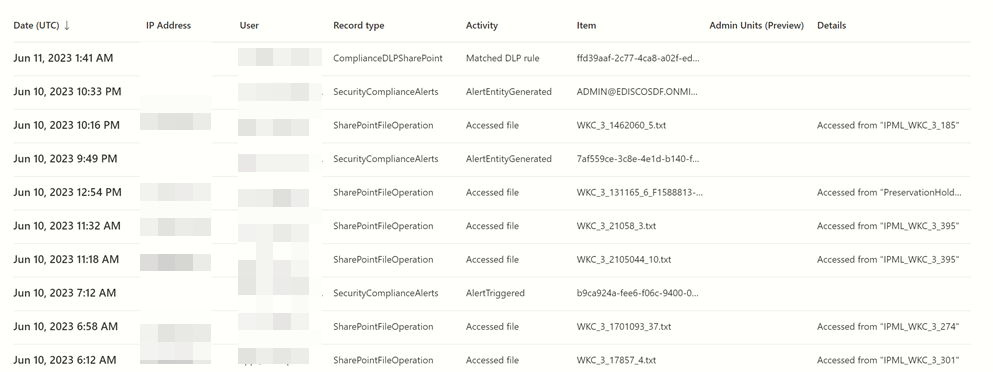
To view details about a search job, select the search job. The total number of items in the job is included at the top of the dashboard. The total result number deducts duplicates, which is why it might be less than the number of items in the search job dashboard. 

Image

The search job details dashboard displays following information about the individual items gathered in the search job results: 

  • Date (UTC): The date and time the activity occurred. 
  • IP Address: The IP address of the device that was used to perform the activity. 
  • User: The user account that performed the activity. 
  • Record type: The record type associated with the activity. 
  • Activity: The friendly name of the activity that was performed. 
  • Item: The name of the file, folder, or site that the activity was acted on. 
  • Admin Units: The admin unit that the user account that performed the activity belongs to. 
  • Details: Additional details about the activity.

Export the Audit report 

This option exports all the audit records from the audit log search you ran, and adds the raw data from the audit log to a CSV file. It takes a while to prepare the download file for a large search. Large files will result when searching for all activities or using a wide date range. 

Format the exported Audit log using the Power Query Editor 

The next step is to use the JSON transform feature in the Power Query Editor in Excel to split each property in the JSON object in the Audit Data column into its own column. Then you filter columns to view records based on the values of specific properties. This can help you quickly locate the specific auditing data you’re looking for. 

1. Open a blank workbook in Excel for Office 365, Excel 2019, or Excel 2016. 
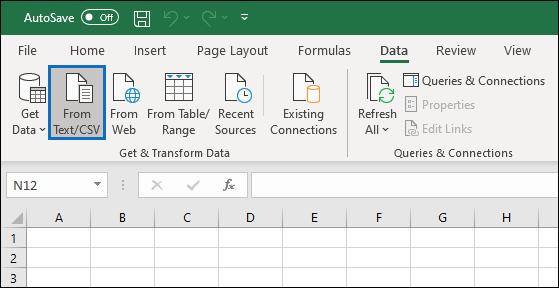
2. On the Data tab, in the Get & Transform Data ribbon group, select From Text/CSV.

Image

3. Open the CSV file that you downloaded in Step 1. 
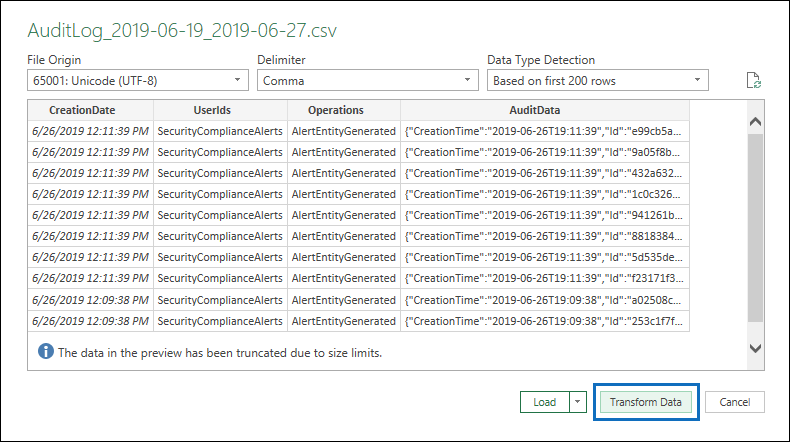
4. In the window that’s displayed, select Transform Data.

image

The CSV file is opened in the Query Editor. There are four columns: Creation Date, User Ids, Operations, and Audit Data. The Audit Data column is a JSON object that contains multiple properties. The next step is to create a column for each property in the JSON object.

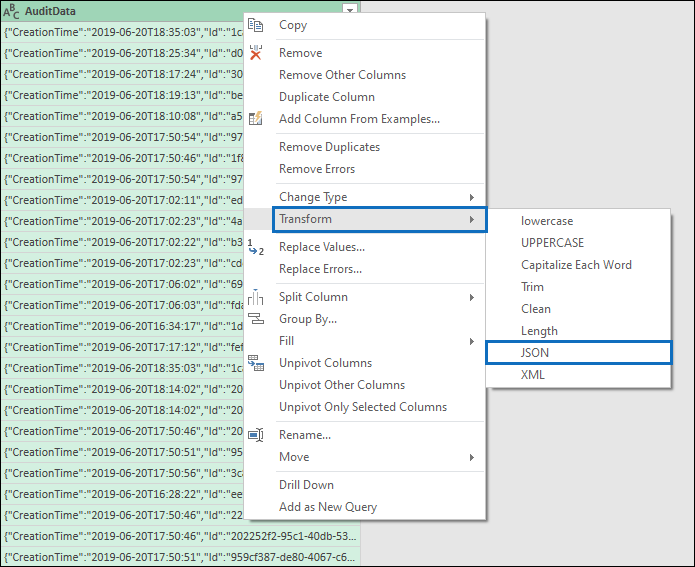
5. Right-click the title in the Audit Data column, select Transform, and then select JSON.

Image

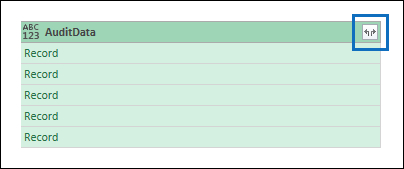
6. In the upper-right corner of the AuditData column, select the expand icon.

Image

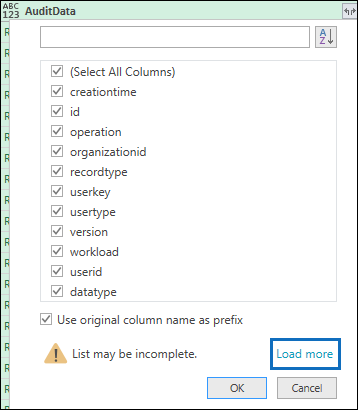
7. Select Load more to display all properties in the JSON objects in the AuditData column.

image

You can unselect the checkbox next to any property that you don’t want to include. Eliminating columns that aren’t useful for your investigation is a good way to reduce the amount of data displayed in the audit log. 

Implementing DLP for secure data sharing in SharePoint and OneDrive

With cyber threats evolving constantly, IT teams face immense pressure to safeguard data from malware, phishing, and insider threats. Microsoft’s Purview platform, equipped with a powerful DLP module, provides a proactive defence. Data Loss Prevention (DLP) is a security solution that helps prevent unsafe sharing and inappropriate transfer of sensitive data. DLP is utilized to protect and monitor sensitive data across both on-premises systems and cloud-based locations within our organizations.

This blog post tackles the critical issue of data security in Microsoft 365. With the ever-growing threat of cyberattacks, protecting sensitive information like social security numbers, credit card data, and “Confidential” documents is paramount.

Microsoft Purview’s DLP module offers a powerful solution to address this challenge. We’ll delve into its importance and provide a step-by-step guide to configure a DLP policy that meets your specific needs.

Scenario:

Block all external sharing of SharePoint and OneDrive items containing sensitive information like Social Security Numbers Credit Card Data etc. and Sensitivity labelled item.

Alerting the Email notification to the security team for every blocked file sharing attempt. User notifications within the interface (if available).
By following our guide, you can gain control over sensitive data sharing and confidently navigate today’s complex cybersecurity landscape.

Step-by-Step Guide to Creating a DLP Policy in Microsoft Purview

This guide walks you through creating a Data Loss Prevention (DLP) policy in Microsoft Purview to prevent accidental or unauthorized sharing of sensitive data in SharePoint and OneDrive.

Step 1: Access the Compliance Portal:
Go to the Microsoft 365 Admin Center and navigate to “Compliance.”In the left-hand pane, find “Data loss prevention” and then “Policies.”

img

Step 2: Create a New Policy:
Click the “Create policy” button.

img

Step 3: Define Policy Details:
Under “Categories,” choose “Custom.” Under “Regulations,” select “Custom policy.”

Click “Next” to proceed. Give a proper policy name and description.

img

img

Step 4: Assign admin units for users or groups:
Similar to the default template approach, assign admin units from Microsoft Entra ID to limit the policy to specific users or groups.

img

Step 5: Enable DLP for SharePoint and OneDrive:
Turn on DLP for “SharePoint sites” and “OneDrive accounts.” Leave other locations disabled. Click “Next.”

img

Step 6: Create and Define DLP Rule:
In “Define policy settings,” ensure “Create or customize advanced DLP rules” is selected. Click “Next” and then “Create rule.”

Give your rule a clear name (e.g., “Block External Sharing of Sensitive Data”). Briefly describe the rule’s purpose.

img img

Step 7: Set Rule Trigger Conditions:
Click “+ Add condition”. Choose “Content is shared from Microsoft 365.” Select “with people outside my organization.” Choose “Content contains” and choose appropriate data types based on your needs. In this case, we’ve selected for sensitive Australian information such as credit card numbers, passport numbers, etc.

img

Step 8: Identify Sensitive Data:
Click “+ Add condition” and set the logic to identify content matching both conditions (AND). Create a new condition group with OR logic (matches at least one condition. Create a new condition group with AND logic (matches at least one condition). Choose “Sensitivity labels” and select the labels based on your needs.

img

Step 9: Block Unauthorized Sharing:
Under “Actions,” choose “Restrict access or encrypt the content.” Select “Block only people outside your organization” to prevent external sharing.

img

Step 10: Notify Users:
Enable “User notifications” to inform users attempting to share sensitive data through a policy tip in Office 365 services. This will notify the user who shared the data.

img

Step 11: Prevent Sharing Overrides:
Ensure “Allow override from M365 services” is not selected to prevent users from bypassing the policy.

Step 12: Set Up Reporting:
Set “Use this severity level in admin alerts and reports” for informational purposes.

Enable “Send an alert to admins when a rule match occurs” to notify admins of potential incidents. Optionally, add email addresses for receiving alerts (e.g., security team). Choose to send alerts for every rule match. You can also enable and add the user to receive incident reports via email when a policy match occurs.

img

Choose the necessary details for incident reports, including the matched information, the location of the match, and the activated rules and policies.

img

Review the DLP Rule After Creation:

img

Step 13: Set Policy mode:
The “State” setting determines when your DLP policy becomes active. It’s recommended to keep the policy off while you’re configuring it and getting approvals. Click Next and then Submit. Click Done.

Here are the available state options:
Run the policy in test mode: You’ll be able to review alerts to assess the policy’s impact. Any restrictions you configured won’t be enforced. Users also receive informative messages to raise awareness about the policy.
Turn the policy on immediately: This enables full enforcement of the policy. After the policy is created, it’ll take up to an hour before any changes are enforced.
Leave the policy turned off: Decide to test or activate the policy later.
Remember: You can change the policy state at any time to adjust your rollout strategy.

img

Step 14: Publish the Policy:
Click “Submit” to finalize and publish the DLP policy.

img

img

Conclusion
By following the outlined steps, organizations can create and implement Data Loss Prevention (DLP) policies in Microsoft SharePoint and OneDrive. These proactive measures significantly enhance data security by preventing accidental or unauthorized sharing of sensitive information. Remember, minimizing the risk of data breaches and ensuring compliance with data privacy regulations require continuous efforts. Regularly monitor policy effectiveness, gather user feedback, and optimize your DLP strategy for a robust security posture in today’s dynamic digital landscape

The Basics of Data Loss Prevention

Microsoft Purview Data Loss Prevention (DLP) helps prevent that by keeping an eye on your organization’s data. It can identify sensitive information like credit card numbers or patient records, and then take action to protect it. DLP policies in Microsoft Purview are a powerful tool for organizations looking to enhance their data security posture and protect sensitive information.

Microsoft offers a range of pre-defined DLP templates tailored to specific countries and regions, such as the US Patriot Act, UK Data Protection Act, or GDPR. These templates come with pre-configured sensitive information types and rules containing conditions and actions. You simply need to assign the template to one or more Microsoft 365 locations. In my experience implementing DLP for organizations, custom policies are frequently utilized.

Data Loss Prevention Apply On:

  • Microsoft 365 services: Like Teams, Exchange Online, SharePoint Online, and OneDrive for Business accounts.
  • Office applications: such as Word, Excel, and PowerPoint.
  • Endpoints: Devices like Windows 10, Windows 11, and macOS computers.
  • Power BI: Detecting sensitive data uploaded to Power BI datasets.
  • Monitoring on-premises file shares and SharePoint.

Benefits of using DLP policies in Microsoft Purview:

  • Minimize data breaches: DLP helps prevent sensitive data from being accidentally or intentionally shared with unauthorized users.
  • Meet compliance requirements: DLP policies can help your organization comply with data privacy regulations like GDPR or HIPAA.
  • Reduce risk of insider threats: DLP can help detect and prevent malicious attempts to steal or leak sensitive data.
  • Increase data security awareness: DLP policies can educate users about the importance of handling sensitive data responsibly.

Here’s a breakdown of how DLP policies work in Microsoft Purview:

  • Identify Sensitive Data: You define what constitutes sensitive data in your organization. This could include things like social security numbers, credit card information, passport numbers, or any sensitive information data classified as “Confidential” based on your internal policies.
  • Set DLP Rules: You create rules that specify what actions to take when sensitive data is detected. These actions can include:
    • Blocking the transfer of the data (e.g., preventing external sharing)
    • Encrypting the data
    • Sending alerts to administrators or users
    • Displaying policy tips to users informing them about the sensitivity of the data
  • Apply DLP Rules: You define where these DLP rules will be enforced. This could include locations like SharePoint sites, OneDrive accounts, emails, or even on user endpoints (laptops).

Features of a DLP Policy:

1. Build Your DLP Policy with templates or custom policies:

In the policy template, there are different templates available to protect different types of information.

image

Financial: Secure financial information by preventing users from sharing details like credit card numbers, bank account numbers, debit card numbers, social security numbers, and more.
Medical and Health: Stop users from sharing confidential and important information.
Privacy: Safeguard information such as license numbers, passport numbers, tax file numbers, national IDs, insurance numbers, and other sensitive details.
Custom: You can create a custom policy from scratch in which you choose the type of content to protect and how you want to protect it.
For more details visit the (https://learn.microsoft.com/en-us/purview/dlp-policy-templates-include?redirectSourcePath=%252farticle%252fc2e588d3-8f4f-4937-a286-8c399f28953a)

2. Define Policy Scope:
A Data Loss Prevention (DLP) policy can identify and safeguard items containing confidential data across various locations. When establishing such a policy, you have the option to designate the specific location(s) where you wish to implement your conditions.

image

3. Define DLP Protection settings
Data loss prevention (DLP) rules act like shields for your sensitive information. You choose what kind of information needs protection by creating these rules.
First, you define the conditions that trigger the rule. This could be finding a Sensitive information in a document.

image

Then, you set the instructions actions that follow. If the rule detects sensitive information, users won’t be able to share the document with anyone outside the company.

image

4. User Notifications
Sharing sensitive information with unauthorized individuals can be a mistake. To help everyone stay informed and protect your organization’s data, you can enable user notifications. When someone tries to share sensitive information externally, they’ll receive a friendly reminder. This includes an email and a clear policy tip explaining why sharing isn’t allowed. You can also customize these notifications! Choose who gets notified (admins or specific teams?), craft a clear email subject and message, and tailor the policy tip text for maximum impact.

image

5. User Overrides
DLP policies offer flexibility In some cases, users might need to share information that triggers a DLP rule. To handle these situations, you can allow users to override the policy.
There are two options for overrides:
Quick Share: Users can proceed without providing a reason.
Explain It Out: Users can provide a business justification for sharing the information.

image

6. Activity Explorer (Reporting Features)

The Activity Explorer tab within DLP lets you monitor all user actions related to sensitive data. You can also filter this activity based on specific criteria, such as policies or sensitivity labels, to focus on what matters most. (Shown below)

image

View Alert Details by Selecting an alert from the “Alert” tab.

image

Click “View Details” to get more information about the alert.

image

This section provides an overview of the triggered alert. You can even assign the alert to a specific user and add comments for further clarification.

img

Click “Events” tab to get a overview of actions taken on the content that triggered the alert.

image

Safeguard Crucial Info Within Microsoft 365

Looking to Safeguard Crucial Info Within Microsoft 365? Dive into the Power of Sensitivity Labels! Explore how these labels protect data, enhance security, and drive productivity within Microsoft 365.

In today’s business landscape, safeguarding sensitive data within platforms like Microsoft 365 stands as a critical priority. The constant evolution of threats emphasizes the need for robust solutions like sensitivity labels. These labels not only categorize data but also fortify it against potential breaches while ensuring uninterrupted workflows.

Table of contents

  • What is sensitive data?
  • Securing data with sensitivity labels through Microsoft Information Protection (MIP)
  • Understanding Sensitive Data

    As businesses navigate an increasingly digital landscape, safeguarding sensitive information is non-negotiable. Sensitivity labels, embedded within Microsoft 365, offer a powerful defence against evolving cyber threats. Striking the delicate balance between security and productivity, these labels pave the way for a future where data protection is proactive, efficient, and integral to business operations.
    What is sensitive data?

    Sensitivity labels are a vital component of data protection strategies. They categorize information based on its confidentiality, ensuring appropriate handling and access control.

    Type of sensitive data?

    Sensitive data encompasses various forms, including personal, financial, or proprietary information, demanding heightened security measures.

    Importance of protecting sensitive data

    The implications of data breaches can be severe, ranging from financial loss to reputational damage, underlining the criticality of safeguarding sensitive information.

    WHAT ARE SENSITIVITY LABELS USED FOR IN M365?

    When it comes to safeguarding sensitive data, WHAT ARE SENSITIVITY LABELS USED FOR IN M365? holds the key. These labels play a pivotal role in tagging data and implementing diverse protective measures. Let’s explore the multifaceted uses and security applications of sensitivity labels within the Microsoft 365 suite.

    Understanding Sensitivity Labels

    Sensitivity labels serve as crucial identifiers, enabling organizations to categorize data based on its sensitivity level. This categorization facilitates robust auditing and reporting mechanisms.

    Labelling Content for Security

    One primary function of sensitivity labels is to tag content, allowing for easy identification of its sensitivity level. This tagging system is pivotal for effective auditing and regulatory compliance.

    Encryption for Content Protection

    To prevent unauthorized access, sensitivity labels facilitate encryption, ensuring that only authorized users can access and decipher the content. This robust security measure mitigates the risk of data breaches.

    Applying Content Markings

    Incorporating content markings, such as headers, footers, and watermarks like ‘Confidential,’ further fortifies the security of sensitive data. These markers serve as visual cues, signalling the sensitivity of the information.

    Protecting Content in Office and Third-Party Apps

    Sensitivity labels aren’t limited to Microsoft’s native applications; they extend their protective reach to third-party apps like Salesforce, Box, or Dropbox. This broad compatibility ensures a holistic safeguarding approach.

    Managing Containers in M365

    Efficient management of containers, including Teams, Microsoft 365 Groups, and SharePoint sites, is achievable through sensitivity labels. This feature bolsters data security within collaborative platforms.

    Securing Meetings and Chats

    Sensitivity labels bring a layer of security to meetings and chats by allowing labelling and optional encryption of invitations and responses. Teams-specific options further reinforce security protocols.

    Extending Labels to Power BI and Purview Data Map

    Innovatively, sensitivity labels transcend beyond conventional applications, extending their protective umbrella to Power BI and Microsoft Purview Data Map. This extension ensures data protection across diverse services.

    Steps to Expertly Set Up Your First Label in Microsoft: A Comprehensive Guide

    Setting up sensitivity labels is crucial for data security. Understanding these labels and their significance lays the foundation for robust data protection.

    Understanding Sensitivity Labels

    Sensitivity labels are metadata tags applied to documents or emails to control access. They offer various functionalities like encryption, watermarking, and more.

    Importance of Sensitivity Labels

    Their role in securing sensitive information cannot be overstated. Effective labels ensure data confidentiality, integrity, and availability.

    Types of Sensitive Information

    Diverse data categories exist, from financial details to personally identifiable information (PII). Identifying the type of information is pivotal.

    Creating Your First Label

    Initiate the process by crafting the label itself, defining its functionalities, such as applying headers, footers, watermarks, or encryption.

    Label Policy and Targeting

    Understanding label policies and their role in targeting users, groups, or sites ensures the right data protections are applied to the right content.

    Targeting Users/Groups/Sites

    Delve into the process of applying labels to designated users, groups, or sites, ensuring comprehensive coverage.

    Publishing Labels

    Implementing labels across the organization requires a strategic and careful approach to ensure seamless integration and functionality.

    Label Management and Updates

    Maintenance and updates are crucial in ensuring label efficiency and relevance over time, avoiding obsolescence or security gaps.

    Setting up your first label involves a comprehensive understanding of sensitivity labels, meticulous planning, and strategic implementation. Prioritize data security through effective label deployment and management.

    How to Create and Define Sensitivity Labels in Microsoft Purview

    Here, we’ll delve into the meticulous process of creating and defining these labels, empowering you to safeguard your data effectively.

    Step 1: Navigating to the Compliance Centre

    To initiate the creation process, begin by accessing the Compliance Centre within Microsoft Purview. Navigate through Information Protection and proceed to ‘Create New Label.’

    img

    Step 2: Crafting Label Details and Description

    Once within the ‘Create New Label’ section, meticulous attention to detail becomes paramount. Begin by entering fundamental information and crafting a descriptive overview for the label. Enter the fundamental information input, including Label Name, Display Name, Priority, and the comprehensive Description for both users and administrators, forms the crux of this phase.

    img

    Understanding Label Scope and Configuration in Microsoft 365

    These labels not only determine the parameters for data sensitivity but also dictate where and how these settings will be visible to users across diverse Microsoft 365 containers.

    Configuring diverse sensitivity label configurations within the Microsoft 365 compliance centre is paramount in today’s data-driven landscape. Understanding and leveraging the label scope functionalities – Files & Emails, Groups & Sites, and Azure Purview Assets – empower organizations to fortify data security across various levels and containers.

    Exploring Label Scope

    The label scope embodies the essence of sensitivity labels within Microsoft 365. It holds the key to two critical elements:

    1. Configurable Label Settings: The label scope determines which settings can be configured within a given label, defining the breadth of its protective capabilities.
    2. Visibility to Users: It also governs where the sensitivity label will be visible to users, ensuring the seamless application of data protection measures.

    img

    Configuration Options

    Microsoft 365 offers various configuration scopes catering to distinct needs:

    Files & Emails Scope

    The foundational scope, “Files & Emails,” serves as the bedrock of sensitivity labels. It encompasses settings to encrypt, mark, and protect labelled emails and Office files. This scope, selected by default, empowers users to configure encryption and content marking for documents and emails effortlessly.

    Interestingly, no additional licensing is required to configure settings within the “Files & Emails” scope, making it easily accessible to users by default.

    Files & Emails Scope Functionality: This scope primarily deals with encrypting and content marking for documents and emails, aligning with the traditional perception of sensitivity labels. By selecting the “Files & Emails” scope, users gain access to configuration settings that protect emails and documents effortlessly.

    Groups & Sites Scope

    Expanding beyond document and email protection, the “Groups & Sites” scope introduces a broader canvas for sensitivity labels. It allows configuration to safeguard content within Microsoft Teams sites, Microsoft 365 groups, and SharePoint Online sites.

    This scope presents a distinct facet by enabling protection settings at the container level. However, it necessitates the activation of capability before configuring protection settings for groups and sites. Once enabled, this scope is also selected by default, enhancing the security umbrella across these containers.

    Functionality of Groups & Sites Scope: In contrast, the “Groups & Sites” scope extends beyond individual documents or emails, focusing on the protection of containers such as Teams sites, Microsoft 365 groups, and SharePoint Online sites. The protection settings at this level include defining privacy (public or private) for team sites and groups, regulating external user access, managing access from unmanaged devices, and enabling external sharing from SharePoint sites (in preview).

    Azure Purview Assets Scope

    For a more comprehensive data security approach, the “Azure Purview Assets” scope steps into the picture. It extends sensitivity labels to assets within Azure Purview, encompassing SQL columns, files in Azure Blob Storage, and more. Once this feature is enabled, this scope, too, becomes the default selection for your tenant, fortifying security measures across diverse assets within Azure.

    Securing Labelled Items: Customizing Encryption and Content Marking Settings

    The intricacies of data protection involve not only encryption but also content marking settings. Understanding and customizing these aspects is crucial to ensure robust security measures within organizations.
    img

    Click the next button to proceed to the next page,

    img

    Configuring Encryption Settings

    On the Encryption page, configuring sensitivity labels enables tailored protection. Two primary options present themselves:

    1. Assign Permissions Now: This empowers administrators to precisely designate user permissions for labelled content, offering meticulous control over access.
    2. User-Assigned Permissions: Opting for this allows users themselves to assign permissions when applying labels, fostering flexibility in collaboration while maintaining security protocols.

    Assigning permissions to specific users or groups adds granularity to security measures. By individually designating permissions for labelled content, organizations fortify their data against unauthorized access.

    img

    Content Marking Settings

    Upon reaching the content marking page, three key options come into view:

    1. Adding a Watermark: This embeds a visible layer of identification, reinforcing the ownership and sensitivity of the content.
    2. Including a Header: A content header provides contextual information and further enhances content identification.
    3. Appending a Footer: Similarly, a footer complements the content by offering additional identification and context.

    img

    Protection Settings for Groups and Sites: Managing Access and Privacy

    In today’s digital landscape, safeguarding sensitive information within collaborative platforms like Microsoft Teams and group sites is paramount. The control over access levels and privacy settings becomes crucial to ensure data integrity and confidentiality. Let’s delve into the intricate details of configuring protection settings for groups and sites, specifically focusing on privacy and external user access, as well as external sharing and conditional access settings. Select the ones that you want to configure the settings:

    • Privacy and external user access settings
    • External sharing and conditional access settings

    img

    Understanding Privacy and External User Access Settings

    Configuring Access Levels

    When applying settings to groups, Microsoft Teams, or sites, administrators encounter pivotal decisions regarding access levels. The chosen settings significantly influence who can view, edit, and manage content within these collaborative spaces. The three primary options include:

    1. Public Access
    2. Private Access
    3. None (Customizable Access)

    img

    Managing Guest Access

    Another pivotal aspect of privacy settings involves enabling or disabling group owners’ capability to add external users as guests. This feature, when enabled, permits external collaborators to access specific teams, sites, or groups based on predefined permissions. Administrators must weigh the necessity of external contributions against the risks associated with granting guest access.

    External Sharing and Conditional Access Settings

    Mitigating Risks through External Sharing Controls

    Admins possess the authority to regulate external sharing of content and resources associated with labelled teams and sites. By defining stringent external sharing settings, organizations can fortify their defences against data leaks or unauthorized access.

    Conditional Access: Strengthening Security Measures

    Conditional access settings act as an additional layer of defence, implementing specific criteria for accessing sensitive information. By establishing conditions such as device compliance, location, or user roles, administrators bolster the security posture of collaborative platforms.

    img

    Enhancing SharePoint Security: Control and Protect Access Options

    The next page presents two crucial options, each holding the power to fortify SharePoint sites: Controlling External Sharing and Leveraging Azure AD Conditional Access.

    Understanding Control External Sharing from Labelled SharePoint Sites

    Configuring External Sharing Settings

    SharePoint administrators wield significant control over data sharing by configuring external sharing settings. This feature empowers them to dictate how content from labelled sites is shared with external entities. By opting for this setting, administrators can meticulously manage and monitor data accessibility beyond organizational boundaries.

    Configurable Replacements for Existing Settings

    The allure of this option lies in its ability to supplant existing sharing settings seamlessly. By configuring settings at the site level, administrators can override previous configurations, ensuring a more streamlined and secure sharing process.

    Implications of Enabling Control External Sharing

    Enabling this feature furnishes an added layer of control over data dispersion. It allows for a structured sharing environment, mitigating the risks associated with unauthorized external access while promoting seamless collaboration among permitted stakeholders.

    Utilizing Azure AD Conditional Access for Enhanced Protection

    Restricting Access from Unmanaged Devices

    In a dynamic workspace, user devices vary in terms of management and security protocols. Leveraging Azure AD Conditional Access enables administrators to enforce restrictions on access from unmanaged devices, curbing potential security vulnerabilities stemming from these endpoints.

    Authentication Context Configuration

    One of the pivotal aspects of this option is the ability to configure authentication contexts. By setting stringent authentication parameters, administrators can elevate the security posture of labelled SharePoint sites, ensuring that access is only granted under specified and verified contexts.

    img

    Guide: Publishing Sensitivity Labels for Organizational Access

    To commence this procedure, start by returning to the labels tab within the information protection settings housed in the Microsoft Purview Compliance portal. Here, the initial step involves selecting the specific sensitivity label intended for wider accessibility.

    Once the intended label is identified, the subsequent action involves clicking on the conspicuous “publish label” button, conveniently located in the right panel of the interface. This simple act initiates a wizard-like process for creating a sensitivity policy. It’s worth noting that this wizard mirrors the one experienced when generating a policy from the label policy tab, with the distinction that, in this instance, a sensitivity label is pre-selected.

    image

    image

    To advance to the following page, simply click on the “Next” button.

    image

    The selection of admin units plays a pivotal role. These admin units operate as the linchpin in restricting policies to specific user groups, significantly influencing subsequent location options. Understanding the nuances and functionalities of admin units is crucial for optimizing policy management within the Microsoft Entra ID ecosystem.
    image

    The upcoming page provides the option to define the users and groups targeted by the policy.

    By default, it encompasses all users and groups. However, you have the ability to select particular users or groups by clicking the “choose user or group” link.

    The Following Section: Policy Settings for Enhanced User Control

    The upcoming policy settings delineate a spectrum of choices, allowing administrators to configure the system to align with organizational data security needs.

    The Power of Choice: Exploring Policy Settings:

    Enabling User Justification for Label Alteration

    Granting users, the ability to provide justifications for label adjustments is a strategic move. By allowing users to articulate reasons for label modification or classification reduction, it fosters accountability while maintaining flexibility. This empowers users to engage responsibly with sensitive data, balancing their needs with organizational security protocols.

    Mandating Sensitivity Labels for Email and Document Handling

    One powerful setting involves enforcing sensitivity labels before sending unmarked emails or saving sensitive documents. This proactive measure ensures that crucial information is appropriately labelled, minimizing inadvertent data exposure. By mandating label application, users become conscious custodians of sensitive data, fortifying organizational data security.

    Extending Sensitivity Labelling to Power BI Content

    Incorporating sensitivity label requirements for unclassified Power BI content amplifies data protection strategies. With this setting, unlabelled Power BI content is no longer overlooked. Users are prompted to apply sensitivity labels, fortifying the integrity and confidentiality of insights gleaned from such data.

    Custom Help Pages: Empowering Users with Guidance

    The provision to showcase a custom help page offers invaluable guidance. Administrators can curate informative resources tailored to assist users in navigating sensitivity label application seamlessly. This fosters user proficiency and understanding, elevating the efficacy of data security practices within the organization.

    image

    Default Label Assignment across Platforms

    The subsequent pages usher administrators into assigning default labels across a diverse spectrum, covering documents, emails, meetings, sites, groups, and Power BI. This pivotal step streamlines the process, ensuring uniformity and adherence to organizational data classification standards.

    image

    Examine and finalize the policy

    Following this step, you’ll be prompted to name your new label policy. You have the option to include a description, although it’s entirely up to you; you can choose to leave it empty. After creating your initial sensitivity label, you’ll have the opportunity to review all aspects of the new policy. Once you’ve confirmed all the settings and particulars, proceed by clicking the submit button to complete the process.

    image

    Overview

    Sensitivity labels are the modern shield for your organization’s data. They fortify your information against threats while nurturing a culture of responsible data handling. With seamless collaboration and robust protection, they ensure sensitive information stays safeguarded. Embrace sensitivity labels to proactively defend your data against evolving risks while fostering a secure, collaborative work environment.

Unlocking hidden insights get started with Microsoft Purview content search

In today’s digital age, businesses generate massive amounts of data daily, stored across emails, documents, chat logs, and more. But finding the specific data you need can feel like searching for a needle in a haystack. Here’s where Microsoft Purview Content Search steps in as your digital detective!

What is Content Search?

This versatile tool helps locate specific information across various applications like Exchange, SharePoint, OneDrive, and Teams. It’s ideal for internal needs such as investigations or audits.

This powerful tool empowers you to effortlessly locate critical information within your Microsoft 365 environment. Whether you’re conducting internal investigations, responding to legal requests, or simply managing day-to-day tasks, Content Search streamlines the process and saves you valuable time.

You can use the Content search eDiscovery tool in the Microsoft Purview compliance portal to search for in-place content such as email, documents, and instant messaging conversations in your organization. Use this tool to search for content in these cloud-based Microsoft 365 data sources:

  • Exchange Online mailboxes
  • SharePoint Online sites and OneDrive for Business accounts
  • Microsoft Teams
  • Microsoft 365 Groups
  • Viva Engage Groups

Running a search is as simple as typing in your keywords. Plus, you get an instant estimate of the number of results and which locations hold the most relevant information. No more wading through mountains of data!

Content Search even lets you preview the results before exporting them for further analysis. This saves you valuable time and ensures you have the right information at your fingertips. Ultimately, Content Search empowers you to make better decisions, faster, and helps your organization stay compliant with regulations.

Here’s how to create and run a content search:

1. Access the Microsoft Purview Compliance Portal:
Go to the Microsoft 365 Admin Center and click on “Compliance”. In the left navigation pane, select “Content search”.

image

image

2. Initiate a New Search:
Click “New search” on the Content search page.

image

3. Give Your Search a Unique Name and Description:
Choose a clear and descriptive name that reflects the purpose of your search. Add a description (optional) to further clarify the search intent.

Image

4. Select Search Locations:
Choose the locations you want to search by toggling them “On.”

  • Exchange Mailboxes: Search all mailboxes by default or select “Choose users, groups, or teams” for specific targets. Use the search bar to find individual mailboxes or distribution groups.
  • SharePoint Sites: Search all sites by default or select “Choose sites” to specify locations. Enter the URL of each SharePoint site, OneDrive site (including those for Teams, Groups, and Viva Engage) you want to search.
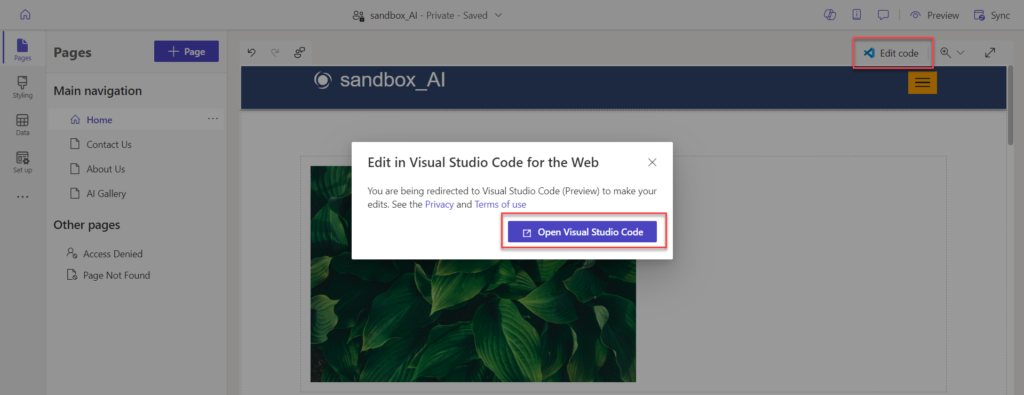
  • Exchange Public Folders: There’s no option to choose specific folders. Toggle “On” to search all Exchange public folders or leave it “Off” if not needed.
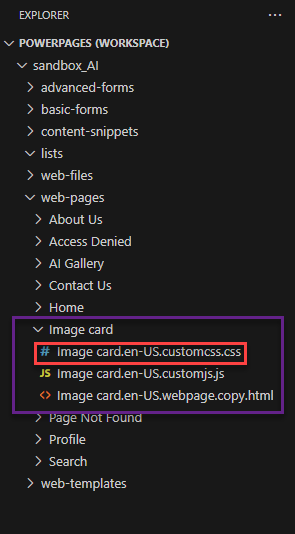
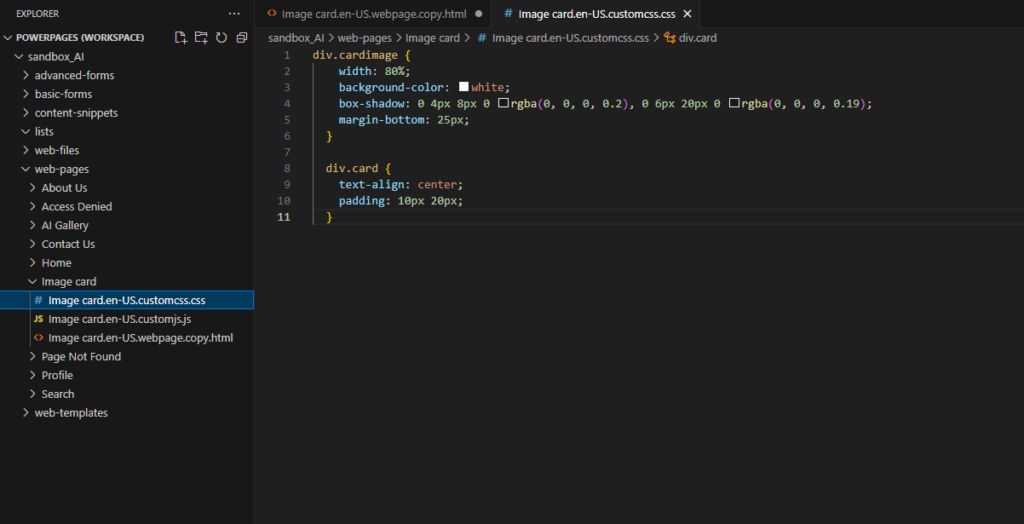
image

5. Refine Your Search with Keywords and Conditions:
Keyword Query: Enter keywords or phrases relevant to your search.

Conditions: For more precise results, use conditions like:
Sent or received date ranges for emails. File name or last modified date for documents.
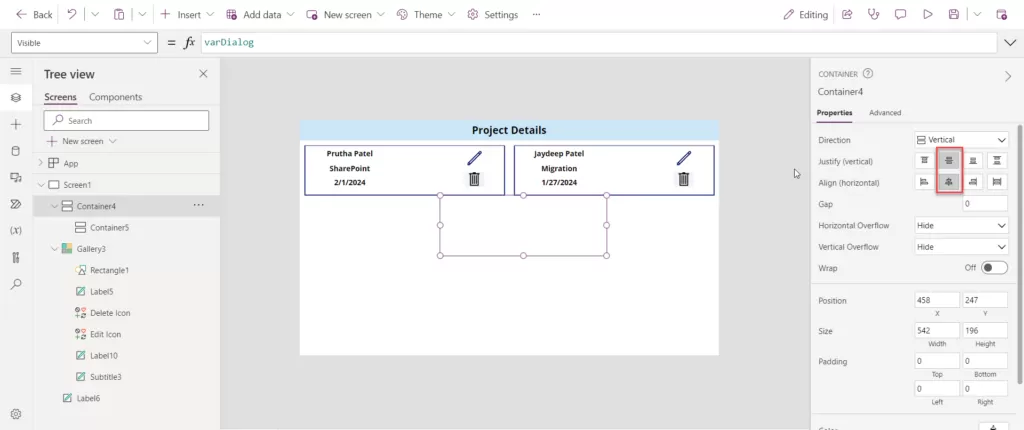
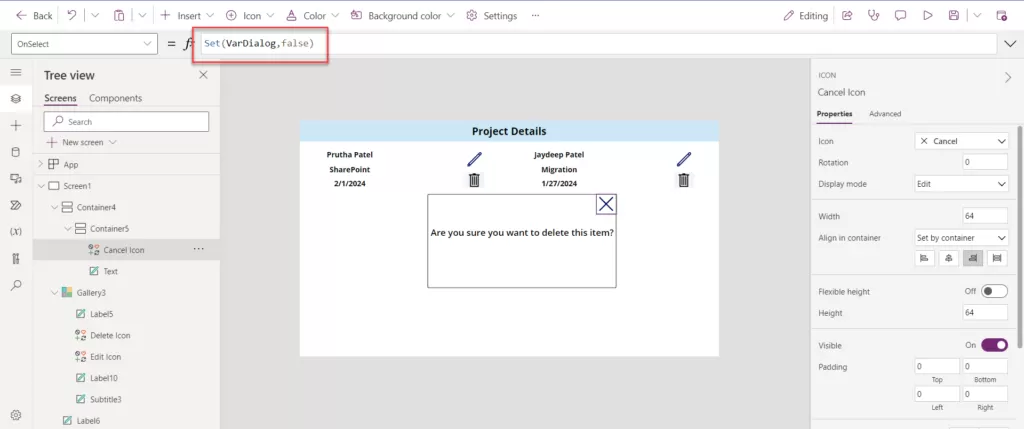
Boolean Operators (AND, OR NOT): Combine keywords for complex queries (explained in Microsoft Documentation: https://learn.microsoft.com/en-us/purview/ediscovery-keyword-queries-and-search-conditions).

image

Enable the keyword list checkbox, then add a keyword per row. Keywords in a row are linked by a logical operator (c:s), similar to the OR operator, with a limit of 20 rows to avoid large list issues. Conditions added must align with the keyword query, using a logical operator (c:c) akin to the AND operator, ensuring only items meeting both criteria appear in the results.( You can have up to 20 keywords in the keyword list.)

6. Review and submit to start the search:
Double-check your search settings. Click “Submit” to start the search process.

image

Image

7. Analyze Your Search Results:
After running the search, you’ll see estimated search results and statistics. Download these statistics to a CSV file for further analysis in Excel to view details like:

  • Content locations with matching items.
  • Number of results for each keyword (if using the keyword list).

Microsoft Purview provides valuable insights after you run a content search. Let’s break down the key sections:

1. Search content
This section offers a quick overview of what your search found. You’ll see the total number of items matching your criteria, along with a breakdown by location (mailboxes and sites) and estimated size

Image

Estimated Items by Location: Shows the total count and specifics of items found in mailboxes and on sites.
Estimated Locations with Hits: Details the total and specific numbers of mailbox and site locations containing matching items.
Data Volume by Location (in MB): Reports the total and specific data sizes for mailbox and site items.

2. Condition report
This section dives deeper into how your search terms performed. It shows statistics for each keyword or condition used in your search query. This helps you analyze which terms yielded the most results and potentially refine your search further. You can even download this report as a CSV file for further analysis in Excel.

image

Location Type: Identifies content location—Exchange for mailboxes, SharePoint for sites.
Part: Specifies if stats apply to the entire query (“Primary”) or individual keywords.
Condition: Indicates the keyword or condition generating the stats.
Locations with Hits: Counts content locations with matching items.
Items: Total number of matching items found.
Size (MB): Combined size of matching items in megabytes.

3. Top locations
This section identifies the content locations (mailboxes or SharePoint sites) with the highest number of matching items.
It displays the top 1,000 locations, allowing you to pinpoint where the most relevant information resides.
Similar to the Condition Report, this section offers the option to download a CSV report for further analysis.

image

4. Exporting Reports:
If you want to save your search results for future reference, you can export them. Simply click the “Actions” menu and select “Export report.”

Image

Choose the desired format and generate the report.

Image

Head over to the “Export” tab to locate the exported report.

Image

Click on the report to download it. When generating the report, you’ll see an “Export key”. This key is required to open the downloaded report. You can also change the export key while generating the report for added security.

Image

For exporting data beyond Purview:
While this guide focuses on exporting reports within Purview, if you’re interested in exporting data to your local system in a different context (e.g., PST files), you can refer to our separate blog titled “How to export Office 365 PST file with eDiscovery in Office 365” which provides more information on that specific process.


Newsletters