
Harnessing Data Insights With Power BI: Optimizing Decision-Making And Business Performance

The power of making informed decisions isn’t just advantageous; it’s a prerequisite for success. Organizations across the spectrum are recognizing the need to convert raw data into actionable insights, fueling their growth strategies and enhancing overall performance.

This is where the extraordinary capabilities of Power BI come into play, revolutionizing the way businesses extract, visualize, and interpret data. In this article, we delve into the realm of Power BI, exploring its seamless integration with existing systems, industry-specific use cases, scalability, performance, continuous monitoring, and alerts.

Let’s unravel the potential of Power BI and how it empowers businesses to make smarter decisions while optimizing their overall performance.
img-01

Integration with Existing Systems: A Synergy of Data and Familiarity
img-02

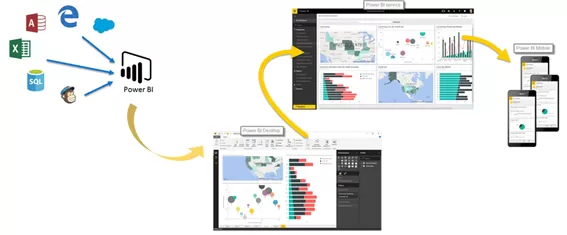
At the core of Power BI lies its remarkable ability to effortlessly integrate with a range of existing systems and platforms.

This integration extends to Microsoft’s own suite of products, including Excel, SharePoint, and Teams as well as numerous other external data repositories.

The synergy between Power BI and these familiar platforms empowers users to leverage their existing data infrastructure while gaining new insights. This easy integration not only streamlines data access but also promotes collaboration within environments that users are already comfortable with.

By connecting Power BI with Excel, users can elevate their data analysis capabilities to new heights, transforming static spreadsheets into interactive visualizations.

Integrating Power BI with SharePoint, including consolidating SharePoint list data, facilitates the creation of interactive reports and dashboards, enhancing data sharing and accessibility.

Moreover, combining Power BI with Teams facilitates real-time collaboration, allowing teams to analyze and discuss insights without leaving the communication platform.

This level of integration redefines how organizations harness the power of their data, effortlessly merging analysis with existing workflows.

Industry-Specific Use Cases: Precision in Diverse Fields

Power BI’s impact is magnified when tailored to industry-specific needs. Across sectors like retail, healthcare, finance, and manufacturing, organizations are leveraging Power BI’s capabilities to uncover insights that drive impactful decisions.

Healthcare Industry:

  • Patient Care: Power BI can analyze patient data to identify patterns and trends, enabling healthcare providers to offer more personalized and efficient care.
  • Hospital Efficiency: Hospitals can use Power BI to monitor and optimize resource allocation, staff scheduling, and patient flow, ultimately improving operational efficiency.
  • Cost Analysis: Power BI can help healthcare organizations track and manage costs, making healthcare more affordable and accessible.

Finance Sector:

  • Financial Reporting: Power BI allows financial institutions to create interactive dashboards for financial reporting and analysis, making it easier to track key metrics.
  • Risk Management: By integrating data from various sources, Power BI can help identify and mitigate risks in real time, ensuring better risk management.
  • Market Analysis: Financial analysts can use Power BI to monitor market trends, track investments, and make data-driven decisions.

Manufacturing Industry:

  • Production Optimization: Power BI can analyze production data to identify bottlenecks and inefficiencies, leading to better production planning and resource allocation.
  • Supply Chain Management: Manufacturers can use Power BI to gain visibility into their supply chain, track inventory levels, and optimize logistics and procurement.
  • Quality Control: Power BI can be used for quality control by analyzing data from sensors and machines to identify defects and reduce product recalls.

Retail Industry:

  • Sales Analysis: Retailers can use Power BI to analyze sales data, including product performance, sales trends, and seasonality. This allows for better inventory management and pricing strategies.
  • Customer Insights: Power BI helps retailers segment customers, understand their preferences, and personalize marketing efforts, improving customer retention and loyalty.
  • Inventory Management: Real-time inventory tracking and predictive analytics help retailers optimize stock levels, reducing overstock and stockouts.

In addition to these industries, Power BI can be applied to many other sectors, such as education, energy, agriculture, and more. Its flexibility and powerful data visualization capabilities make it a valuable tool for organizations looking to apply data-driven insights and make informed decisions in today’s data-driven world.

Scalability and Performance: Empowering Growth and Expansion 
img-03

As organizations grow, both their data requirements and the sources of data expand exponentially. Power BI is built to accommodate this growth through its scalability and performance-enhancing features.

Power BI’s cloud-based architecture allows businesses to scale up or down as needed, accommodating increasing data volumes and user demands.

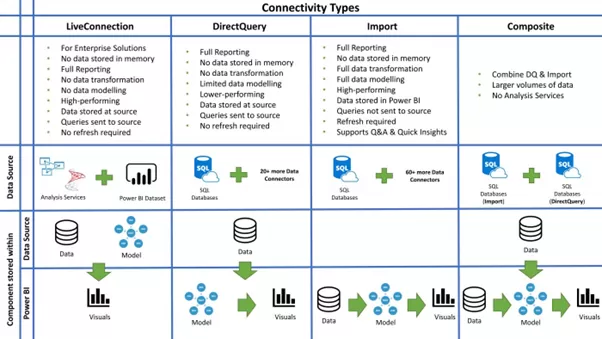
Its DirectQuery and Live Connection capabilities ensure that reports and dashboards reflect real-time data, providing accurate insights for critical decision-making.

With Power BI’s Dataflow feature, organizations can preprocess and transform data before visualization, enhancing performance and saving time.

Power BI’s elasticity ensures that as businesses evolve, their data capabilities evolve with them, providing consistently high performance and usability.

Continuous Monitoring and Alerts: Staying Ahead in Real-Time

Business insights are most valuable when they’re timely. Power BI understands this need and offers continuous monitoring and alerts.

With Power BI’s automated refresh and scheduling capabilities, reports and dashboards are updated in real-time.

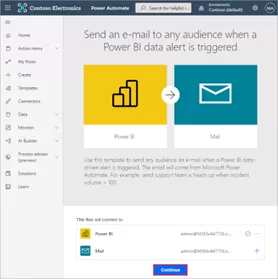
Users can set up alerts based on specific thresholds or conditions, ensuring that key stakeholders are promptly notified when critical metrics are met or exceeded.

This feature enables organizations to respond swiftly to changing scenarios, seizing opportunities and mitigating risks as they arise.

The ability to proactively monitor data and receive alerts ensures that businesses are always ahead of the curve.
img-04

Visual Impact: Making Complexity Understandable

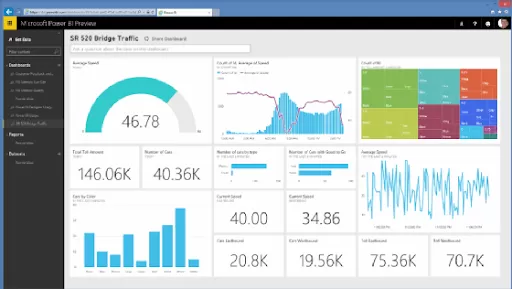
Power BI’s prowess isn’t limited to data analysis; it’s about lucid communication. The ability to translate intricate data into comprehensible insights through interactive dashboards and tailored visuals is its forte.

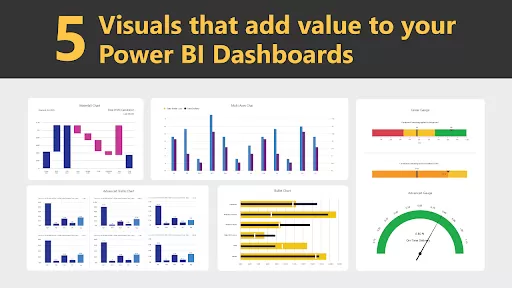
Visualizations like charts, graphs, and maps render complex data in user-friendly formats, allowing data narratives to be intuitive and accessible.

Visualization elevates Power BI beyond mere analysis – it’s the conduit that transforms complex insights into actionable strategies.

In conclusion, Power BI stands as a beacon of data-driven decision-making, offering a suite of tools and capabilities that empower organizations to optimize their performance.
img-05

Discover Power BI Solutions and how effortlessly it transforms raw data into decision-driving insights, optimizing performance across industries.

With its smooth integration, industry-specific adaptability, scalability, performance-enhancing features, and real-time monitoring, Power BI redefines how businesses make use of the potential of data.

As organizations navigate the complexities of the modern world, Power BI stands as a trusted ally, driving insightful decisions and unlocking new avenues of growth and success. Embrace the power of Power BI and steer your business toward a future of data-driven excellence.

As you navigate the complexities of data-driven decision-making, tap into the power of Power BI with Reality Tech. Our expertise not only ensures flawless integration but also maximizes the potential of Power BI in your unique context.

With a proven track record of delivering impactful solutions, we’re your partners on the journey to data-driven excellence.

Embrace the possibilities that Power BI offers, and steer your business toward a future defined by intelligent insights and optimized performance.

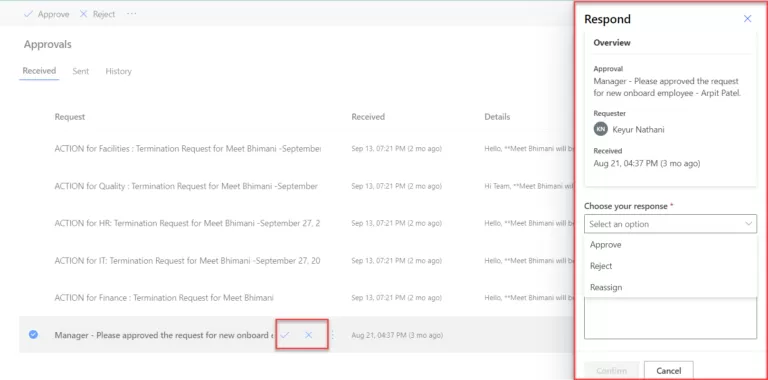
The Power of Workflow Automation: Simplifying Business Processes With Power Automate

Introduction:

Efficiency and productivity reign supreme in today’s rapidly changing business landscape. However, manual tasks and intricate processes often act as roadblocks, impeding progress and consuming valuable time. Fortunately, the advent of workflow automation has emerged as a game-changing solution, transforming the way businesses operate. At the forefront of this digital transformation stands Microsoft’s Power Automate, a dynamic platform that streamlines operations, enhances collaboration, and propels productivity to unprecedented heights.

The Challenge Before Power Automate

Before delving into the capabilities of Power Automate, it’s crucial to understand the challenges that organizations faced in a pre-automation era. Before the introduction of Power Automate, businesses grappled with numerous challenges like:

  • Manual Tasks: Repetitive and time-consuming tasks drained valuable resources, with employees spending countless hours on data entry and form filling. This not only consumed valuable time but also left room for errors, potentially leading to data inaccuracies and compliance issues.
  • Complex Processes: Navigating intricate workflows often resulted in errors and delays. Managing approvals, notifications, and data flows became increasingly challenging.
  • Communication Gaps: Siloed data and inefficient communication hindered collaboration, with teams operating in isolation and having limited access to critical information.
  • Email Overload and Document Version Confusion: Users frequently found themselves inundated with a deluge of emails, often accompanied by attachments. This email-centric approach created document version confusion, making it challenging to track and manage critical information effectively.

The Power Automate Solution

Power Automate steps in as the solution to these challenges, driving both operational efficiency and cost savings. It’s not just about automating tasks; it’s about reimagining how processes operate. Power Automate offers a transformative solution to these challenges, simplifying business processes by automating tasks and reducing the need for manual intervention. This not only makes complex processes efficient and error-resistant, ensuring tasks progress smoothly and accurately, but it also results in cost efficiency by reducing manual labor, minimizing errors, and streamlining processes. Silos are broken down, enabling seamless data sharing and collaboration.

How Power Automate Works

At its core, Power Automate leverages workflows to automate and optimize tasks and processes:

  • Forms and Actions: Custom workflows are built using forms and actions tailored to an organization’s needs. These workflows define how tasks are executed, providing a structured framework for managing processes efficiently
  • Event-Based Triggers: Actions are triggered based on specific events or conditions. For example, an approval workflow can be initiated when a request is submitted, eliminating the need for manual intervention and ensuring timely processing.
  • User-Friendly Interface: Power Automate offers an intuitive interface that allows users to design and customize workflows without needing extensive technical knowledge. Moreover, the interface and forms are mobile-friendly and responsive, enabling work on the go and ensuring that users can stay productive from any device, anywhere.
  • Automated Reminders and Escalations: Within the Power Automate ecosystem, automated reminders and escalations play a crucial role in streamlining exception handling. These features ensure that critical tasks are not overlooked, deadlines are met, and exceptions are promptly addressed. This proactive approach to process management enhances efficiency and reduces the risk of errors.

Explore how Power Automate can seamlessly integrate with your business processes to optimize approvals and notifications, driving efficiency and agility across your organization.

Key Features of Power Automate

Power Automate offers several key features that are instrumental in enhancing business processes:

  • Connectors: Integration with enterprise systems and third-party tools ensures that data flows seamlessly across applications and platforms.

img-01

  1. SQL Server: This connector enables interaction with Microsoft SQL Server databases. You can perform actions like querying databases, inserting records, updating data, and executing stored procedures.

img-03

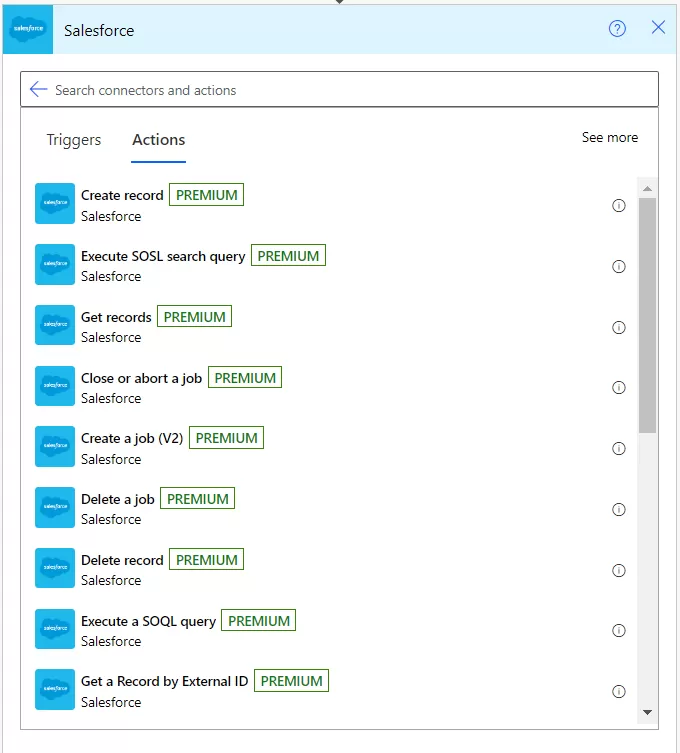
2.Salesforce: This connector provides integration with Salesforce, a widely used Customer Relationship Management (CRM) platform. It enables actions like creating, updating, and retrieving records, as well as triggering workflows based on Salesforce events.

img-03

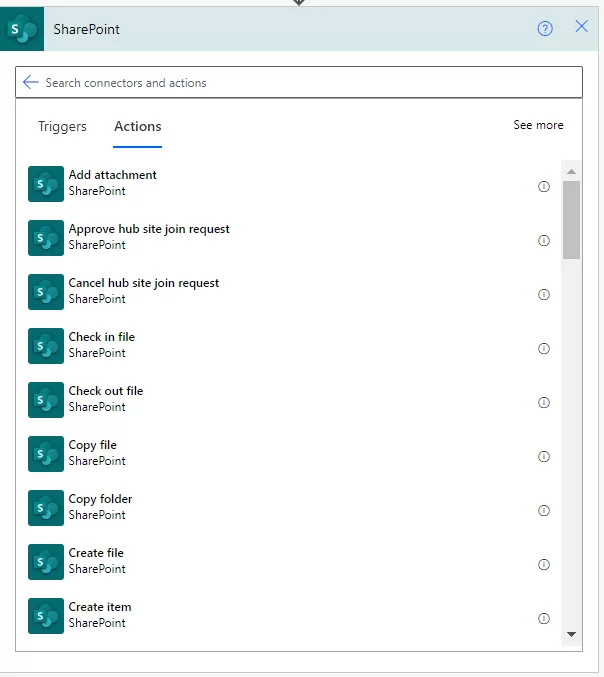
3. SharePoint: This connector is specifically designed for interacting with SharePoint Online.It allows you to perform operations such as creating, updating, and deleting files/items and lists within SharePoint.

img-04

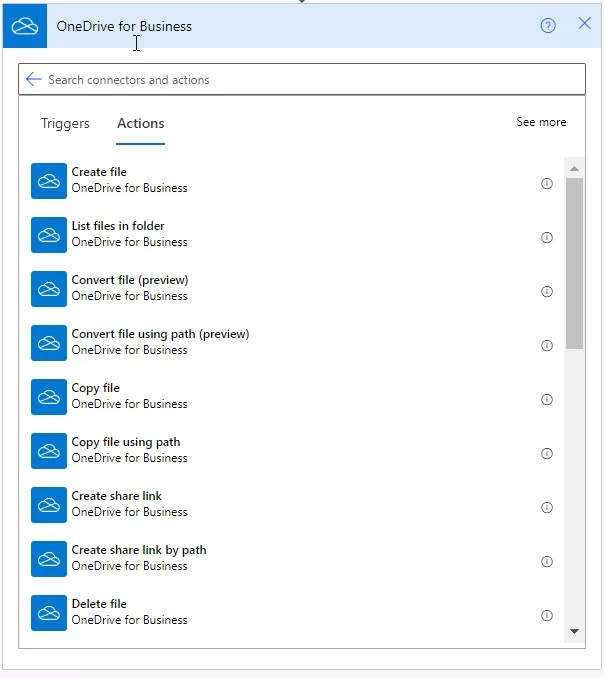
4. OneDrive for Business: This connector allows you to automate tasks related to OneDrive for Business, including actions like creating, updating, and deleting files.

  • Data Capture: Automates data collection from various sources, reducing the need for manual input and enhancing data accuracy.
  • Document Creation: Generates dynamic and personalized documents, such as contracts, reports, and invoices, based on predefined templates and data sources.
  • Dashboards: Power Automate provides intuitive dashboards that offer real-time visibility into workflow progress, allowing users to track and monitor the status of various processes. This feature enables better decision-making and keeps stakeholders informed.
  • Notifications: Power Automate allows for the configuration of notifications at various workflow stages. Users can receive alerts, updates, and reminders, ensuring that critical tasks are addressed promptly and efficiently.
  • Workflow Step Logging: Every step within a workflow can be logged and tracked, providing a detailed history of actions taken. This feature enhances transparency and accountability, as users can review the sequence of events within a workflow.

Seamless Integration with Existing Systems

Power Automate seamlessly integrates with various systems, creating a unified workflow. This includes integration with Microsoft Forms for data capture from multiple sources and SharePoint for enhanced document management and collaboration. It can also be easily integrated with a variety of third-party tools, ensuring a seamless fit within your existing technology ecosystem.

AI Integration for Enhanced Automation

Power Automate goes beyond traditional automation by leveraging artificial intelligence (AI) to enhance its capabilities. Through AI-driven features, the platform can learn from user interactions and make intelligent suggestions for workflow improvements. This adaptive learning allows organizations to fine-tune their processes over time, making them even more efficient and effective.

Additionally, Power Automate can seamlessly integrate with Microsoft’s AI services, unlocking advanced functionalities like natural language processing, image recognition, and predictive analytics. This integration empowers businesses to harness the power of AI to optimize their workflows, extract insights from data, and make more informed decisions.

Streamlining Data Capture and Document Creation

Effortless data capture and dynamic document creation are two standout features of Power Automate. By automating data capture from various sources, manual input is eliminated, reducing errors and improving data accuracy. Dynamic document creation enables the generation of personalized documents like contracts and reports based on predefined templates and data sources, saving both time and ensuring consistency.

Enhanced Collaboration and Insights and Scalability

Power Automate goes beyond automation; it empowers organizations with robust analytics and reporting capabilities, offering valuable insights into workflow performance and efficiency. Users can effortlessly track key metrics, monitor the status of workflows in real-time, and pinpoint areas for optimization. These insights drive informed decision-making, enhancing business outcomes.

Moreover, Power Automate boasts remarkable scalability. It can seamlessly grow alongside a business, accommodating increased workloads and complexities as the organization expands. This scalability ensures that your automation solutions remain effective and valuable in the long run, adapting to changing business needs and evolving workflows. Whether your organization is a startup with ambitious growth plans or an established enterprise, Power Automate can flexibly scale to match your requirements, providing a future-proof solution for your automation needs.

Realizing Success with Power Automate

Let’s explore the real-world impact of Power Automate.

Streamlining Employee Onboarding & Examples

Traditionally, employee onboarding involved a cumbersome series of paperwork, manual approvals, and resource provisioning. With Power Automate, this process can be transformed into a streamlined and efficient operation. New hires can complete digital forms, which automatically trigger approval workflows. Once approved, access to systems and resources is granted automatically. This not only speeds up the onboarding process but also ensures that new employees have everything they need from day one, enhancing their experience and operational efficiency.

Power Automate doesn’t stop at employee onboarding; it extends its transformative capabilities to other critical areas. For example, organizations can leverage Power Automate for Contract Management, streamlining the creation, approval, and management of contracts. Additionally, Employee Offboarding processes can also be automated, ensuring a smooth transition when employees leave the organization. These are just a few examples of how Power Automate can be tailored to fit specific business needs, making it an invaluable asset for organizations seeking to optimize their workflows and enhance operational efficiency.

A remarkable facet of Power Automate lies in its unparalleled integration capabilities. The platform seamlessly interfaces with a myriad of tools and systems, including Microsoft Forms, SharePoint Lists/Libraries, Azure SQL, Salesforce, and a plethora of third-party applications. The result is a harmonious ecosystem where data flows effortlessly, processes synchronize seamlessly, and business operations resonate with unparalleled efficiency.

As you contemplate the transformative capabilities of workflow automation with Power Automate, explore our blog on Seamlessly Automate Your SharePoint Tasks with Power Automate to discover how this powerful duo can reshape your business processes and elevate your operational efficiency.

Embracing Workflow Automation with Power Automate

In conclusion, the era of manual and cumbersome business processes is evolving rapidly, thanks to workflow automation and Microsoft Power Automate. Businesses are now equipped to streamline operations, reduce complexities, and boost productivity. Embrace automation, leverage Power Automate’s capabilities, and propel your organization toward a more efficient and productive future.

The power of workflow automation extends beyond technology implementation; it signifies a fundamental shift in how businesses operate. With Power Automate as your ally and guided by the expertise of Reality Tech, your organization can redefine processes, unlocking unprecedented efficiency, productivity, and agility.

In a world where efficiency is paramount, Microsoft Power Automate is your gateway to a brighter, more streamlined future. Embrace automation, simplify your processes, and elevate your organization’s productivity.

SharePoint for Remote Work: Enabling Collaboration and Productivity Anywhere

The world of work has undergone a significant transformation, with remote work becoming increasingly prevalent. The need for robust collaboration tools has never been greater as organizations strive to ensure productivity and effective communication among remote teams.

In this blog, we delve into the depths of SharePoint, an exceptionally comprehensive solution that empowers seamless collaboration, boosts productivity, and enables effective remote work.

Join us as we explore the extraordinary features of SharePoint and how it can elevate team efficiency, communication, and data security, all while optimizing remote work.

The Rise of Remote Work and the Need for Robust Collaboration Tools:

img-01

As remote work becomes the new normal, organizations face the imperative to equip their teams with tools that enable seamless collaboration and productivity.

The physical distance between team members necessitates a solution that bridges the gap and fosters effective communication (without defaulting to email), efficient document sharing, and real-time collaboration.

SharePoint stands out as the go-to platform that addresses these needs and revolutionizes the way remote teams work together.

SharePoint: Enabling Seamless Collaboration and Productivity in Remote Work Scenarios:

img-02SharePoint boasts a myriad of features that empower remote teams to work collaboratively, enabling them to transcend the limitations of geographical boundaries.
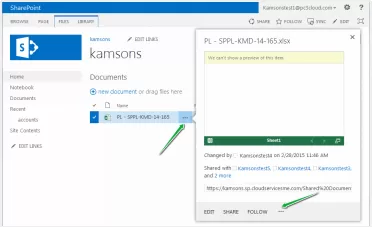
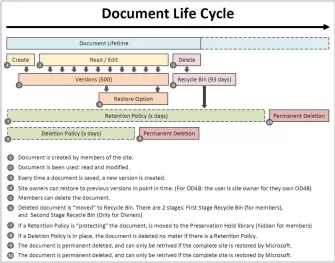
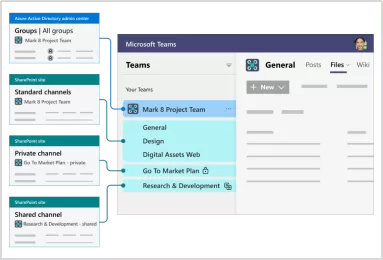
With its versatile capabilities, SharePoint ensures that teams remain connected, collaborative, and productive, regardless of their physical location.

1. Co-Authoring and Real-Time Updates: 

img-03

One of the standout features of SharePoint is its ability to facilitate real-time co-authoring, enabling team members to work on documents simultaneously. This fosters a dynamic and collaborative environment where ideas flow freely, fostering innovation and collective problem-solving.

With real-time updates, every team member can witness changes as they happen, eliminating the need for endless email threads and version control headaches.

2. Document Sharing and Accessibility: 

img-04

SharePoint’s document-sharing capabilities form the backbone of efficient remote collaboration. With its intuitive document libraries and folders, teams can easily organize and categorize files, ensuring smooth accessibility and seamless sharing.

Remote team members can effortlessly retrieve information, enabling streamlined workflows and reducing time wasted searching for critical documents.

SharePoint Online extends its prowess to foster external collaboration allowing users to securely share files and collaborate with external partners, such as contractors, vendors, or clients, all while maintaining stringent data protection measures.

3. Integration with Microsoft Teams: 

img-05

To truly supercharge remote collaboration, SharePoint integrates seamlessly with Microsoft Teams, providing a unified solution that combines collaboration and communication tools.

With this integration, virtual meetings become effortless, allowing team members to connect, share screens, and collaborate on documents in real time.

Chat functionality within Teams fosters quick and efficient communication, further enhancing remote team collaboration.

4. OneDrive with Sync for Offline Work:

img-06

For those instances where connectivity may be limited, SharePoint’s integration with OneDrive offers a powerful solution.

OneDrive with Sync enables team members to continue working on documents even without an internet connection.

Changes made offline are automatically synced when the connection is reestablished, ensuring a seamless transition and uninterrupted productivity.

5. Advanced Data Security: 

img-07

In a remote work environment, data security is of paramount importance. SharePoint provides robust security measures to protect sensitive information and prevent unauthorized access.

With features such as role-based access control, encryption, and data loss prevention, organizations can rest assured that their data is safeguarded even in remote settings.

More advanced capabilities are available within Azure Information Protection (AIP) and Microsoft Purview, allowing label and policy settings for a more unified and nuanced management capability that we’ll explore in a future article.

6. SharePoint as an Intranet: 

img-08

SharePoint serves as an invaluable intranet solution, empowering organizations to create cohesive and personalized intranet portals. These centralized hubs offer a seamless gateway for employees to access important information, news, and updates.

With customizable layouts, newsfeeds, and event calendars, SharePoint’s intranet capabilities foster a sense of unity and engagement within distributed teams.

Additionally, the intranet acts as a virtual water cooler, providing a space for employees to share ideas, collaborate on projects, and build a strong sense of community, even when working from different locations.

7. Usage Analytics:

img-09

SharePoint Online equips organizations with powerful usage analytics, granting valuable insights into how the platform is utilized by remote teams.

These analytics offer a comprehensive understanding of user behaviors, content engagement, and collaboration patterns.

Armed with this data-driven knowledge, organizations can identify areas for improvement, optimize remote work strategies, and enhance overall productivity.

Usage analytics become the compass guiding organizations towards more effective remote collaboration, empowering them to make informed decisions that drive success.

8. Integration with Microsoft Search: 

img-10

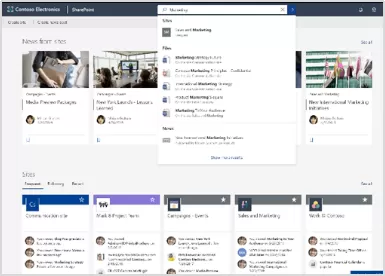
SharePoint Online seamlessly integrates with Microsoft Search, a powerful cross-application search tool within Microsoft 365.

This integration delivers a unified search experience, allowing remote workers to swiftly locate information across various Microsoft 365 applications.

With a single search bar, users can access files, emails, documents, and even people, streamlining the retrieval of critical information.

This unified search capability eliminates the need for navigating multiple applications, enhancing productivity and efficiency for remote workers and ensuring that valuable time is spent on collaboration and essential tasks rather than searching for scattered information.

The potential of SharePoint in fostering effective remote collaboration is endless. Check out the Top Features and Benefits of SharePoint Online for a more comprehensive understanding of how SharePoint Online can enhance collaboration and teamwork.

Tips and Best Practices for Optimizing SharePoint in Remote Work:

To maximize the potential of SharePoint in remote work scenarios, here are some tips and best practices to consider:

  • Leverage alerts to ensure team members stay updated on critical changes and developments in real-time
  • Customize and edit basic Flow templates to automate routine tasks, freeing up time and increasing productivity
  • Create different views in lists/libraries to allow team members to view filtered data relevant to their specific roles and responsibilities.
  • Review the Office 365 tenant settings for tuning the right set of features, sharing, and control for your enterprise.
  • Create an Intranet in SharePoint so the enterprise, down to each team and department, has access to all the links, documents, events, news, and calendars needed to hit the ground running.

Understanding the advantages of transitioning to SharePoint Online and the smooth migration process can greatly contribute to optimizing your collaboration and productivity

For valuable insights and practical tips, check out Why Migrate to SharePoint Online and Tips for Migration.

SharePoint for Virtual Meetings and Communication:

In conjunction with Microsoft Teams, SharePoint serves as a powerful platform for virtual meetings and seamless communication.

Teams can conduct virtual meetings, initiate chats, and collaborate on documents in real-time, ensuring remote teams are always connected and informed.

SharePoint for Knowledge Management:

In addition to collaboration and document management, SharePoint excels as a knowledge repository.

Through features such as wikis, document libraries, FAQs, and robust search functionality, teams can capture, organize, and share valuable information.

This promotes continuous learning, enhances productivity, and empowers remote teams with a wealth of knowledge.

Optimize Your SharePoint Environment with Reality Tech:

At Reality Tech, we specialize in optimizing SharePoint environments to suit the unique needs of remote collaboration.

Our expertise spans SharePoint development, migrations, workflows, and support, enabling businesses to maximize efficiency, improve communication, and enhance the overall remote work experience.

Regardless of your physical location, Reality Tech can be your trusted partner in unleashing the true potential of SharePoint.

Conclusion:

As remote work continues to shape the future of work, SharePoint emerges as a game-changer, enabling seamless collaboration, productivity, and secure data management.

With its versatile features, SharePoint empowers remote teams to collaborate effectively, communicate effortlessly, and access critical information from anywhere.

While SharePoint offers incredible out-of-the-box functionality, selecting the right SharePoint services firm can make a significant impact on your business’s success. That’s why it’s crucial to know how to choose the ideal SharePoint services partner for your business.

However, there is more to SharePoint than meets the eye.  From aligning with unique requirements to optimizing workflows, SharePoint configuration and even customization opens doors to endless possibilities, helping you tailor your SharePoint environment to meet business needs.

Partnering with Reality Tech ensures that your SharePoint environment is fine-tuned to drive success, regardless of physical location. Embrace SharePoint and revolutionize your remote work experience.


Ultimate Guide to Microsoft Purview: Revolutionizing Data Governance and Compliance

In this data-driven era, organizations face a significant challenge – managing and safeguarding their vast and diverse data assets while adhering to strict regulatory requirements. As data grows exponentially, so does the complexity of ensuring its security and compliance.

 Enter Microsoft Purview, a game-changing data governance and compliance platform designed to provide organizations with a unified view of their data estate, revolutionizing the way businesses handle data.

With its powerful suite of features and cutting-edge technology, Purview offers a holistic and proactive approach to data governance, helping businesses unlock insights, secure sensitive information, and streamline compliance processes.

Let’s explore the potential of Microsoft Purview and how it can transform the landscape of data governance and compliance within your company.

What is Microsoft Purview?

img-01

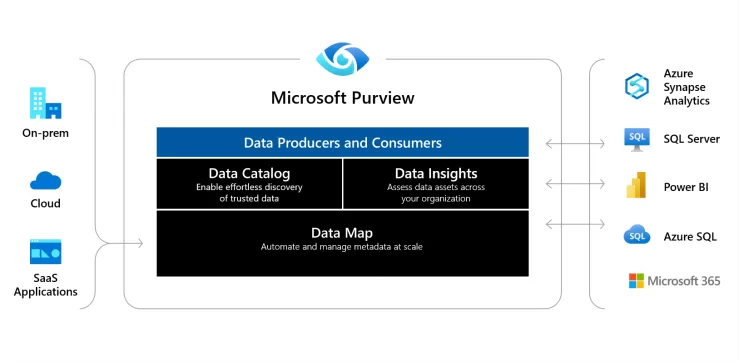
Microsoft Purview is a powerful data governance and data management tool offered by Microsoft. It provides businesses with a comprehensive solution to discover, classify, and manage their data assets across various sources, both within their organization and in the cloud.

With Purview, businesses can gain valuable insights into their data, understand its lineage, identify sensitive information, and ensure compliance with data regulations.

This enables organizations to make informed decisions, protect their sensitive data, and drive efficient data-driven processes throughout their enterprise.

By providing a unified view of data across the organization, Microsoft Purview empowers businesses to harness the true potential of their data, transforming it into a strategic asset for growth and success.

Benefits of Microsoft Purview:

  1. Holistic Data Visibility:

img-02

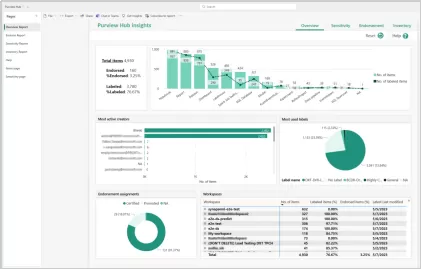
Gaining a comprehensive and centralized view of the entire data estate is a crucial advantage offered by Microsoft Purview. Businesses can now gain invaluable insights into data sources, relationships, and usage patterns.

This enhanced visibility enables data-driven decision-making and optimizes data management strategies, leading to enhanced efficiency and productivity.

  1. Proactive Insider Risk Management:

Understanding and mitigating insider threats are critical components of data security. Microsoft Purview actively monitors user activity to detect suspicious behavior patterns, allowing organizations to proactively address potential risks and ensure data security.

  1. Integration Capabilities:

Purview seamlessly integrates with a range of business applications, including SharePoint, Salesforce, Outlook Calendars, SQL Server, Teams, and Planner, enhancing automation capabilities and streamlining data workflows.

Key Features of Microsoft Purview:

  1. Automated Data Classification:

img-03

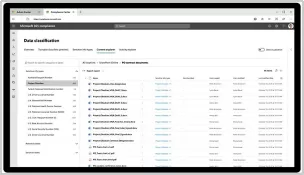
Accurate identification and classification of sensitive data are essential for data protection and compliance. With Purview, organizations can seamlessly identify and classify data based on predefined policies or custom criteria, ensuring regulatory compliance and bolstering data security.

Leveraging the power of AI and ML, Purview automatically classifies data based on sensitivity, risk, and content, streamlining the data classification process for efficient data protection and compliance.

img-04

  1. Intelligent Information Protection:

Purview empowers organizations to enforce data protection policies on sensitive data, preventing unauthorized access and safeguarding sensitive information from unauthorized disclosure.

With information protection, businesses can now benefit from sensitivity labels that offer seamless classification and protection of their valuable data without compromising productivity and collaboration.

Purview enables organizations to apply granular protection policies to sensitive data, ensuring that data remains secure and accessible only to authorized personnel.

Using sensitivity labels, users gain the ability to:

  • Apply encryption and content markings to secure documents and emails.
  • Safeguard content in various Office apps on different platforms.
  • Protect content in third-party apps with Microsoft Defender for Cloud Apps.
  • Secure containers like Teams, Microsoft 365 Groups, and SharePoint sites with privacy settings.
  • Label and encrypt meeting invites and chat in Teams for added protection.
  • Extend sensitivity labels to Power BI and Microsoft Purview Data Map to protect data beyond the service.
  • Enable third-party apps to read sensitivity labels and apply protection settings.
  • Label content to indicate sensitivity levels and generate usage reports.

What’s more, the versatility of sensitivity labels allows organizations to extend their protective reach to secure containers such as Teams, Microsoft 365 Groups, and SharePoint sites with privacy settings.

Even meeting invites and chats in Teams can be labeled and encrypted for added protection.

  1. Comprehensive Insider Risk Management:

Microsoft Purview’s advanced analytics and behavior monitoring capabilities proactively identify insider threats, empowering organizations to take swift action to mitigate risks and protect their data.

Purview’s Insider Risk Management feature provides detailed insights into user activities, helping organizations understand patterns that may indicate malicious intent or security vulnerabilities.

With this valuable information, businesses can implement targeted security measures, such as additional authentication steps or temporary access restrictions, to prevent potential data breaches.

  1. Effortless Content Search:

Microsoft Purview simplifies data retrieval and auditing processes with its powerful content search capabilities. Whether for auditing or eDiscovery purposes, Purview allows businesses to quickly search and retrieve specific data sets or files across various sources.

The intuitive search interface enables users to pinpoint relevant information effortlessly, saving valuable time and effort in data discovery.

  1. Data Loss Prevention:

Data security is a top priority for businesses, especially when dealing with sensitive information. Microsoft Purview’s Data Loss Prevention (DLP) features empower organizations to implement robust policies and controls to prevent the unauthorized disclosure or loss of sensitive data.

With Purview’s DLP, businesses can proactively safeguard their valuable data assets, ensuring compliance with data protection regulations and maintaining customer trust.

  1. Seamless Compliance with Communication Policies:

Communication compliance is a crucial aspect of data governance. With Purview, businesses can effectively monitor and enforce compliance with communication policies across various channels, such as emails and chats, promoting a secure and compliant data environment.

  1. Enhanced Information Barriers:

To maintain data integrity and prevent conflicts of interest or inappropriate access, businesses can leverage Purview’s Information Barriers feature.

This capability enforces a separation between certain users or groups, limiting data access based on defined policies.

By effectively controlling data flow, organizations can enhance security and minimize the risk of unauthorized data exposure, ensuring data stays in the right hands.

  1. Streamlined Record Management:

Practices

img-05

Compliance with regulatory requirements is crucial for businesses, especially when it comes to managing records and documents. With Purview, users can create retention labels that can be applied manually or automatically, providing flexibility and control over data retention.

To get started with retention labels, users first need to create a label definition that outlines the specific retention settings for the label.

Once the label definition is created, it can be published. Users have the option to apply the label manually by selecting the content they want to label and choosing the appropriate label from the list of available options.

img-06

Moreover, Purview offers the capability to apply labels automatically using auto-apply policies, streamlining the process further. Users can create custom auto-apply policies that specify conditions that must be met for the label to be applied automatically.

For instance, an auto-apply policy can be configured to apply the label to all documents created in a specific location or containing particular keywords.

But it doesn’t end there—Purview also provides Disposition Review, a crucial process for deciding what to do with old records after their retention period has expired.

During disposition review, users can extend the retention date, relabel, add reviewers, or dispose of records. This process ensures that records are managed and disposed of in accordance with your organization’s policies and procedures, promoting compliance and avoiding regulatory fines and penalties.

  • Compliance: Disposition review ensures that records are managed and disposed of in accordance with your organization’s policies and procedures.
  • Efficiency: With efficient disposition review, you can optimize your data storage and utilization. By disposing of old or unnecessary records, you can reduce the amount of storage space needed for your data.
  • Enhanced Data Security: Protecting your records from unauthorized access, modification, or deletion is vital for data security. Disposition review in Microsoft Purview allows you to identify records that may be at risk and implement appropriate security measures to safeguard sensitive information.
  1. Simplified eDiscovery:

Legal and compliance requirements often necessitate rapid data retrieval. eDiscovery, a powerful feature of Microsoft Purview, greatly enhances the efficiency and effectiveness of legal proceedings and compliance audits.

Purview streamlines the eDiscovery process, enabling organizations to quickly identify and retrieve relevant data sets and files.

With eDiscovery, you can automate the identification and application of legal holds to relevant data, ensuring that critical information is preserved and protected for legal purposes.

The feature also provides a variety of tools to help you search for relevant data, including keyword searches, date ranges, and custodian filters. You can also use predictive coding to help identify the most relevant data swiftly and accurately.

Moreover, eDiscovery makes it seamless to export relevant data from your eDiscovery case in various formats such as PDF, CSV, and XML, making it convenient to share information with legal teams or regulatory authorities.

  1. Robust Audit Trail:

Staying on top of user activity and system events is vital for compliance and security purposes. Microsoft Purview’s audit capabilities allow businesses to track and report on user interactions with data and system events.

This valuable insight helps organizations identify potential risks, monitor data usage patterns, and ensure adherence to data security and compliance policies.

With Purview’s auditing features, businesses can maintain transparency and accountability in their data management practices.

  1. Effective Data Lifecycle Management:

Microsoft Purview offers robust data lifecycle management, ensuring effective data management from creation to disposal. Retention policies can be created from the Data lifecycle management catalog.

These policies allow organizations to manage the lifecycle of data in various locations, providing centralized data governance. You can apply a single policy to multiple locations or specific ones, with the retention period based on content creation or modification dates.

When items are moved outside their specified container, a copy is retained in a secure location, but the retention settings do not travel with the content.

For that purpose, retention labels should be used instead. Microsoft Purview’s data lifecycle management empowers organizations to streamline data retention, enhance compliance, and maintain responsible data stewardship.

Overcome Microsoft Purview Implementation Challenges with Reality Tech

During the implementation of Microsoft Purview, organizations may encounter challenges, issues, or limitations. Licensing costs, configuration challenges, performance issues, administrative access limitations, and reporting needs must be carefully evaluated and addressed to ensure a seamless deployment.

With Reality Tech’s proven experience and deep understanding of Microsoft Purview, businesses can confidently navigate these challenges and unlock the full potential of this powerful data management solution.

Our team of experts stands ready to assist you at every step, ensuring a smooth and successful implementation that meets your unique business needs.

Also, if you are looking to ensure comprehensive compliance across your organization, check out Microsoft Purview Compliance Manager, where we delve into how this powerful tool can help you achieve regulatory compliance and streamline your compliance management processes seamlessly.

Discover the perfect duo of Microsoft Purview and Purview Compliance Manager to revolutionize your data governance and compliance strategies.

In conclusion, Microsoft Purview empowers organizations to transform their data governance and compliance strategies, driving data insights, enhancing data protection, and ensuring adherence to regulatory standards.

As a trusted partner, Reality Tech leverages its expertise to assist organizations in harnessing the full potential of Microsoft Purview.

With a focus on streamlining workflows, optimizing efficiency, and ensuring compliance, Reality Tech enables businesses to unleash the true power of Purview, taking your data governance and compliance practices to new heights of success.

Embrace Microsoft Purview and revolutionize the way you manage and protect your data estate.

Creating A Custom Site Template in SharePoint Online

Summary

In this blog post, I share the steps for creating the custom template for any SharePoint Online site — an essential capability if you’re customizing your SharePoint development solutions for scalable collaboration and branding.

Now let’s start building the custom template, for which we will run the following commands.

Step 1

First, create a SharePoint site. If you’re new to the platform or wondering why it’s worth using, start with this guide on SharePoint Online benefits for collaboration and teamwork.

Step 2

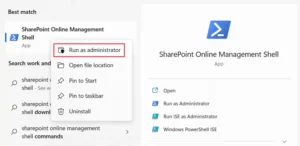
Install “SharePoint Online Management Shell” and open as “Run as Administration”


img-01

Step 3

Connect the SharePoint tenant using the following command. Make sure your connection setup aligns with SharePoint security best practices — especially if your template will be deployed across sensitive business environments.

Tenant Admin Url – https://anyorganization-admin.sharepoint.com/

Connect-SPOService -url “Tenant Admin Url”

Step 4

Execute the command below for creating the theme according to the requirements.
$themepallette =@{
"themePrimary"="#9b59b6";
"themeLighterAlt"="#faf7fb";
"themeLighter"="#f5eef8";
"themeLight"="#ebdef0";
"themeTertiary"="#d5b9e0";
"themeSecondary"="#a569bc";
"themeDarkAlt"="#8e4ba8";
"themeDark"="#6e3a83";
"themeDarker"="#572e67";
"neutralLighterAlt"="#f8f8f8";
"neutralLighter"="#f4f4f4";
"neutralLight"="#eaeaea";
"neutralQuaternaryAlt"="#dadad";
"neutralQuaternary"="#d0d0d0";
"neutralTertiaryAlt"="#c8c8c8";
"neutralTertiary"="#d6d6d6";
"neutralSecondary"="#474747";
"neutralPrimaryAlt"="#2e2e2e";
"neutralPrimary"="#333333";
"neutralDark"="#242424";
"black"="#1c1c1c";
"white"="#ffffff";
"primaryBackground"="#ffffff";
"primaryText"="#333333";
"bodyBackground"="#ffffff";
"bodyText"="#333333";
"disabledBackground"="#f4f4f4";
"disabledText"="#c8c8c8";
}

Add-SPOTheme -Name “Test Purple” -Palette $themepallette -IsInverted $false Here we can provide the theme’s name based on requirements.

Step 5

Now we’ll initialize the previously created theme and site logo. If you’re migrating from a legacy system, this is a great way to unify branding after a file share to SharePoint Online migration.

$site_script=@'
{
"$schema":"schema.json",
"actions":[
{
"verb":"applyTheme",
"themeName":"Test Purple"
},
{
"verb":"setSiteLogo",
"url":"Site Logo Url Path"
}
],
"bindata":{ },
"version": 1
}
'@

Here, we replace the “Site Logo Url Path” with the link, where it is located in one of the document libraries.

Step 6

Run the below command to return the ID
	
Add-SPOSiteScript -Title "TestSite" -Content $site_script -Description "Creates Test Site Script"

Here, you can change the Title and Description based on the requirements.

Step 7

	
Add-SPOSiteDesign -Title "TestSite" -WebTemplate "68" -SiteScripts "ID" -Description "Test Site"

Step 8

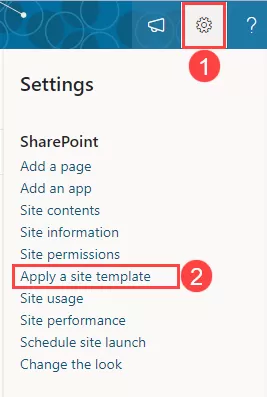
Now open existing the SharePoint site which we created in site tenant, we click on gear icon, then click on “Apply a site template”.

img-02

Step 9

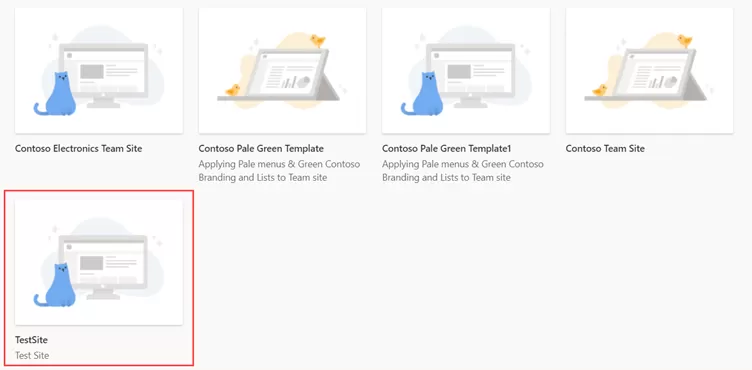
Go to “From your organization” and you can see your created customized template and use this template in the site.

img-03

Step 10

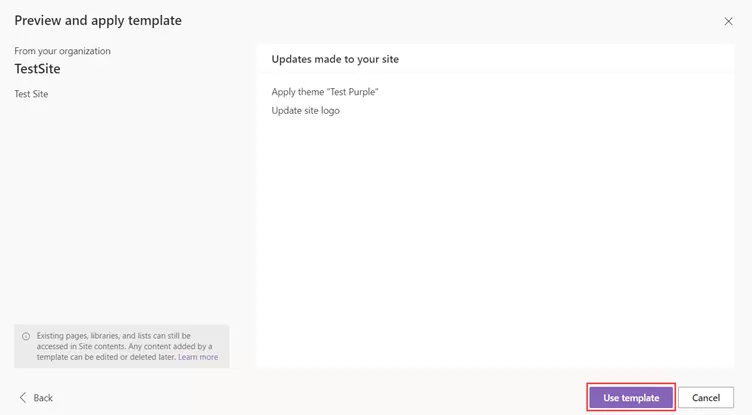
After selecting the template click on “Use template”. It can take a few times for apply template apply the template the the site.

img-04

I hope, this article will help you in building for your app.

In summary, we’ve created a custom site template in SharePoint that brings consistent branding and configuration across your organization. For tailored implementation or help managing permissions, themes, or automation, check out our SharePoint development services.

Hope this helps!!  Happy SharePointing!

Confluence to SharePoint Migration – Step by Step Guide

As businesses grow, the need to store, secure, and manage crucial information becomes increasingly important. Microsoft SharePoint is a cloud-based system that has gained a reputation for being a reliable and powerful tool to meet collaboration needs.

With enterprises discovering that SharePoint comes included with their Microsoft Office licenses and seamlessly integrates with Active Directory, migrating from legacy systems to SharePoint has become an attractive option to consolidate intranet and collaboration information.

If you are currently using Confluence as your system for wiki-based corporate reference information, transitioning to Microsoft SharePoint might be a wise choice.

In this article, we offer insights into a smooth and successful Confluence to SharePoint migration.

Benefits of Confluence to SharePoint Migration? 

There are a range of benefits to SharePoint over Confluence that are worth exploring.  Let’s consider some of the benefits:

1: Effortless Integration

SharePoint, as part of Microsoft 365, offers incredible integration with other Microsoft applications, like Microsoft Outlook, Teams, OneDrive, and Office.

This means smoother collaboration, higher productivity, and better shared access to files and documents.

For example, access to documents shared on Teams via SharePoint and OneDrive accounts, alerts, tasks, versioning, and approval workflows become available to team members.

2: Enterprise-grade Features

Enterprise-level features like search, customizable workflows, advanced security and permissions, and integration with other Microsoft tools are offered by Office 365 in general and SharePoint in particular

3: Flexibility and Scalability

Being highly flexible, SharePoint allows for customization according to business needs and processes.

In addition, it boasts excellent scalability, ensuring that vast data shared by users can be accessed across geographical locations, devices, and browsers without requiring third-party tools.

Metadata can be centrally defined across the organization, ensuring organization-wide search capabilities.

4: Support and Community

With an enormous user community and support resources, technical and support issues quickly and efficiently.

An array of online communities, online user group channels, forums, and online documentation are all available to seek quick and effective resolutions to issues, with a range of vendors offering Microsoft product support.

Additional Read

SharePoint for Enterprise Content Management – Why Should Choose?

Steps For Confluence to SharePoint Migration

Step 1: Documenting the Information Architecture

We start by analyzing the file types and sizing, including wiki pages and their relationship to corporate divisions and departments.

We define the site hierarchy, structures, and metadata, as well as any necessary features, customizations, and workflow.

Finally, the correct permissions are required for exporting from Confluence and uploading to SharePoint, with security being a critical dimension of the information architecture and its alignment with Active Directory.

Step 2: Choose the Right Migration Tool for Your Business

Choosing a migration tool that meets specific business requirements is essential for a seamless migration.

We consider factors like whether the Confluence instance is migrated from a cloud, server, or data center.

Data size, space requirements, and throughput all need to be evaluated to decide whether cloud or on-premises migration tools are required.

Customizable migration tools using configuration and mapping options are recommended for hassle-free migration.

In migrating a large dataset from Confluence, we would want a customizable migration tool for hassle-free migration that allows for a maximum of options and mappings and configuration for an optimal migration.

Additional Read

How to Choose the Right SharePoint Migration Tool and Service Partner?

There are advanced options and capabilities to consider, such as URL redirection, that can allow existing legacy URLs to be handled seamlessly going forward so embedded links can still work post-migration in SharePoint.

Step 3: Mapping

Metadata must be selected to preserve from the source and how each field will map to the destination.

Mapping subsets of content, such as departmental content, to structures in the destination lets us refine migration to compensate for organic growth at the source.

Select content can be excluded from migration to only migrate the latest and most relevant content, allowing select fields to be mapped, including “Creator,” “Creation Date,” Editor, Author, timestamps, and other fields.

Step 4: An initial migration

Load the initial dataset from Confluence to SharePoint for consideration. Mapping is refined iteratively, and objects are mapped for optimal usability in the destination.

Once the initial migration is complete, even for just one department, delta migrations and cutover can be done.


Step 5: Delta Migration to SharePoint

Using a sophisticated migration tool to identify what was already migrated and what is remaining for migration becomes necessary in a delta migration. Mappings are crucial for data subsets in a usable format on the destination.

The mapping is the key, so each type of content at the source is mapped to a usable type of content on the destination, with the result being coherent and usable by end users. Note that migrating pages from Confluence takes effort.

Step 6: Train users for quick adoption

To ensure quick adoption of the new productivity platform, training users is crucial. Training resources are tailored to meet specific business requirements, with 1-1 training, group training, how-to-reference guides, and other approaches, including “Train the Trainer.”

Training for in-house support and administrators is also essential. Consequently, you need to determine suitable training resources for your organization.

Conclusion

Confluence to SharePoint migration is a stride towards consolidating business systems, centralizing control, and management of information.

Enhanced productivity, successful collaboration, and efficient data management can be achieved with SharePoint’s enterprise-grade features.

When you opt for migration, hire an experienced partner for seamless migration and training.

A dedicated team can help plan and execute a successful migration while providing training to ensure effortless platform adoption by users.

New SharePoint Feature: External File Requests

SharePoint External File Requests

With SharePoint, one can now request external files quickly and easily. The feature initially surfaced first back in 2019 within OneDrive. It is now available in SharePoint as well.

This out-of-the-box feature allows users to request and collect files from anyone inside or outside the organization quickly and securely.

With file requests, one can request documents from anyone, irrespective of whether they have access to your SharePoint document libraries or other sites.

The file request link can be included in a range of communication channels, including email signatures, chats, and your intake or onboarding procedures with customers, prospects, and vendors.

The procedure is quick and straightforward for the recipient. They receive a link and upload the file via browser, and the file is then stored in SharePoint.

This feature improves overall collaboration and streamlines processing. File sharing in this manner gives users a simple and secure way to upload files without compromising access or requiring permission changes.

The result is fewer files being emailed and a reduced load on email recipients extracting the file from the email and uploading to a specific SharePoint location.

How SharePoint External File Requests Help My Enterprise?

This easy and secure way of collecting files from anyone and everyone is beneficial for organizations as it leads to smoother and better collaboration and faster business processing and automation with no code and less user interaction and manual filing effort.

1. Greater Collaboration:

The file request feature allows for streamlined collaboration and sharing with external users.

It enables organizations and their employees to collect files easily from clients, customers, and vendors in a controlled and secure manner while enhancing the coordination, communication, and collaboration processes.

2. Simplified File Collection: 

This feature enables a smoother and more secure file collection process that is easy and simple for users.

It has an extremely easy, user-friendly web interface for recipients to upload files while avoiding the requirements for complicated and time extensive file transfer methods that might entail licensing or additional credential management.

3. End-to-End Data Security: 

Apart from easy file sharing, it also ensures end-to-end data security and control, ensuring that external users can only upload files to a specific folder that they want and does not grant access to the folder or library to the user.

It mitigates the risk of unauthorized access to sensitive information and maintains the security of your SharePoint document libraries.
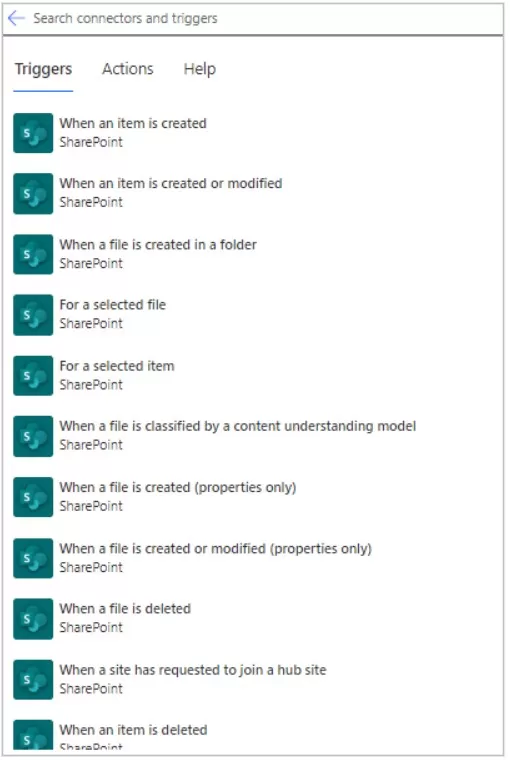
To prepare for using the file request feature in SharePoint Document Libraries, here are some of the considerations that should be kept in mind- 

  • To enable such file transfers, ensure that the administrator enables the file request feature at the tenant level.  You can enable this configuration using the SharePoint Online Management Shell.
  • Configure the required permissions for links, with specifications related to the appropriate levels of view, edit, and upload permissions for external users.
  • Inform your user base of this capability and how to utilize it.
  • Users should receive some guidance, instructions, or cheat sheets for making file requests and managing the files they receive using this functionality.
  • Ensure desktop support staff is aware of this newly enabled function and are ready to provide support and guidance on its use.

By taking into account the configuration, management, and use, you can get the most out of SharePoint Online’s file request capability and benefit from streamlined file collecting and collaboration while ensuring data protection and control.

Step-by-step Guide for External File Sharing in SharePoint Online

We will be listing the 10-step comprehensive guide for external file sharing in SharePoint Online. Have a look at it and get started for easy and quick file sharing.

1. Enable Guest Sharing:

The very first step is enabling guest sharing in your SharePoint architecture. The site owners or, more likely, the administrators can do it using the SharePoint Online Management Shell.

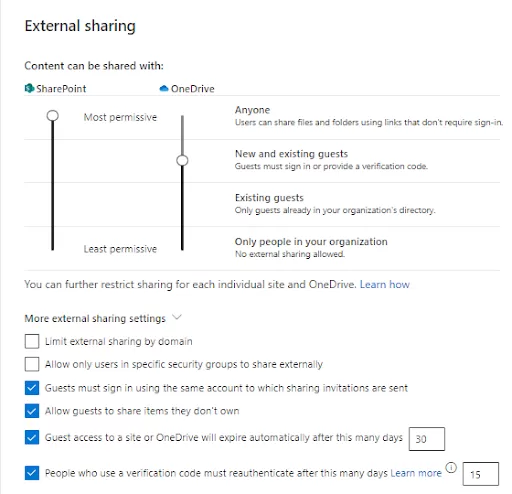
Change the Sharing Settings as below by going to SharePoint Admin Center > Policies > Sharing

img-01

You can set up the OneDrive settings as – New and existing guests and Anyone for SharePoint and can still enable the feature.

After setting these up, check that OneDriveRequestFilesLinkEnabled is set correctly via SharePoint Online Management Shell.  Here are the commands (substitute your tenant domain, of course):

img-02

  • For OneDrive
    • Check if CoreRequestFilesLinkEnabled is set to True. If it isn’t set to True, run Set-SPOTenant -CoreRequestFIlesLinkEnabled $True.
    • If this is set to True, the Request files link on the core partition for all SharePoint sites is enabled (not including OneDrive sites). If this value isn’t set, Request files will only show for OneDrive with Anyone links enabled.

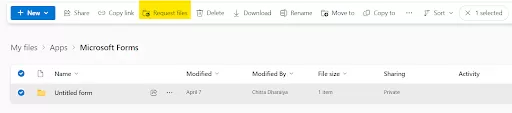
2. Choose a Folder: 

After that, choose the folder in SharePoint where you want the recipient to place the requested files. This folder collects the files uploaded by the recipients.

In SharePoint, the option appears as:

img-03

In OneDrive, the option appears as:

img-04

3. Request Files: 

Once you’ve selected the folder, click on the “Request Files” option to initiate the file request.

Additional Read

Top Features and Benefits of SharePoint Online for Collaboration and Teamwork

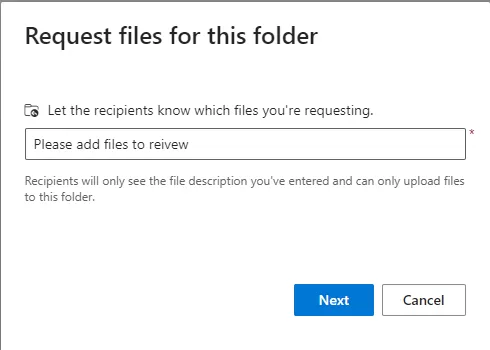
4. Fill out the Details: 

You need to add the necessary details, such as the name of the folder which you will use to collect the requested files. Make sure that the name of your folder is easy to find as well as descriptive.

A popup comes up to add the information:

img-05

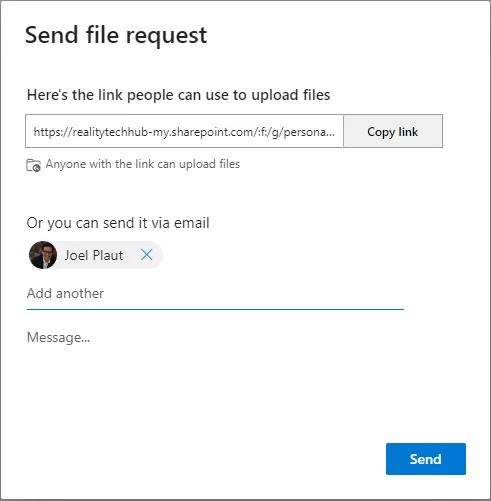
5. Enter the Recipient’s Email: 

Then, add the email address of the person you want to request files from to enable file requesting.

img-06

6. Sending the Request: 

After you get the recipient’s email, then you can send the file-sharing request option to the recipient. You can send a unique link or email directly from the SharePoint user interface.

img-07

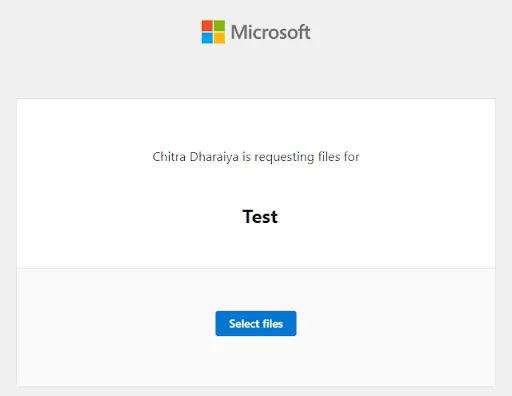
7. Uploading Files:

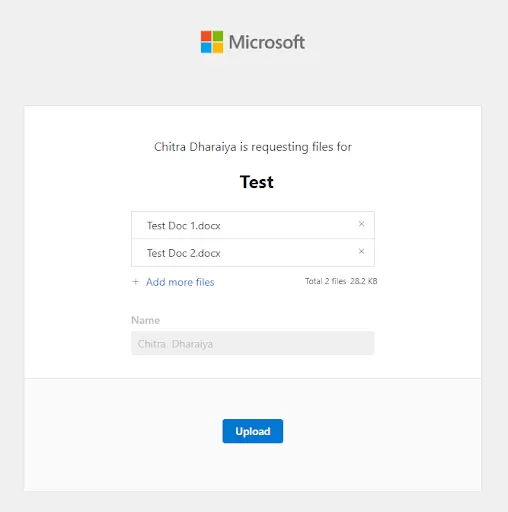
The recipient will receive the file request and click on the link provided in the email. They will be directed to a web page with a simple browse and upload experience. The recipient can select the files they want to upload and submit them.

When the recipient clicks on the link, the following page is displayed,

img-08

Once the user clicks “Select Files”, File Explorer opens up to select files.

img-09

Once the files are selected, click on Upload to upload the files to the folder.

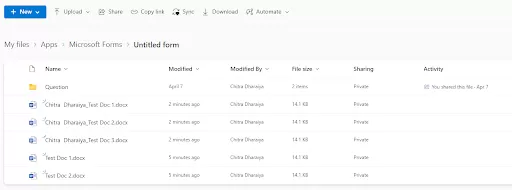
Once uploaded, the documents come up like this:

img-10

Here’s A Disclaimer – 

The file request feature allows users to only upload files. They cannot view, edit, or see files uploaded by others or any other content in the SharePoint environment.

That’s good news, as the process is naturally secure, restricting your designated user to simply uploading file(s).

1. Email Alerts: 

Once the recipient uploads files, you will receive an email notification about the update. The email contains all the information regarding the updated files and even the person who uploaded them.

2. Repeat for Multiple Requests: 

You can repeat this process for multiple recipients or file requests. Each recipient will have a unique file request link or email.

3. Manage Files Seamlessly: 

As the requestor, you can access the folder where the requested files are being collected. You can view and manage the uploaded files as needed seamlessly.

Quick Tip – 

You can also consider assigning a common folder for broader file requests, such as a SharePoint document library.

This way, you can use the file request link within your email signature, making it easier for people to send you files by simply clicking on the hyperlink.

That’s it! You’re now ready to start using the file request feature in SharePoint.

Conclusion

In conclusion, the file request feature in SharePoint offers numerous benefits and provides a convenient solution for collecting files from external parties.
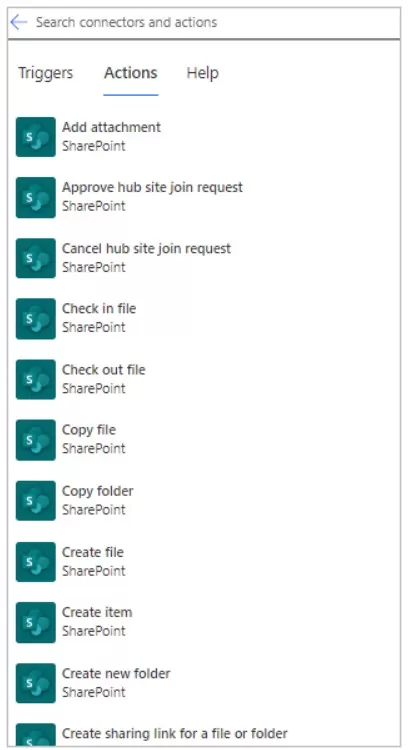
With our simple step-by-step guide, you can easily set up file requests and streamline the process of gathering documents from various sources.

This feature is highly versatile, and you can easily use it in various situations, such as collecting bids for a Request for Proposal (RFP), gathering assignments from students, soliciting feedback from team members, accumulating media files from an event, etc.

When you are looking to implement file requests, it is crucial to ensure that guest sharing is enabled in your SharePoint environment and that the appropriate folder is selected for collecting the requested files. With clear instructions, you can facilitate a smooth and seamless process.

We hope that by following the step-by-step guide outlined in this blog, you can start leveraging the file request feature in SharePoint to simplify file collection, improve collaboration, and enhance productivity.

Start Your Project in a Click

Our technology and wide delivery footprint have created billions of dollars in value for clients globally and are widely recognized by industry professionals and analysts.


So, What Are You Waiting For?

Start leveraging this powerful feature today and experience the benefits of efficient file collection and collaboration with SharePoint.

If you are looking for further guidance to enable smooth collaboration with SharePoint Online, then reach out to Reality Tech. Our team of experts is glad to assist.

Microsoft Purview Compliance Manager

Microsoft Purview Compliance Manager is a relatively new solution that helps organizations manage their compliance needs across multiple cloud platforms and tools.

With the rapid adoption of cloud-based services, organizations face a growing need to ensure that their data and applications are compliant with regulatory requirements and industry standards.

Purview Compliance Manager is designed to simplify management and reporting and compliance, process, enabling organizations to oversee, and monitor their compliance setup and configuration in a single platform.

What is Purview Compliance Manager?

Purview Compliance Manager is a compliance management solution that provides organizations with a unified view of their compliance configuration across multiple cloud platforms.

It helps organizations assess their compliance with regulatory requirements and industry standards, such as GDPR, HIPAA, and ISO 27001.

The solution also provides recommendations for remediation and enables organizations to track progress towards compliance goals via scoring and dashboards and task lists.

Purview Compliance Manager is built on the Microsoft Azure cloud platform and is integrated with other Microsoft solutions, such as Azure Active Directory, Azure Policy, and Azure Security Center.

This integration enables organizations to leverage their existing investments in Microsoft technologies and extend their compliance management capabilities to other cloud platforms.

The business organizations using Microsoft’s compliance manager can efficiently manage their multi-cloud compliance requirements. This software solution helps users throughout their compliance

journey by –

  • Generating an inventory of data protection risks
  • Managing the challenges associated with implementation of controls
  • Staying updated with latest regulations and certifications
  • Reporting for management and to auditors

Compliance Manager can reduce the risk by simplifying the compliance in the following manner.

– It has pre-built and customized assessments which are useful in different scenarios

  • Pre-built assessments are used for common regional and industrial standards and regulations
  • Customized assessments are used to satisfy the unique compliance needs of users

– Workflow capabilities to efficiently complete the risk assessments through a single tool

– Through this software solution, users receive a single tool to easily complete the risk assessment.

– It provides the users with: –

  • A detailed guidance (step-by-step) on improvement actions enabling them to comply with the regulations and standards relevant for an organization. Users also receive implementation details and audit results for actions being managed by Microsoft.
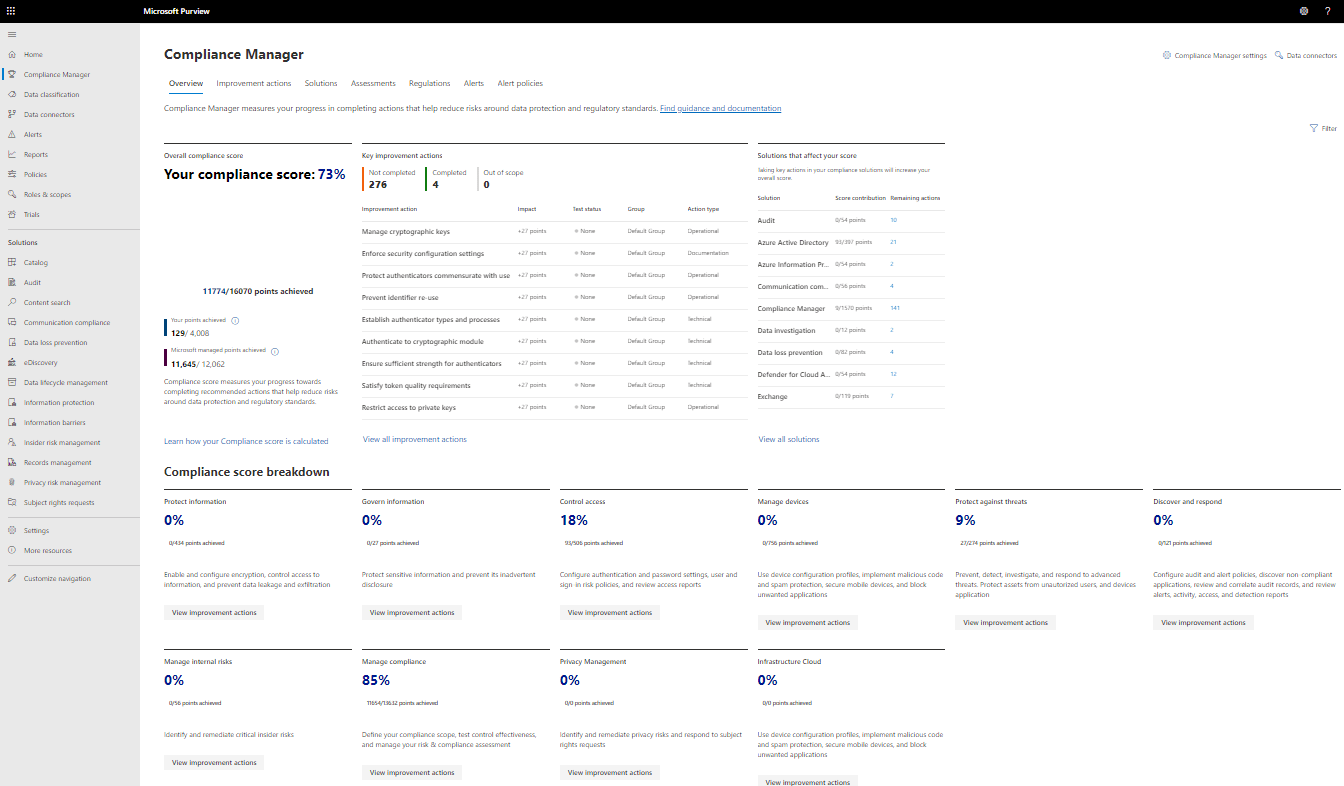
  • Risk-based compliance score enabling them to measure their progress in finishing the improvement actions and helping them in understanding the compliance posture.

img-01

Understanding the Compliance Score

Compliance Manager awards points for improvement actions taken to comply with a policy, regulation or standard, and combines those points into an overall compliance score. The compliance score can help prioritize which action to focus on to improve the overall posture and helps report on progress over time.

The compliance score is calculated based on Microsoft 365 data protection reference baseline information.

Additional Read

Microsoft Viva: A Guide to Enhancing the Employee Experience

Key Features of Purview Compliance Manager

The tool pulls together a unified view of the compliance across the organization and surfaces dashboards, reports and scores to facilitate management and reporting.

Purview Compliance Manager provides organizations with a centralized view of their level of compliance across multiple cloud platforms and tools. This enables organizations to identify compliance gaps and prioritize remediation efforts.

1. Compliance Assessments:

Purview Compliance Manager includes a library of compliance assessments that enable organizations to assess their compliance with regulatory requirements and industry standards. These assessments are based on industry best practices and include recommendations for remediation.

Assessments include several components, such as- ‘In-scope services’ (a particular set of Microsoft services which are applicable to the assessment), ‘Microsoft managed controls’ (used for Microsoft cloud services implemented by Microsoft), customer-managed controls (implemented and managed by users) and ‘Shared controls’ (Microsoft and users both share responsibility for implementing them).

2. Remediation Recommendations:

Purview Compliance Manager provides recommendations for remediation based on compliance assessments.

These recommendations include step-by-step guidance for implementing controls and mitigating risks.

3. Compliance Score:

Purview Compliance Manager provides a compliance score that enables organizations to track their progress towards compliance goals.

The compliance score is based on the results of compliance assessments and the implementation of remediation recommendations.

4. Integration with other Microsoft Solutions:

Purview Compliance Manager is integrated with other Microsoft solutions, such as Azure Active Directory, Azure Policy, and Azure Security Center.

This integration enables organizations to leverage their existing investments in Microsoft technologies and extend their compliance management capabilities to other cloud platforms.

5. Tracking Controls:

Compliance Manager can track different types of controls, such as Microsoft managed controls (used for Microsoft cloud services implemented by Microsoft), Customer managed controls (implemented and managed by an organization or user) and Shared controls (Microsoft and users share responsibility for implementing these controls).

Benefits of Purview Compliance Manager

1. Pre-Built Assessments:

Microsoft’s compliance manager has a wide range of pre-built assessments developed around industry standards and regulations.

They are built around best practices to help organizations in maintaining compliance with standards, applicable laws and regulations.

The process of creating and managing the compliance assessments for various organizations is simplified with Purview Compliance Manager.

It enables the users to find the gaps and rapidly rectify issues.

With Microsoft’s Purview Compliance Manager, users can tailor the assessments based upon the specific compliance needs of an organization.

The custom assessments can be configured to fulfill a business’ specific policies, standards and requirements.

It’s also possible to customize the assessments for inclusion of additional criteria.

2. Simplified Compliance Management:

Purview Compliance Manager simplifies compliance management by providing a single platform for monitoring and managing compliance requirements across multiple cloud platforms and systems.

The user-friendly interface of Compliance Manager allows the organizations to easily identify, evaluate and manage risks.

Users receive comprehensive risk profile information rolled up into a single enterprise platform to hep develop implement and manage strategies for risk mitigation.

3. Improved Compliance:

Purview Compliance Manager helps organizations improve their compliance posture by identifying compliance gaps and providing recommendations for remediation.

Enables Collaboration: Purview Compliance Manager enables collaboration between compliance and IT teams, enabling them to work together to achieve compliance goals.

4. Save Time and Reduce Costs:

Purview Compliance Manager saves time and reduces costs by automating compliance assessments and remediation recommendations.

5. Provides Visibility:

Purview Compliance Manager provides visibility into compliance, enabling organizations to identify compliance gaps and track progress towards compliance goals.

Additional Read

Microsoft Viva: A Guide to Enhancing the Employee Experience

Conclusion

Microsoft Purview Compliance Manager is a powerful compliance management solution that simplifies compliance management for organizations…

Microsoft Purview Compliance Manager is a powerful compliance management solution that simplifies compliance management for organizations.

With its unified view of compliance, assessments, remediation recommendations, compliance scoring, dashboards, and integration with other Microsoft solutions, Purview Compliance Manager enables organizations to improve and achieve compliance goals for meeting internal policy and regulatory requirements and industry standards across multiple cloud platforms and systems.

By improving and tracking overall compliance, enabling collaboration, it saves time and reduces costs, and provides enhanced transparency and visibility, Purview Compliance Manager can help organizations manage and mitigate risks and ensure the security of data and applications across the enterprise.

Seamlessly Automate Your SharePoint Tasks with Power Automate

Introduction:

While SharePoint Online is a powerful collaboration and content management tool, manual tasks can often take up valuable time and resources.

Let’s explore how Power Automate can be leveraged to automate manual tasks, streamline processes and save time.

What exactly is Power Automate?

Microsoft Power Automate, formerly known as Microsoft Flow until November 2019, is a SaaS platform by Microsoft for automation of recurring tasks. It is part of the Microsoft Power Platform line of products together with products such as Power Apps and Power BI.

In this article, we’ll explore how Power Automate can help businesses automate repetitive tasks in SharePoint Online. It also covers how businesses can leverage this capability to drive efficiency and productivity.

Section 1: Introduction to Power Automate.

First things first, let’s get to know more about What Power Automate is.

Power Automate is a service that helps you create automated workflows between your favorite apps and services to synchronize files, get notifications, collect data, and more.

With the help of triggers and actions, this intelligent cloud-based system employs a sequence of actions to complete repetitive, laborious, and time-consuming operations for a business without the need for human participation.

Through this platform and its inbuilt features, businesses can save time, increase productivity, and reduce errors – leading to better results for the team and business (as a whole) and if it fails you can design it to fail gracefully with email notification of which step failed and set it up to retry.

Power Automate offers a range of ready-made templates that businesses can utilize to quickly create automated workflows for common day-to-day business activities with no code. These templates cover a variety of industries and use cases, such as human resources, finance, sales, and more. Companies can choose based on their industry and get started and adapt existing templates.

Power Automate has about a thousand connectors which can be used to seamlessly work and integrate with. Connectors are categorized as either Standard or Premium.

Standard Connectors can be used without paying any fee, while Premium connectors have a fee associated.

Standard connectors include – Outlook, SharePoint, MS Teams, Gmail, YouTube, Adobe, Smartsheet, WordPress, Pinterest, and more.

Premium connectors include – SQL Server, Salesforce, Amazon Redshift, Cloud Connect, DocuSign, Egnyte, and many more.

You can create a variety of Power Automate flows which can be –

  • Automated – Trigged by a designated event such as adding an item to list, creating, or modifying an item/file, when an email is received, etc.
  • Instant – Triggered manually as needed,
  • Scheduled – runs at a specified time – can be daily, weekly, every 2 weeks or monthly. You choose when and how often it runs.
  • Describe it to Design Flow – describe what you want to automate, and built-in AI assistance will help you create your flow.
  • Desktop flow – Automates the process on your desktop environment.
  • Process advisor – Evaluates and optimizes the existing processes and tasks.

There are built-in templates to start the automation you require. You can review the templates by connector, or by the process you wish to accomplish, such as sending an email, approval flow or many others.

Section 2: How Does Power Automate Work with SharePoint Online?

Power Automate is a great tool for automating tasks in SharePoint Online. It provides a powerful and flexible way to automate tasks in SharePoint Online, which contributes to freeing up time and increasing productivity for businesses.

Integrating Power Automate with SharePoint Online can reduce monotonous tasks such as creating list/libraries/folders/files, sending alerts, updating the files, moving, or copying folders/files, updating metadata, sending notifications seamlessly and manty other tasks.

Let’s Understand with An Example: –

Businesses can set up a workflow to create a new folder in a document library whenever a new item is added to a list.

It works by creating workflows that are triggered by specific events in SharePoint Online. Once the trigger event occurs, it will proactively initiate the workflow and perform the actions they’ve set up.

It mainly covers tasks like creating a new item in a list, updating an existing item, or sending an email notification.

In this case, there’s a list called “Issue Tracker”, where ongoing Issues are reported and tracked. When an Issue is created, the flow would trigger and create a folder with the Issue’s title and Date it was reported in a Document Library.

You can also automate it further as needed, such as updating the status of the folder when the status of the item changes or updating any new attachments which are added to the item and many more.

Here’s the best part: With Power Automate, businesses can customize the workflows in SharePoint by adding conditions or loops. It allows them to create scalable and flexible workflows tailored to their specific needs.

Power Automate also allows businesses to create custom connectors, which businesses can use to connect SharePoint Online with other applications and services. This opens a world of possibilities for automating tasks across multiple platforms and streamlining the workflows.

Section 3: Examples of Power Automate in SharePoint Online.

1. Data Synchronization:

Power Automate can be used to synchronize data between SharePoint Online and other systems, such as Dynamics 365, Power BI, Azure SQL, SQL Server, Salesforce, WordPress and many more.

SharePoint has vast range of triggers and actions:

img-01

As soon as your flow starts, you can use any of the more than 40 actions to manipulate your lists/libraries-

img-02

2. Data Collection:

Through Power Automate, business professionals can easily automate data collection tasks in SharePoint Online. It can automatically take the data from the form and store it in a database or send it to another system for processing.

Microsoft uses diagnostic data to keep Power Automate client software secure and up to date; to detect, diagnose, and fix problems; and to make product improvements. This data doesn’t include a user’s name or email address, the content of the user’s files, or information about apps unrelated to the product.

As part of this work, diagnostic data collected from source software as customers use their devices is classified as either Required or Optional.

Data in the Optional category isn’t essential to the product or service experience. Opting into this feature allows us to identify usage trends, which enhances our ability to make product improvements.

Power Automate client products don’t collect optional data unless the user consents during the product installation process or has enabled the feature through the application settings later. If users choose to send optional diagnostic data, it’s collected in addition to required diagnostic data.

Required diagnostic data is the minimum data necessary to help keep Power Automate client software performing as expected on the device it’s installed on. Examples include summary details about the health and security of the running service, version information about infrastructure, configuration details, flow runs, service interactions, success or errors received, and aggregated information about failures and security concerns.

3. Automate Content Publishing:

Power Automate can automate content publishing, such as publishing news posts or pages to specific audiences or updating content based on specific conditions.

Power Automate uses connections to make it easy for you to access/publish your data while building flows. Power Automate includes commonly used connections, including SharePoint, SQL Server, Microsoft 365, OneDrive for Business, Salesforce, Excel, Dropbox, Twitter, among others.

Connections are shared with Power Apps, so when you create a connection in one service, the connection shows up in the other service.

4. Document Approval:

With Power Automate, you can manage the approval of documents or processes across several services, including SharePoint, Dynamics 365, Salesforce, OneDrive for Business, Zendesk, or WordPress.

To create an approval workflow, add the Approvals – Start and wait for an approval action to any flow. After you add this action, your flow can manage the approval of documents or processes.

For example, you can create document approval flows that approve invoices, work orders, or sales quotations. You can also create process approval flows that approve vacation requests, overtime work, or travel plans.

Section 4: Best Practices for Implementing Power Automate in

SharePoint Online

Workflow automation is an approach to making the flow of tasks, documents and information across work-related activities perform independently in accordance with defined business rules.

When implemented, this type of automation should be a straightforward process that is executed on a regular basis to improve everyday productivity.

An organization first identifies the tasks that make up the job. It then creates the rules and logic that govern how those tasks should be done. Finally, it programs the software with predefined business rules and logic.

To get the best and required results, it’s crucial to implement some best practices:

1. Identify Workflows to Automate:

Before implementing Power Automate in SharePoint online, identify the workflows that could benefit from automation. Companies should look for manual repetitive, time-consuming, or error-prone tasks that they want to automate.

2. Select the Right Triggers and Actions:

When creating a Power Automate flow in SharePoint Online, it’s essential to select the right triggers and actions. We therefore consider the requirements, the data sources involved, and the desired outcome when selecting triggers and actions.

3. Ensure Compliance with Data Policies:

When automating workflows with Power Automate in SharePoint online, ensure that the staff complies with the organization’s data policies, such as data retention policies, data privacy laws, and security requirements.

Additional Read

The Ultimate Guide to Using SharePoint for End Users!

Section 5: Benefits of Power Automate in SharePoint Online

Here’s the rundown of the diverse benefits of using Power Automate in SharePoint Online:

1. Easy Integration:

Power Automate can integrate SharePoint with other useful platforms, such as Microsoft Teams, Outlook, OneDrive, or Dynamics, making streamlining processes across multiple systems easy.

2. Save Time & Money:

Power Automate even allows companies to streamline various time-consuming SharePoint tasks, such as creating and sending emails, updating lists, and creating new documents, freeing up employees’ time and decreasing costs associated with it.

3. Less Human Errors:

Power Automate can even help improve accuracy in SharePoint by reducing the risk of errors caused by manual data entry and ensuring that data is accurate across different systems.

4. Greater Team Collaboration:

Power Automate can help enhance collaboration among staff working in SharePoint by automating diverse tasks that involve multiple team members while making it easier to assign tasks, track progress, and communicate with team members.

5. End-to-End Monitoring:

With Power Automate, the entire business workforce can easily participate in and manage the SharePoint workflows in real time and receive notifications when there are any issues or errors, which helps them identify and fix any problems (without much hassle).

Conclusion

We hope by now you’ve gotten to know a bit more about how Power Automate can be a a powerful tool for automating tasks in SharePoint Online and other platforms.

Power Automate offers a range of features for businesses looking to optimize their SharePoint Online experience. By leveraging both these platforms, businesses can streamline their internal and external processes with fewer errors and improve efficiency and productivity.

Apart from a powerful platform, you also need a powerful implementation to fully leverage the platform and generate the best possible results for your business.

If you are still unsure about using these two platforms together and looking for some guidance and insights, book a free consultation, and our team of experts will be glad to work with you.

Start Your SharePoint Project in a Click

Our technology and wide delivery footprint have created billions of dollars in value for clients globally and are widely` recognized by industry professionals and analysts.


Reality Tech Announces Partnership with Mozzaik365 to Enhance SharePoint Collaboration and Efficiency

New York, USA (April 2023):

Reality Tech, an award-winning Microsoft Office 365 SharePoint services and solution provider, has announced its official partnership with Mozzaik365.

This partnership aims to deliver innovative and scalable intranet solutions that focuses on seamless workplace collaboration, cutting-edge intranet design, communication, and efficiency.

Reality Tech focuses on optimizing collaboration and interaction among people in their workplace, improving enterprise agility, efficiency, and productivity.

Reality Tech offers deep expertise and skills in Microsoft Office 365 SharePoint technology, PowerAutomate, PowerBI and deliver excellence in migration, workflows, intranets, and integration across a range of technology disciplines.

Mozzaik365 is a French technology company that designs Digital Workplace solutions for enterprises to collaborate, share, and communicate effectively.

They offer solutions integrated with SharePoint Online and Teams. Mozzaik365 doubles the power of SharePoint and centralizes Microsoft 365 uses from your intranet.

Easily build a beautiful and engaging Digital Workplace to connect and collaborate with your teams.

This partnership aims to provide impactful Digital Workplaces tailored to meet the unique needs of each client and help them achieve their goals efficiently and quickly.

Both Reality Tech and Mozzaik365 are excited about this partnership and enthusiastic to deliver seamless solutions and technology excellence.

Guirec Loison, Head of Partnerships at Mozzaik365, said, “We are thrilled to start this partnership with Reality Tech and very confident that it will be a win-win cooperation”.

Anjalika Pattanaik, Partnerships Manager at Mozzaik365, said, “Looking forward to working together on projects very soon!”

Joel Plaut, CEO of Reality Tech, said – “We are enthusiastic and very much looking forward to some very significant and noteworthy implementation successes and ultimately delighting end users.”

This partnership will significantly impact workplace communication and collaboration through customized and automated workflows and processes by using Microsoft SharePoint technology and intranet frameworks.

About Reality Tech:

Reality Tech is a leading Microsoft SharePoint services provider that offers enterprise-grade technology cutting-edge solutions that focuses on intranet design, document management, project web access, compliance, Search, and workflows.

For more information, visit reality-tech.com

About Mozzaik365:

Mozzaik365 is a pioneer in designing unique digital experience for enterprises.

Their digital workplace solutions enable users to connect, share, and communicate effectively regardless of their location.

They create digital spaces by using the utility, tools, and features offered by the Microsoft 365 environment.

For more information, visit en.mozzaik365.com

Newsletters