



Welcome to the workplace of the future, a vision Microsoft brought to life at Ignite 2025.
In this new reality, your organization’s “team” is no longer limited to people. Alongside analysts, engineers, and business users, AI agents are now part of everyday operations.
These agents can:
- Create employee onboarding emails
- Coordinate workflows across applications
- Analyze data and generate reports
- Trigger HR actions
- Sync files across systems
- Monitor daily IT checks
- Run continuously without fatigue
They work faster, scale effortlessly, and never slow down.
But with this level of autonomy comes a new challenge.
AI agents can behave in unexpected ways, and in a security context, that unpredictability poses real risk.
At Ignite 2025, Microsoft made this clear: AI agents must be treated as identities. And every identity requires strong governance, monitoring, and Zero Trust protection.
This is where Microsoft Entra ID and Microsoft Entra Security play a critical role- helping organizations detect unusual behavior early and strengthen AI agent security across their environment.
Why This Scenario Matters in the Age of AI-Driven Workforces
AI agents are no longer simple background scripts. They now act as digital workers with real responsibilities.
They can:
- Send onboarding messages
- Update HR systems
- Move financial data
- Handle support tickets
- Run approvals
- Communicate with APIs
- Connect services across systems
Because they have access and permissions, they also introduce AI security risks.
Not because they intend to, but because things can go wrong.
Where AI Agents Become High-Risk
AI agents can become risky in several situations:
- API keys or secrets are exposed
- Login attempts happen from unusual locations
- Automation loops behave unexpectedly
- Agents try to access unfamiliar resources
- Code updates change behavior unintentionally
- Test agents move into production
- Compromised identities trigger harmful actions
These are real AI security risks that organizations must address.
Imagine an HR agent trying to access financial systems at an unusual time from another region. That is not normal behavior; it’s a warning sign.
In such cases, automated protection is essential.
Microsoft Entra High-Risk Agent Protection: Your AI Security Shield
With Microsoft Entra Conditional Access and built-in intelligence, Microsoft evaluates AI agents the same way it evaluates human users.
It monitors:
- Impossible travel
- Abnormal sign-in patterns
- Suspicious IP activity
- Behavioral anomalies
- Token misuse
- Unusual API calls
- Signs of credential compromise
These capabilities are part of modern conditional access policies.
When risk reaches a high level, action is immediate:
High Risk = Block the agent instantly. Investigate afterward.
This approach aligns with zero-trust security microsoft, where nothing is trusted without verification.
Pros & Cons (Realistic, Practical View)
Pros
- Automatically blocks unsafe or compromised agents
- Protects sensitive applications and data
- Stops issues before they spread
- Provides continuous monitoring
- Supports modern microsoft entra security strategies
- Aligns with Zero Trust principles
Cons
- Some workflows may pause temporarily
- Teams must review risk alerts
- False positives can occur in rare cases
However, a temporary pause is far safer than a security breach.
A Futuristic Analogy You Can Relate To
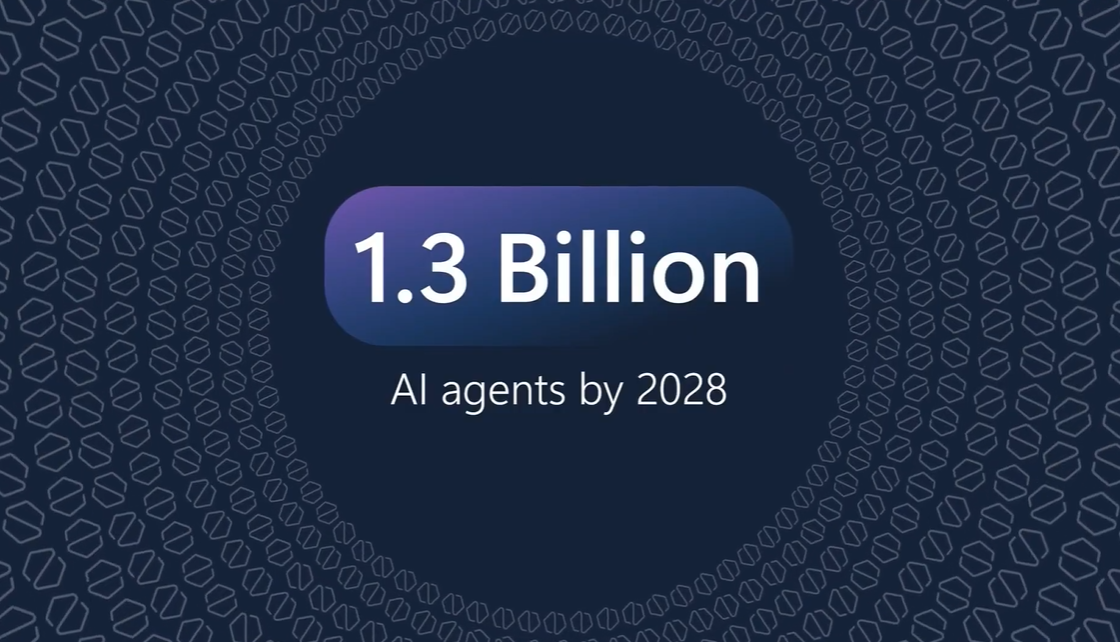
By 2028, billions of AI agents may operate alongside humans.
In such an environment:
- AI handles onboarding
- Automation manages daily operations
- Systems run continuously
But imagine this scenario:
An HR agent suddenly:
- Tries to access restricted financial data
- Logs in from multiple regions within seconds
- Makes repeated unusual API calls
- Requests permissions that it never needed before
What would you do?
You would immediately block its access.
That is exactly what microsoft entra conditional access does, automatically and instantly.
Final Thoughts: Ignite 2025 Made the Future Clear
Organizations are entering a new phase where AI agents are part of everyday operations.
With this shift, AI agent security is no longer optional; it is essential.
Organizations can use Microsoft Entra ID, identity and access management, and conditional access policies to protect their systems. These tools also support secure innovation.
This approach strengthens:
- Security
- Stability
- Compliance
- Trust
It also supports a strong zero-trust security microsoft model for the future.
Adopting these practices ensures your organization can use AI confidently, without compromising security.
Next in the Series: Part 2: Configuration & Implementation
The next blog will walk through step-by-step configuration for:
- Scenario 1: Allow only approved agents to access resources
- Scenario 2: Automatically block high-risk agents
- Enhanced Object Picker usage
- Custom Security Attributes for agents
- Testing with Report-Only mode
- Microsoft’s recommended best practices
More AI agent security blogs are on the way as part of this governance series.
Have a question?
We’re here to help. Get in touch with us anytime, 24/7